
Industrial Wet Scrubber Systems
Showing 1–12 of 20 resultsSorted by latest
-
 Industrial Wet Scrubber Systems
Laboratory Fume Hood Scrubber | Lab Exhaust Gas Purification System
$1,299.00 Add to cart -
Industrial Wet Scrubber Systems
SOx Wet Scrubber System | 98% Multi-Pollutant Removal
$1,300.00 Buy product -
-
Industrial Wet Scrubber Systems
HCl Scrubber | 99.9% Hydrochloric Acid Removal | Zero Corrosion
$1,300.00 Buy product -
Sale!Industrial Wet Scrubber Systems
NO₂ Scrubber | 98%+ NOₓ Removal Efficiency | XICHENG EP LTD
Original price was: $1,399.00.$1,299.00Current price is: $1,299.00. Add to cart -
Industrial Wet Scrubber Systems
PP polypropylene wet scrubber for air pollution control
$1,099.00 Add to cart -
Sale!Industrial Wet Scrubber Systems
Biogas Scrubber | Chemical-Resistant PP Spray Tower for Waste Gas Treatment
Original price was: $1,399.00.$1,299.00Current price is: $1,299.00. Add to cart -
Industrial Wet Scrubber Systems
NH3 Scrubber | 99.8% Ammonia Removal | Explosion-Proof Design
$1,300.00 Buy product -
Sale!Industrial Wet Scrubber Systems
Carbon Monoxide Scrubber System for Industrial Acid Mist Waste Gas Treatment
Original price was: $1,399.00.$1,299.00Current price is: $1,299.00. Add to cart -
Sale!Industrial Wet Scrubber Systems
Chemical Scrubber | 12+ Gases Treatment | Modular Flue Gas System
Original price was: $1,399.00.$1,299.00Current price is: $1,299.00. Add to cart -
Sale!Industrial Wet Scrubber Systems
Chemical Wet Scrubber | Industrial Chemical Absorption System
Original price was: $1,399.00.$1,299.00Current price is: $1,299.00. Add to cart -
Industrial Wet Scrubber Systems
Packed Tower Wet Scrubber | 99% Gas + 95% Dust Removal
$1,300.00 Buy product
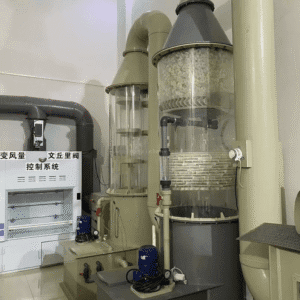
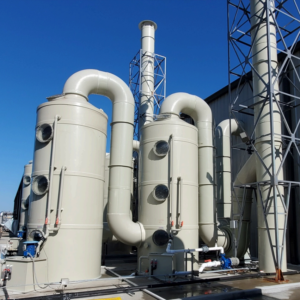

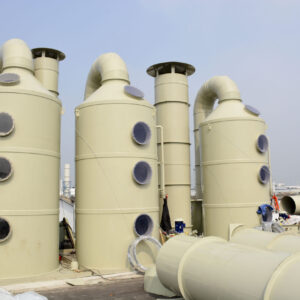
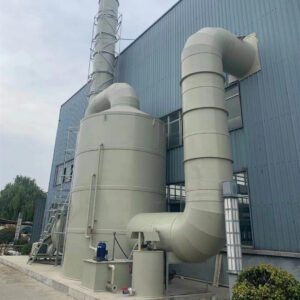
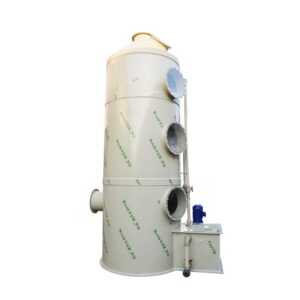
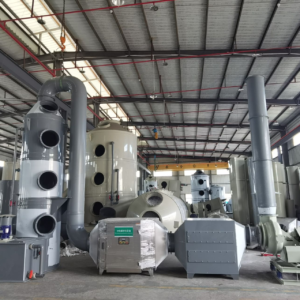
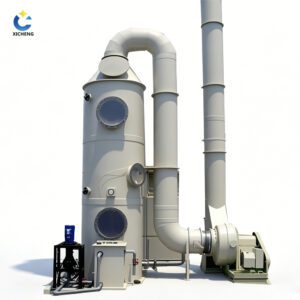

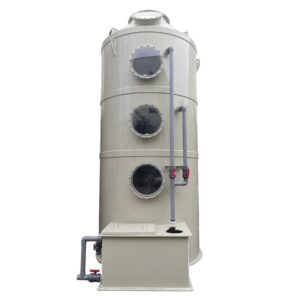
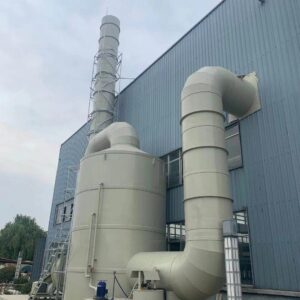
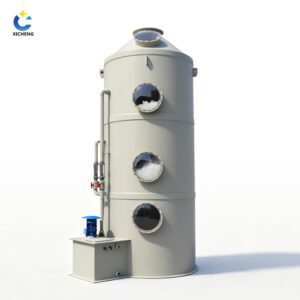
Industrial Wet Scrubber Systems for Corrosive Exhaust Treatment
Industrial wet scrubbers remove 95-99% of acid gases, VOCs, and particulates from exhaust streams through direct gas-liquid contact. According to the EPA Wet Scrubber Cost Manual, a properly designed packed bed scrubber achieves the highest removal efficiency per unit of pressure drop among all wet scrubbing technologies. XICHENG EP has manufactured PP wet scrubbers for 15+ years, shipping 2,600+ systems to 60+ countries.
| Scrubber Type | Best For | Efficiency | Pressure Drop |
|---|---|---|---|
| Packed Bed (Counter-Current) | Acid gases: HCl, HF, H2SO4, HNO3, SO2 | 95-99% | 200-500 Pa/m |
| Spray Tower | Particulate + water-soluble gases | 85-95% | 100-250 Pa |
| Horizontal Cross-Flow | Space-constrained, moderate efficiency | 90-97% | 150-350 Pa |
| Multi-Stage | Mixed pollutants: acid + VOC + particulate | 95-99.5% | 300-800 Pa |
Why choose PP over FRP or stainless steel?
PP wet scrubbers deliver 15-20 year service life treating corrosive exhaust, vs 5-7 years for FRP and 2-5 years for 316L stainless. PP is chemically inert to HCl, HF, H2SO4, and NaOH at operating temperatures up to 90 C. A PP scrubber costs 30-50% less upfront than FRP and 60% less than alloy steel, with zero internal coating renewal or corrosion patching required. See our PP vs FRP Scrubber comparison and cost savings analysis.
How is a wet scrubber sized?
Scrubber diameter = gas flow rate / design velocity (0.8-1.5 m/s through packed bed). Bed depth uses NTU/HTU method based on target removal efficiency and pollutant Henry’s Law Constant. Example: 20,000 m3/h exhaust with HCl at 500 mg/m3 requiring 99% removal needs a 1.8m diameter scrubber with 3.0m structured packing at L/G = 2.5 L/m3. See our sizing calculation guide and NTU/HTU efficiency guide.
Target pollutants matched to scrubbing chemistry
| Pollutant | Scrubbing Medium | Industry Source |
|---|---|---|
| HCl | NaOH (pH 7-9) | Chemical processing, semiconductor etch |
| HF | NaOH or KOH | Glass etching, aluminum processing |
| SO2 | NaOH / Lime / Limestone | Coal boilers, smelting, sulfuric acid plants |
| NH3 | H2SO4 or H3PO4 | Fertilizer, refrigeration |
| Cl2 | NaOH (20% solution) | Water treatment, chemical synthesis |
| VOCs | Water + oxidation agent | Paint, pharmaceutical, solvent use |
Frequently Asked Questions
What airflow rates can PP wet scrubbers handle?
Standard models cover 500 to 215,000 m3/h. Custom designs for larger flows. Multi-fan configurations available for very high volumes.
What maintenance does a PP wet scrubber require?
Monthly: check spray nozzle pattern, packing condition, pH probe calibration. Quarterly: inspect mist eliminator, recirculation pump. Annual: full internal inspection. PP scrubbers require no internal coating renewal, unlike FRP. See our maintenance guide.
Can one scrubber handle multiple pollutants?
Yes. Multi-stage scrubbers combine acid gas scrubbing (stage 1) with VOC adsorption (stage 2) and particulate removal (mist eliminator). Common in chemical plants and pharmaceutical facilities. See our chemical plant treatment guide.