Who Needs This PP Polypropylene Wet Scrubber?
If your industrial facility generates acid mist waste gas — particularly hydrochloric acid (HCl) and nitric acid (HNO₃) fumes — and you need a durable, corrosion‑resistant treatment solution, this PP packed bed wet scrubber is engineered for you.
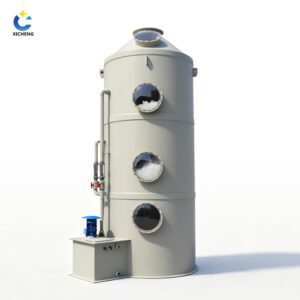
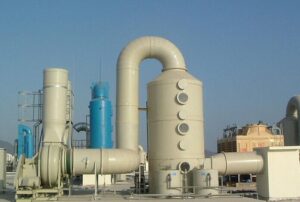
As defined by the U.S. EPA, wet scrubbers used for gaseous pollutant control are often referred to as absorbers, and most absorbers have removal efficiencies in excess of 90 percent, depending on the pollutant absorbed. To learn more about how wet scrubbers work and their role in air purification, see our introductory guide. XICHENG’s PP wet scrubber achieves this through a vertical counter‑current packed bed design — acid‑laden exhaust enters from the lower tower body and flows upward through the packing layer, spray layer, and demisting layer, where it contacts a descending NaOH alkaline scrubbing solution for acid‑base neutralization before clean gas is discharged from the top exhaust port.
Typical operating scenarios:
- Electroplating and metal finishing lines generating HCl and HNO₃ mists
- Chemical processing plants producing sulfuric acid (H₂SO₄) and hydrofluoric acid (HF) exhaust
- Laboratory fume hoods with mixed acid exhaust streams
- Pickling operations in steel and metalworking industries
- Battery manufacturing with H₂SO₄ acid mist
- Pharmaceutical and semiconductor facilities with corrosive waste gases
This scrubber handles a wide processing air volume range from 50 to 215,000 m³/h, accommodating everything from small pilot lines to large factory‑wide installations. The PP polypropylene body is roll‑formed and welded from PP sheet, providing excellent resistance to HCl, HNO₃, and most dilute mineral acids and alkalis. It is not designed for exhaust temperatures exceeding 70°C, or for strong oxidizing acids such as concentrated nitric acid (>50%) and fuming sulfuric acid. For extreme environments, alternative materials should be considered. For applications focused on pure acid mist absorption, see our dedicated acid fume scrubber. We lay out these boundaries transparently so you can make an informed equipment decision.
Why Engineers Choose Our PP Packed Bed Wet Scrubber
1. Multi‑Faceted Hollow Ball Packing = Maximum Neutralization Efficiency
The wet scrubber employs a new type of multi‑faceted hollow ball as filler, providing a large specific surface area for gas‑liquid contact while maintaining low flow resistance. This packing design ensures that acid mist exhaust gas interacts thoroughly with the NaOH scrubbing solution, enabling complete acid‑base neutralization reactions. The gas‑liquid ratio is engineered to be reasonable and the absorption purification efficiency is high, meeting the empty tower flow rate design requirements through a large cross‑sectional area configuration.
2. Optimized Residence Time = High Processing Efficiency
The acid mist stays in the tower for an extended duration, ensuring sufficient time for acid‑base neutralization to reach completion. Industry data indicates that PP scrubber systems can achieve up to 98% efficiency for acid fumes removal including HCl, H₂SO₄, and HNO₃. This extended residence time, combined with the counter‑current packed bed design, delivers high purification efficiency that meets stringent environmental emission standards.
3. PP Polypropylene Construction = Reliable Corrosion Resistance
The wet scrubber body is made of PP sheet roll‑formed and welded, providing inherent corrosion resistance without the layered structural weaknesses of laminated alternatives. As Tri‑Mer Corporation notes, polypropylene is homogeneous throughout, a feature that benefits both the structure and internal supports — it is inherently stronger and more stable than FRP, which is a layered laminate. If scratched or impacted, FRP’s layered construction can be compromised, while polypropylene’s homogeneous construction maintains its structural integrity. And if damage does occur, repairs on homogeneous polypropylene are straightforward and nearly always doable on‑site using standard shop tools. Polypropylene also offers long‑term resistance to harsh chemicals and common organic solvents, with the exception of strong oxidizers, making it appropriate for continuous duty up to 180°F (82°C).
4. Backwash Structure = Compact Installation, Small Footprint
The wet scrubber adopts a backwash structure, suitable for small space installation and occupying a small area. The vertical counter‑current design maximizes packing depth per unit floor area, making it practical for crowded chemical plants and retrofit projects where every square meter counts.
5. Complete Integrated System = Ready‑to‑Install
The standard configuration includes the wet scrubber body (with water storage tank, packing layer, spray layer, defogging layer, observation window, and base), a circulating water system (vertical circulating water pump, UPVC circulating water pipeline, PP spiral nozzle, water tank level control, and floating ball valve), and an automated dosing system (pH online detector, dosing metering pump, and dosing mixing barrel). This complete, integrated system reduces on‑site assembly time and commissioning complexity — simply connect inlet/outlet ducting, fill the sump, and power on.
6. Maintenance‑Friendly Design = Stable, Low‑Cost Operation
The wet scrubber is designed with maintenance and inspection ports for easy access, and features automatic control for stable operation. The pressure drop per unit height of packing is small, keeping system resistance low and exhaust fan power requirements minimal.
Technical Specifications
All values taken directly from the original product specification. Custom configurations are configured to your exact process parameters.
| Parameter | Available Range / Options |
|---|---|
| Processing Air Volume | 50 – 215,000 m³/h |
| Tower Structure | Vertical counter‑current packed bed |
| Body Material | PP (Polypropylene) — roll‑formed and welded from PP sheet |
| Packing Type | Multi‑faceted hollow ball (large specific surface area, low flow resistance) |
| Internal Components | Circulating water tank, acid mist inlet, packing layer, packing bearing grille, spray layer, demisting layer, exhaust gas outlet, discharge port, filling inlet, observation window |
| Spray System | PP spiral nozzle (full‑cone) |
| Circulating Water System | Vertical circulating water pump, UPVC circulating water pipeline, water tank level control, floating ball valve |
| Dosing System | pH online detector, dosing metering pump, dosing mixing barrel |
| Wind Resistance | Low system resistance — small pressure drop per unit height of packing |
| Gas‑Liquid Flow | Counter‑current: gas upward through packing, scrubbing liquid downward |
| Standard Scrubbing Liquid | NaOH alkaline solution (concentration matched to acid type and loading) |
Standard configuration includes: the complete wet scrubber body, circulating water system, and automated dosing system — a ready‑to‑install integrated package. Custom dimensions, multi‑stage configurations, and additional accessories available upon request. Contact our engineering team with your specific exhaust parameters (gas composition, concentration, temperature, air volume) for a tailored specification.
Selection Notes
Good Fit Conditions
This product is suitable when the application matches the design specifications in the technical table above. Contact our engineering team with your project specifications to confirm compatibility.
When to Review with Engineering
- Gas temperature or concentration outside standard design range
- Mixed pollutants requiring multi-stage treatment
- Site constraints limiting footprint, headroom, or utilities
Datasheet and Quotation Information
An engineering datasheet with dimensional drawing and specification confirmation can be prepared once the project configuration is confirmed.
To request a quotation: gas composition and concentration, flow rate (m3/h), temperature, material preference.
Frequently Asked Questions
Q1: How does PP compare to FRP or stainless steel for wet scrubber construction?
Polypropylene (PP) is homogeneous throughout, providing inherent strength and stability without the layered construction vulnerabilities of FRP. As Tri‑Mer Corporation notes, structural cracks can be problematic within FRP layers, and wicking and chemical attack from solutions such as HCl and HF can result. If scratched or impacted, FRP’s layered construction can be compromised, whereas polypropylene’s homogeneous construction maintains structural integrity. Repairs on homogeneous polypropylene are straightforward and nearly always doable on‑site using standard shop tools, while FRP repair frequently involves off‑site repair and extended downtime. Scrubbers manufactured with FRP have a higher strength‑to‑weight ratio and are slightly lighter, but polypropylene scrubbers of equal capacity are also strong — the weight difference is minimally important except during installation. Stainless steel (316L) provides high‑temperature strength but is susceptible to chloride‑induced pitting corrosion. For most dilute acid and alkali exhaust streams under 70°C, PP offers the best cost‑effectiveness and service life.
Q2: What acid gases can this wet scrubber treat?
Engineered for water‑soluble acid gases including hydrochloric acid (HCl), nitric acid (HNO₃), sulfuric acid (H₂SO₄), hydrofluoric acid (HF), chromic acid (CrO₃), hydrogen cyanide (HCN), and hydrogen sulfide (H₂S). It also handles alkali gases (NH₃, NaOH fumes) and formaldehyde (HCHO) when the appropriate scrubbing liquid chemistry is applied. The scrubbing liquid must be matched to each specific pollutant. For a detailed overview of different scrubber types matched to specific gases, see our guide on gas scrubber types (H₂S, Acid & Fuel Gas).
Q3: What removal efficiency can I expect?
Under properly designed operating conditions with matched scrubbing chemistry, this packed bed wet scrubber can consistently achieve removal efficiencies above 90% for highly soluble acid gases (HCl, HNO₃). According to the U.S. EPA, most absorbers have removal efficiencies in excess of 90 percent, depending on the pollutant absorbed. The primary indicators of wet scrubber performance are pressure differential, liquid flow rate, and scrubber liquid outlet concentration. Industry data shows PP scrubber systems can achieve up to 98% efficiency for acid fumes including HCl, H₂SO₄, and HNO₃. Actual efficiency depends on gas solubility, liquid‑to‑gas ratio, packing depth, and scrubbing liquid chemistry.
Q4: How does the automated dosing system work?
The integrated dosing system includes a pH online detector, dosing metering pump, and dosing mixing barrel. The pH detector continuously monitors the scrubbing liquid pH in the circulating water tank. When pH deviates outside the optimal neutralization range (indicating NaOH depletion), the dosing metering pump automatically injects fresh alkaline solution from the mixing barrel. This automation ensures consistent acid‑base neutralization performance, prevents chemical overdosing (reducing NaOH consumption), and significantly reduces operator workload compared to manual pH adjustment.
Q5: How do I determine the correct scrubber size for my facility?
The processing air volume ranges from 50 to 215,000 m³/h. To determine the appropriate size, you need to define your exhaust air volume (m³/h), the type and concentration of acid mist, operating temperature, and target outlet emission limits. Our engineering team uses these parameters to size the tower diameter, packing depth, liquid recirculation rate, and pump specifications. The system’s large cross‑sectional area design ensures the empty tower flow rate meets design requirements across the operating range. Provide your detailed process data for a customized sizing verification.
Q6: What regular maintenance is required?
A well‑designed maintenance schedule prevents corrosion, scaling, and unexpected downtime. The U.S. EPA notes that wet scrubbing systems are susceptible to several operating problems, especially if the pressure differential, liquid flow, and gas flow are not kept relatively constant. Common problems include low gas flow rate, low liquid flow rate, condensation of aerosols, poor liquid distribution, use of liquid with high pollutant concentration, air inleakage, pollutant re‑entrainment, freezing/pluggage of lines, and scaling. As outlined by MACH Engineering’s Wet Scrubber Troubleshooting Guide:
Weekly: Check spray nozzle patterns and packing condition.
Monthly: Test scrubbing liquid pH and concentration, replenish as needed.
Quarterly: Inspect mist eliminator for scaling or damage.
Annually: Full packing inspection; replace damaged or degraded media.
For a complete tiered inspection schedule with chemical management strategies, refer to our Acid Scrubber Maintenance Guide: Prevent Corrosion, Scaling & Downtime.
Q7: What are the most common operating problems and how do I solve them?
Based on MACH Engineering’s field troubleshooting data:
Low pressure or flow rate: Blockage in pipes, nozzles, or packing, or a leak in ductwork or housing. Clean or replace clogged components, inspect and repair system leaks.
High pressure or flow rate: Clogged mist eliminator or packing bed. Clean the mist eliminator and packing, verify correct fan speed settings.
Deviations in pH levels: Chemical imbalances or unanticipated chemicals in the gas stream. Check for leaks, organic growth, or corrosion. Replenish or replace the scrubbing solution.
High energy consumption: Failing sensor or mechanical issues like a failing pump motor. Recalibrate the sensors, conduct a pump performance assessment.
The observation window and maintenance inspection ports built into our design allow operators to visually detect early signs of these issues without system disassembly. For a deeper analysis of how PP construction prevents premature failure, see why scrubber work fails and how PP material prevents it.
Q8: What is the expected service life?
PP tower shell: 8–12 years under normal corrosive conditions with routine maintenance. Polypropylene combines durability and fatigue resistance, providing long‑term resistance to harsh chemicals and common organic solvents. Packing media replacement: every 3–5 years depending on gas composition and operating temperature. Pump mechanical seals: inspect annually; replace every 2–3 years. pH probe: calibrate monthly; replace every 1–2 years. This service life significantly exceeds metallic scrubbers (2–4 years in HCl service).
Q9: How do I handle the scrubbing liquid wastewater?
The blowdown from the circulating water tank contains dissolved neutralization salts (e.g., NaCl from HCl + NaOH reaction, or NaNO₃ from HNO₃ + NaOH). Before discharge to sewer or surface water, the solution must be neutralized to pH 6–9, settled or filtered to remove any solid precipitates, and verified compliant with your local wastewater discharge regulations. We can supply a complete water treatment module integrated with the scrubber control system if required.
Q10: Is this wet scrubber compliant with EPA and OSHA regulations?
Our scrubbers are designed to help you meet local environmental emission standards. The EPA identifies wet scrubbers as a viable control technology for acid gases controlling gaseous pollutants from exhaust streams. OSHA sets permissible exposure limits (PELs) for specific pollutants. The scrubbing liquid chosen for wet scrubbing should have high solubility for the target gaseous pollutant to maximize absorption and minimize consumption. We work with your specific inlet conditions to configure a system that reliably achieves your required outlet emission targets.
Q11: Does PP material degrade under UV exposure for outdoor installation?
Standard polypropylene resin is susceptible to UV degradation when exposed to direct sunlight over extended periods, which can cause surface chalking, discoloration, and gradual reduction in impact strength. For outdoor installations, we recommend either a simple weather shelter or canopy to block direct sunlight, or our UV‑stabilized PP formulation with carbon black or chemical UV absorbers at a modest additional cost. This preserves the 8+ year service life projection for outdoor conditions.
Q12: What is the standard lead time?
Standard models typically ship within 15–25 working days from our factory in China. Custom configurations — including non‑standard dimensions, multi‑stage designs, or special accessories — may require 30–45 working days. We deliver FOB/CIF to major ports worldwide. Expedited production slots are available upon request for urgent projects.


About the Author & Our Expertise
Product specifications reviewed by: Corbin Deng, Process Engineer, XICHENG EP LTD — 12+ years in industrial wet scrubber design and air pollution control systems.
About XICHENG EP LTD
XICHENG EP LTD specializes in the production of PP polypropylene wet scrubbers for air pollution control, serving the electroplating, chemical processing, pharmaceutical, and metal finishing industries across 30+ countries. With over 800 installations worldwide and deep expertise in PP material fabrication, our engineering team delivers reliable, cost‑effective pollution control solutions backed by real‑world performance data.
Verified Installations
- Electroplating facility, Vietnam — PP wet scrubber treating HCl and CrO₃ mist, operational since 2019 with zero unplanned downtime.
- Chemical processing plant, Thailand — Multi‑stage PP wet scrubber for mixed acid gas exhaust, compliant with local emission regulations since 2021.
- Laboratory fume hood installation, Singapore — Compact PP scrubber for HNO₃ and mixed acid exhaust, validated by third‑party stack test.
Certifications: ISO 9001:2015 (Quality Management) | ISO 14001 (Environmental Management). Material certificates and inspection reports available upon request.
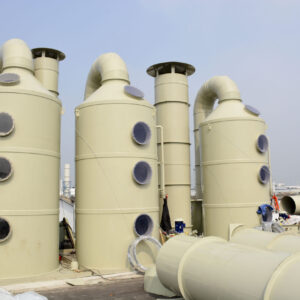
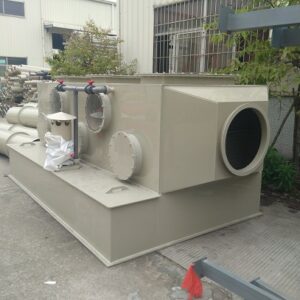
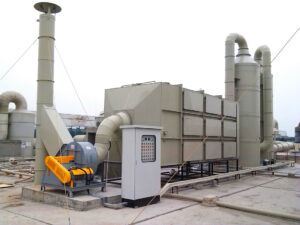
All photos on this page are of actual XICHENG manufacturing, packing, and installation sites, taken in 2021–2025.
Contact the Xicheng Engineering Team Today.
Send us your project specifications. Our engineers will prepare a product configuration and quotation within 24 hours.
Manufacturing Head Office: No. 34 Zhenxing Road, Shenzhen, China
WhatsApp: +86 189 2745 6906
Email: xicheng023@outlook.com