
PP/PVC Square & Rectangular Duct
Showing all 5 resultsSorted by latest
-
Sale!
 PP/PVC Square & Rectangular Duct
Custom Square Duct | Made-to-Order PP Rectangular Ventilation
Original price was: $30.00.$28.00Current price is: $28.00. Add to cart -
Sale!PP/PVC Square & Rectangular Duct
Square Duct with Flange | Reinforced Rectangular PP Connection Duct
Original price was: $30.00.$28.00Current price is: $28.00. Add to cart -
PP/PVC Square & Rectangular Duct
Lab & Industrial Square Duct | Chemical Resistant Rectangular Ductwork
$30.00 Add to cart -
PP/PVC Square & Rectangular Duct
PP Square Duct | Rectangular Ventilation Air Duct System
$41.00 Add to cart -
PP/PVC Square & Rectangular Duct
Square Rectangular Duct | Space-Saving PP Ventilation Ductwork
$20.00 Add to cart
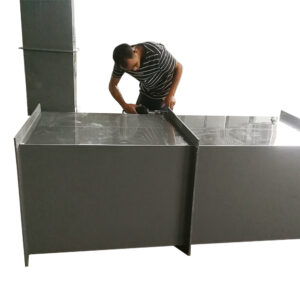
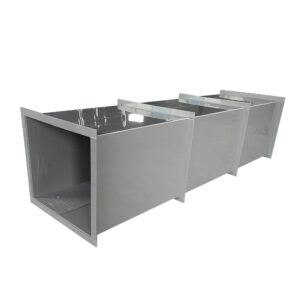

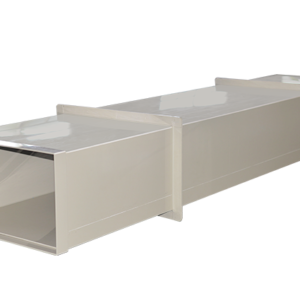

PP/PVC Square & Rectangular Duct — Space-Saving Ventilation for Tight Ceiling Plenums
PP and PVC square and rectangular ventilation duct is the preferred choice for installations where ceiling plenum height is limited and round duct would require excessive vertical clearance. Custom aspect ratios allow ductwork to fit within shallow ceiling voids while maintaining design airflow cross-section. According to ASHRAE duct design guidelines, rectangular duct can reduce installed height by 40-60% compared to equivalent-diameter round duct in space-constrained applications.
| Specification | Options |
|---|---|
| Material | PP (polypropylene), PVC |
| Construction | CNC-welded from PP sheet, uniform wall thickness |
| Aspect Ratios | 1:1 to 4:1 (custom any ratio) |
| Wall Thickness | 3-15mm depending on dimension and negative pressure |
| Flanges | Square flange, drilled to match bolt pattern |
| Accessories | Square elbows, tees, reducers, dampers — matching system |
Square duct vs round duct — when does each make sense?
Round duct offers lower pressure drop per unit cross-section (8-12% less for same area) and is less expensive to fabricate. Square/rectangular duct wins when ceiling height is constrained, multiple ducts must stack in a common plenum, or architectural visibility requires flush fit. For corrosive exhaust, PP square duct provides the same 15-20 year corrosion-free service life as round PP duct. A 10,000 m3/h system at 10 m/s can use a 600mm round duct or a 500x600mm rectangular duct — saving 100mm of plenum height.
Frequently Asked Questions
What aspect ratio is most efficient for rectangular duct?
Aspect ratios close to 1:1 (square) minimize friction loss. Ratios above 4:1 significantly increase pressure drop and should be avoided unless space constraints make it unavoidable.
Can square duct be used with corrosive exhaust?
Yes. PP and PVC square duct resists HCl, HF, H2SO4, and NaOH at -10 C to +90 C. All joints are full-penetration hot-gas welded for leak-free operation.
How is square duct supported?
Square duct requires more frequent support spacing than round duct (every 1.5-2.5m depending on dimension). Flanged connections provide structural rigidity. See our duct design guide for full support specifications.