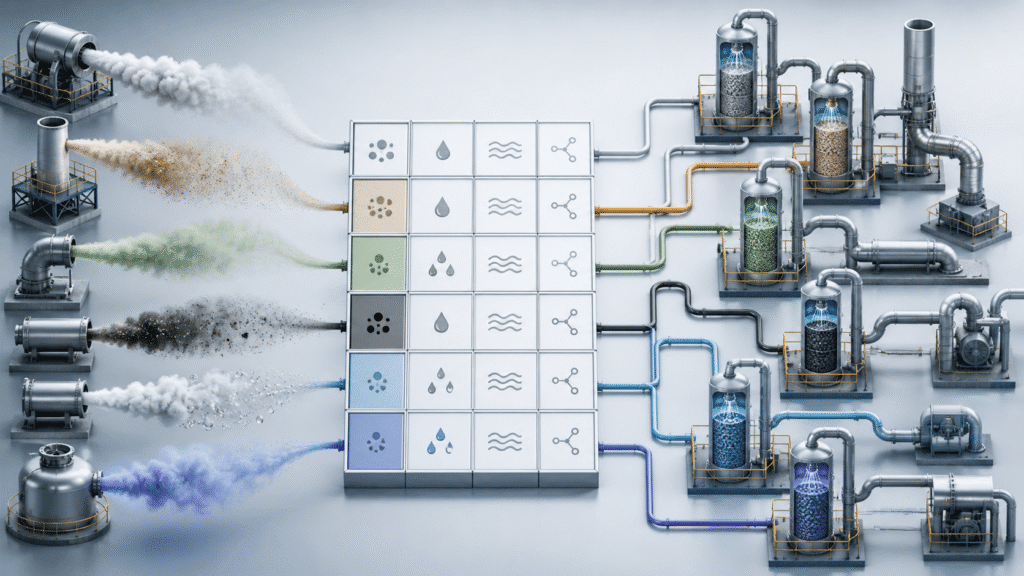
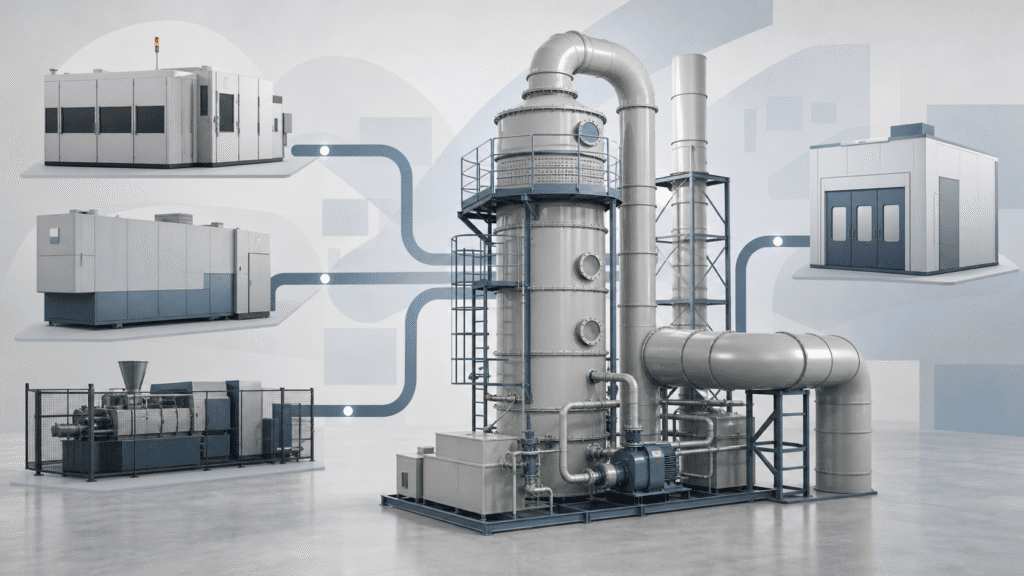
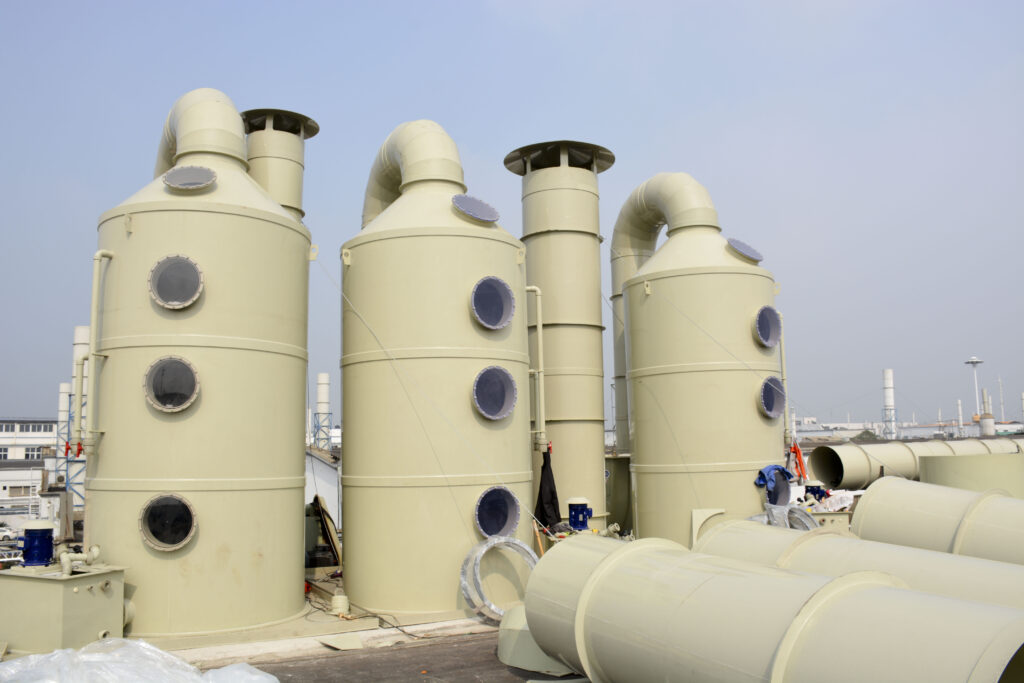
Six distinct industrial pollutant streams routed through a decision matrix to separate packed-tower wet scrubber routes
Blog

Match Your Pollutant to the Right Scrubber Design

Engineering hub that routes H2S, SO2, HF, HCl, chlorine and ammonia loads to the right scrubber chemistry, materials and safety boundary – via one pollutant decision matrix, three screening questions, and a worked three-stream routing example.

Blog

When a Wet Scrubber Fits Plastics Extrusion Exhaust—and When It Does Not

A wet scrubber fits plastics extrusion exhaust when soluble acid gases or capturable particulate dominate, and it does not when poorly soluble VOC or condensable-heavy streams are the load. This guide walks the fit test — source characterization, pollutant form, five criteria, decision matrix — and ends with a source characterization data sheet to send to EHS and your vendor.

Blog

Scrubber Room Design: Layout, Utilities, Drainage and Maintenance Access

A scrubber room is more than the tower footprint: the input list covers envelope and clearances, access, drainage and containment, ventilation, chemical storage, utilities, lifting and code review. This guide builds the Facilities Input Data Sheet your designer, contractor and scrubber supplier confirm before design.

Blog

SO2 Scrubber for Incinerator Exhaust: Design Inputs, Reagent Choice, and Quench Requirements

Incinerator exhaust is not boiler flue gas: SO2 arrives with HCl, fine particulate, and metals at temperatures that require a quench stage. This guide maps furnace type and feed to your acid load, matches your unit to the applicable NSPS or permit limit, and builds the design input sheet — liquid-to-gas ratio, pH, pressure drop, materials, monitoring — that a vendor needs to quote an SO2 scrubber for incinerator exhaust.

Blog

Wet Scrubber Rebuild or Retrofit? An Inspection-Based Decision Guide

Wet scrubber rebuilds and retrofits are a shell-life decision, not an age decision. This guide walks a facility owner from the first degradation signals through a nine-point asset inspection to a repair/rebuild/replace decision matrix, then turns the branch into a supplier-ready scope definition with design inputs and acceptance criteria — without promising fixed service lives or guaranteed savings.

Blog

Wet Scrubber Selection for Glass Manufacturing Furnace Exhaust

Glass furnace exhaust carries solid and condensable particulate, sulfur and halogen acid gases, and trace metal HAPs, and it is not always a wet scrubbing problem. This guide routes the stream between multi-stage wet scrubbing, dry sorbent injection, and filtration against EPA’s AP-42 factors and the NSPS and NESHAP limits, then sizes the multi-stage train of quench, venturi, packed tower, and demister from eight inputs a supplier needs, with a worked example for a container glass furnace.

Blog

Packed-Bed Scrubber Design for Semiconductor Acid-Gas Exhaust: Route the Acid Stream, Size the Tower, Hand Over a Spec

A packed bed scrubber for semiconductor acid-gas exhaust is a counter-current wet scrubber that absorbs HCl, HF and other acids from etch, wet-clean and CVD tool exhaust. This guide covers which of the four fab stream classes belong on a packed-bed scrubber, how the tower captures acid gas and when it fits, HCl versus HF design differences, normal-versus-peak design basis, tower parameters, material and temperature boundaries, demisting, redundancy, monitoring, and a worked example that ends in a 12-field design input sheet you can hand to a supplier.

Blog

H2S Scrubber for Wastewater Tank Vents and Leachate Exhaust

Wastewater tank vents and leachate exhaust can carry H2S above safe odor and exposure levels, so treatment starts with quantification, not equipment choice. This guide covers where vent gas comes from, how to estimate flow and H2S peaks, when a caustic wet scrubber, impregnated activated carbon, biological, or liquid-redox system fits, the six design inputs a vendor needs, a worked 150-cfm example, and inlet/outlet monitoring for acceptance.

Blog

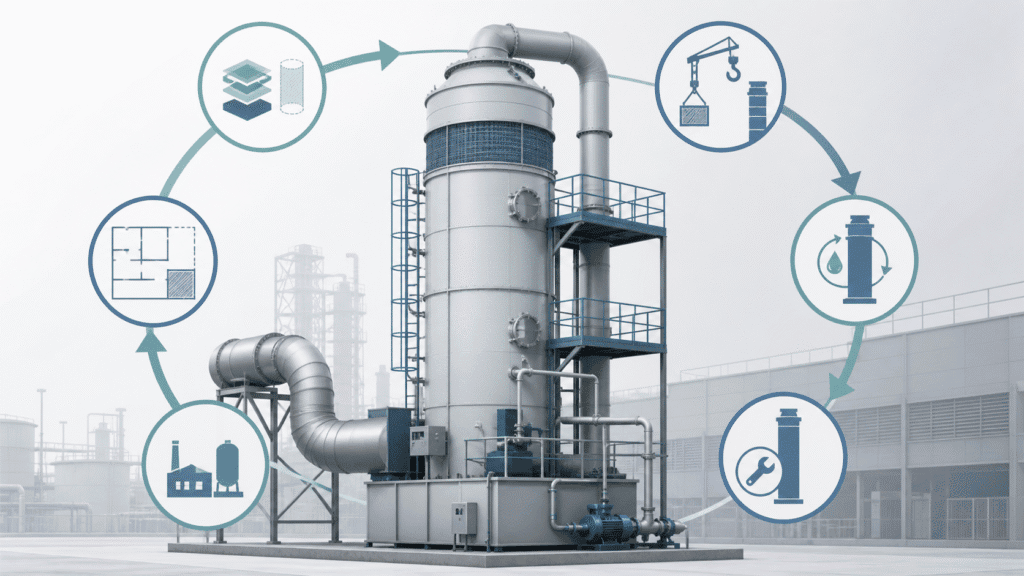
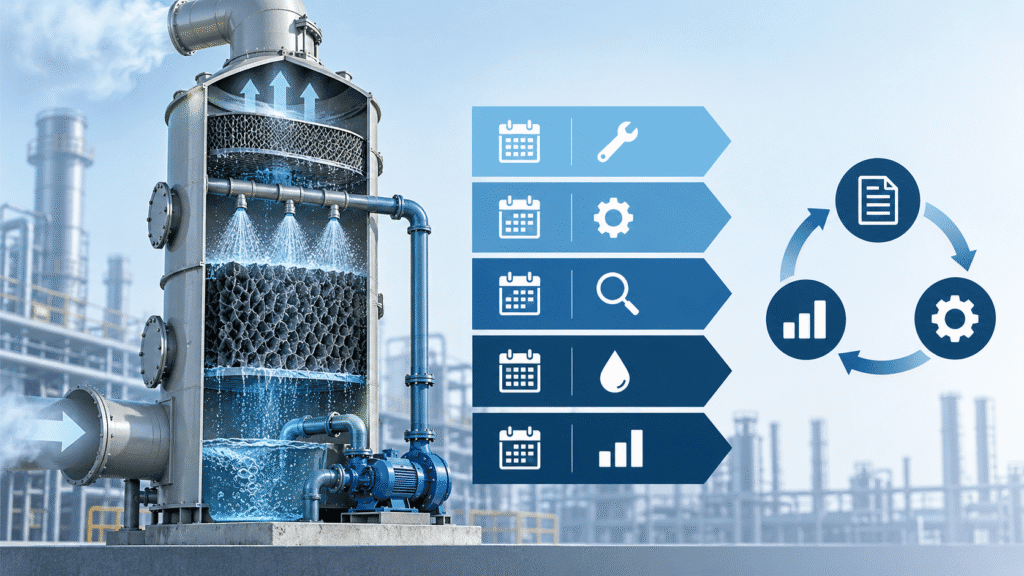
Wet Scrubber Installation Checklist: 5 Phases & Acceptance

Run a wet scrubber installation in five phases: site readiness, receiving, piping and instrumentation, leak testing, and commissioning — with a check item and an acceptance action at every step. This checklist covers foundation and utility verification, incoming inspection, P&ID instrument verification against EPA monitoring indicators, leak testing before energizing, pre-start checks, and commissioning acceptance against design criteria, with a ten-week worked example.

Scroll to Top