
Laboratory Fume Hoods & Exhaust Systems
Showing all 4 resultsSorted by latest
-
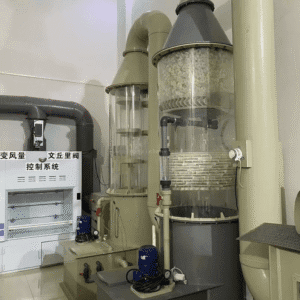
 Industrial Wet Scrubber Systems
Laboratory Fume Hood Scrubber | Lab Exhaust Gas Purification System
$1,299.00 Add to cart -
Laboratory Fume Hoods & Exhaust Systems
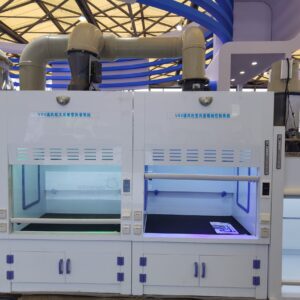
PP polypropylene fume hood for laboratory
$810.00 Add to cart -
Laboratory Fume Hoods & Exhaust Systems
Acid & Alkali Resistant Fume Hood | Mixed-Material Laboratory Ventilation
$810.00 Add to cart -
Laboratory Fume Hoods & Exhaust Systems
PP Laboratory Fume Hood | Variable Air Volume Ventilation System
$1,000.00 Add to cart


Laboratory Fume Hoods & Exhaust Purification Systems
Laboratory fume hoods capture and contain chemical vapors, particulates, and hazardous fumes at the source before they enter the laboratory breathing zone. XICHENG EP manufactures PP, SS316L, and FRP fume hoods for chemical, pharmaceutical, and research laboratories. Complete systems include hood + duct + scrubber or carbon filter for end-to-end exhaust treatment. According to OSHA laboratory safety standard 29 CFR 1910.1450, fume hood face velocity must be maintained at 0.4-0.6 m/s (80-120 fpm) for effective containment.
| Specification | Options |
|---|---|
| Material | PP (acid/alkali), SS316L (high-temp, solvents), FRP |
| Width | 1200mm, 1500mm, 1800mm (standard); custom sizes |
| Work Surface | PP, ceramic, epoxy resin, stainless steel |
| Ventilation | VAV (variable air volume), CAV (constant air volume) |
| Sash | Vertical rising, horizontal sliding, combination |
| Exhaust Treatment | Integrated wet scrubber or carbon filter options |
PP vs SS316L vs FRP fume hood — material selection guide
PP fume hoods are ideal for inorganic acids (HCl, HF, H2SO4, HNO3) and alkalis — the standard choice for wet chemistry and digestion work. SS316L suits high-temperature applications and organic solvent work but corrodes in HCl or chloride environments. FRP offers higher temperature resistance than PP and better acid resistance than steel, at 40-60% higher cost. Most analytical and wet chemistry labs choose PP for its combination of chemical resistance, durability, and cost-effectiveness.
Frequently Asked Questions
What face velocity do I need for my fume hood?
0.4-0.6 m/s (80-120 fpm) per OSHA and ANSI/AIHA Z9.5. Higher velocities create turbulence that can draw contaminants out of the hood. Lower velocities fail to contain. VAV systems maintain constant face velocity as sash position changes.
Do I need a scrubber with a fume hood?
If the exhaust contains acid gases, VOCs, or regulated pollutants that exceed local emission limits, yes. A fume hood captures contaminants; a scrubber or carbon filter removes them before atmospheric release. Many facilities combine PP fume hoods with a common exhaust manifold feeding a central scrubber. See our lab scrubber guide.
Can PP fume hoods handle perchloric acid?
Standard PP fume hoods should NOT be used with perchloric acid due to explosion risk from perchlorate crystal accumulation. Special wash-down perchloric acid hoods with SS316L construction and water spray systems are required.