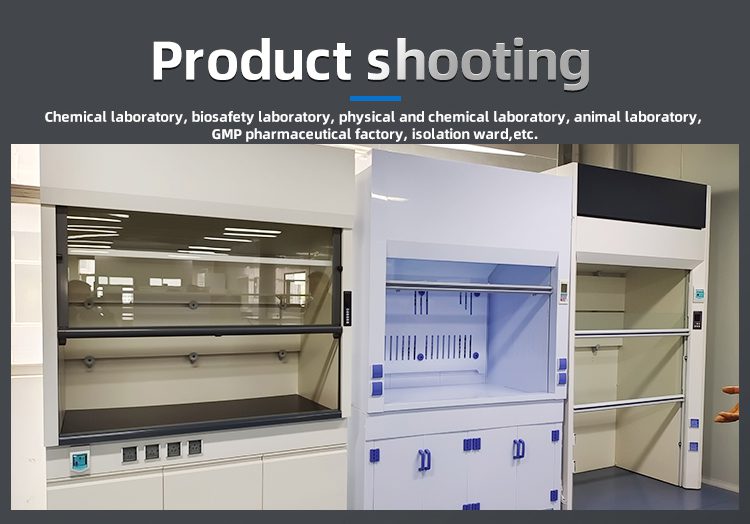
Product Overview
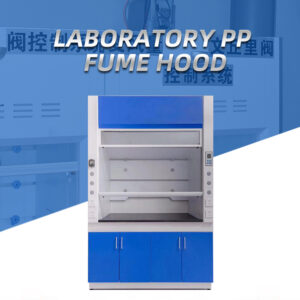
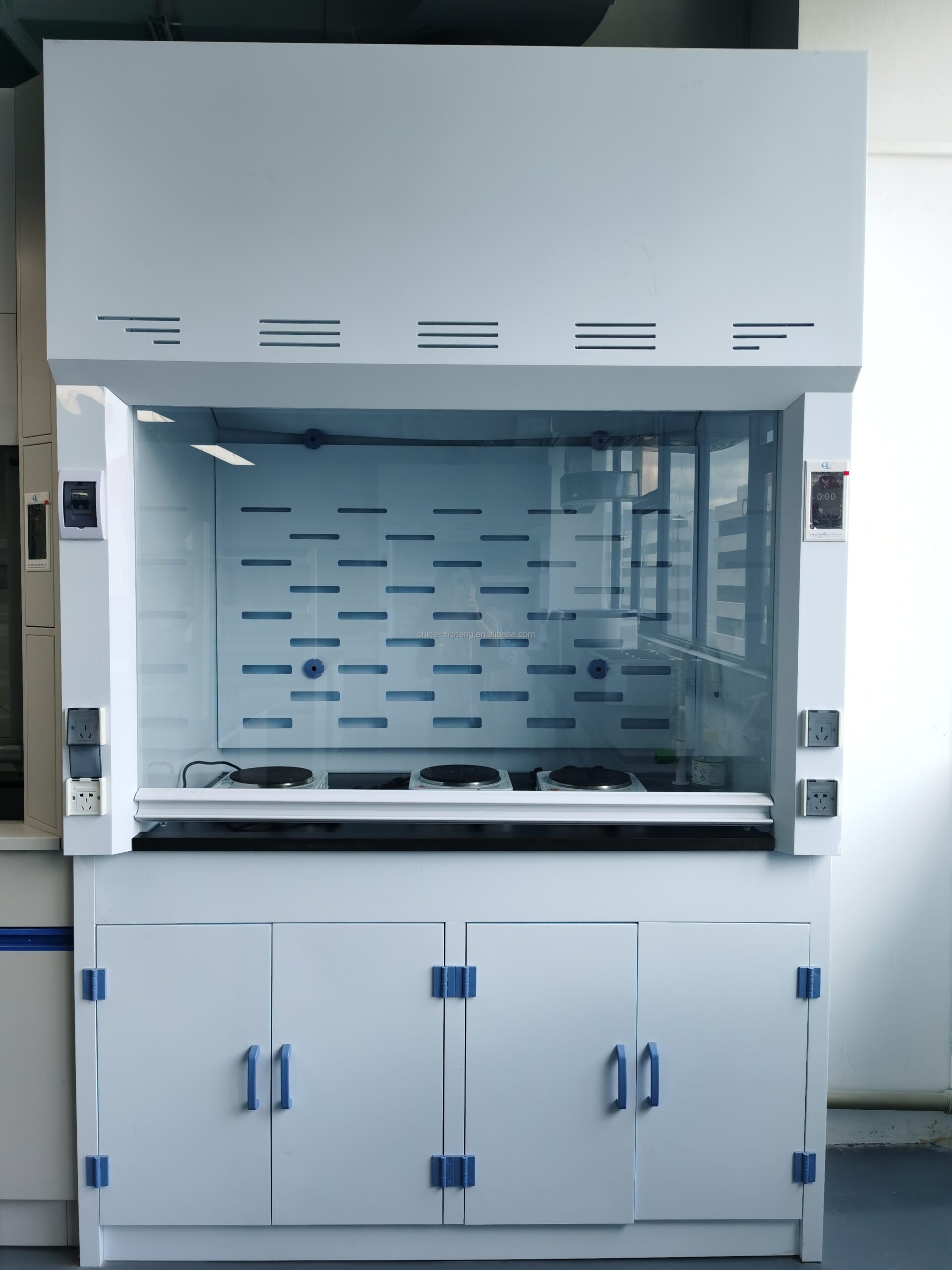
PP polypropylene laboratory fume hood with variable air volume (VAV) ventilation — designed for chemical, pharmaceutical, and research laboratories handling corrosive chemicals, acid digestion, solvent work, and hazardous substance manipulation. The VAV system integrates air quality sensors to automatically adjust exhaust volume based on real-time pollutant concentration, maintaining operator safety while reducing energy consumption by supplying only the airflow actually needed rather than running at constant maximum.
| Application | Chemical laboratory operations, acid handling, solvent work, sample digestion, hazardous substance containment |
| Material | Virgin PP (Polypropylene) body; tempered glass sash; PP work surface |
| Ventilation | Variable air volume (VAV) with automatic sensor-based adjustment; 0.3-0.5 m/s face velocity |
| Standard size | 2,350 x 800 x 1,200 mm (W x D x H); custom sizes available |
| Door height | 850 mm operable sash opening |
| Color | White |
| Lead time | 15-25 days |
| Warranty | 12 months structure; electrical components per manufacturer warranty |
How Variable Air Volume (VAV) Improves Fume Hood Performance
Conventional constant-air-volume (CAV) fume hoods run at a fixed exhaust rate regardless of what is happening inside — sash open or closed, intense chemical work or idle. VAV fume hoods use real-time monitoring to match airflow to actual demand, improving both safety and operating cost:
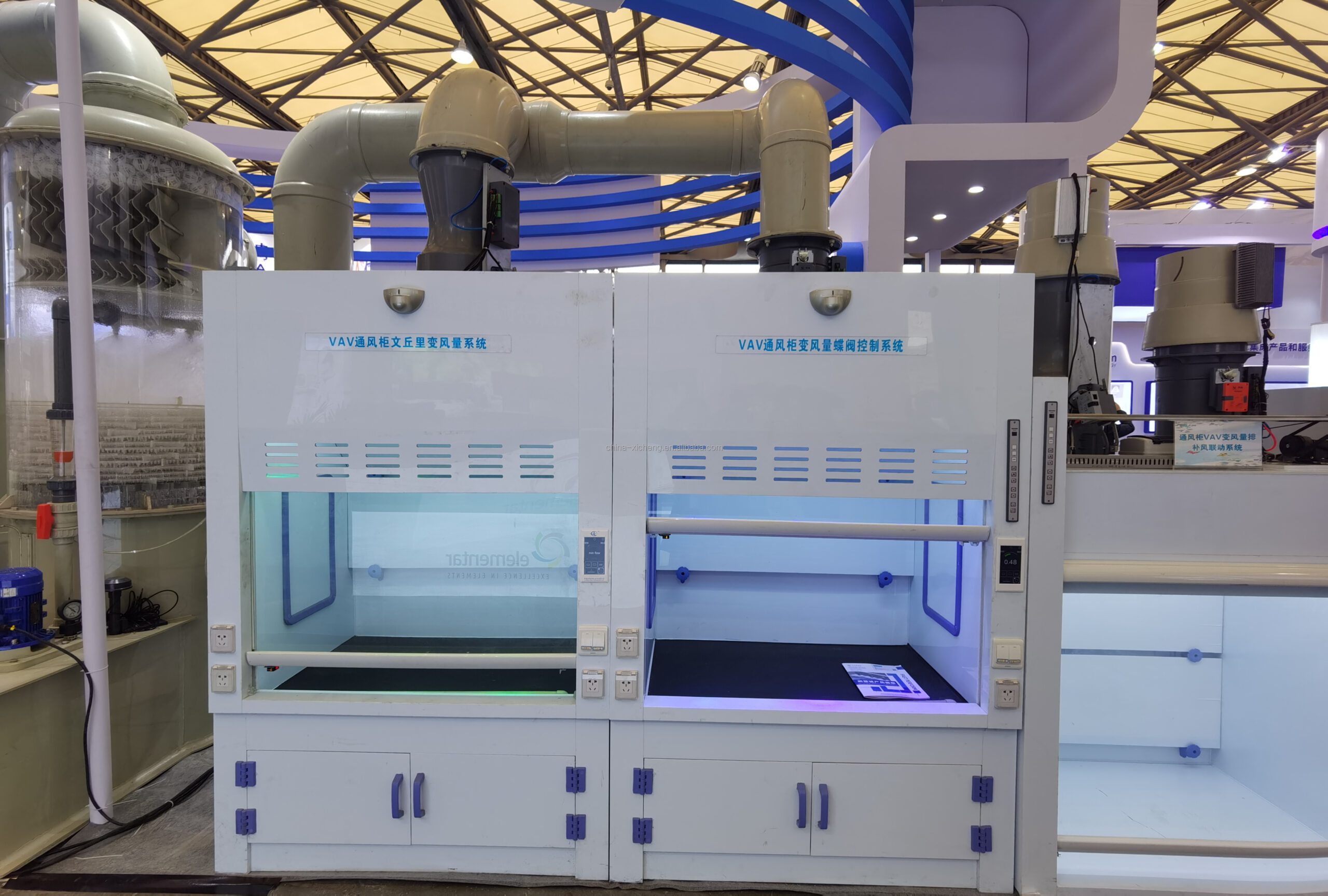
- Sensor-driven air quality monitoring. Integrated gas concentration sensors, temperature sensors, and sash position sensors continuously monitor conditions inside the hood. When pollutant concentrations exceed safety thresholds, the system automatically increases exhaust volume to capture and remove contaminants — no manual adjustment needed. This aligns with OSHA laboratory safety standards for chemical exposure control.
- Automatic air volume adjustment. The controller receives sensor feedback and modulates fan speed accordingly. During active chemical work, the system increases airflow to maintain safe containment. During idle periods with the sash closed, airflow reduces to a minimum holding level — typically 50-70% lower than maximum, dramatically cutting HVAC energy costs.
- Energy savings without safety compromise. Laboratory ventilation is one of the largest energy consumers in research facilities — a typical fume hood exhausting 1,500 m3/h continuously can cost USD 3,000-5,000 per year in HVAC energy alone. VAV systems reduce this by 40-60% by supplying air on demand rather than continuously at maximum. Read about fume hood energy standards in US DOE laboratory energy efficiency guidelines.
Why Xicheng
16 years, 2600+ systems shipped worldwide. Laboratory fume hoods are safety-critical equipment — a poorly designed hood with inadequate containment, uneven face velocity, or chemical-incompatible materials puts laboratory personnel at risk:
- PP construction for corrosive environments. Most standard fume hoods use epoxy-coated steel or phenolic resin panels. PP provides superior resistance to a wider range of chemicals — particularly strong acids (HCl, HNO3, H2SO4, HF at moderate concentrations), alkalis, and oxidizing agents that corrode steel and degrade epoxy coatings within months. Smooth non-porous PP surfaces resist chemical staining and are easy to decontaminate.
- Uniform face velocity distribution. Our hoods maintain 0.3-0.5 m/s face velocity across the entire sash opening — tested and verified at multiple measurement points. Uneven airflow creates dead zones where contaminants can escape into the breathing zone. Our baffle and plenum design directs airflow evenly from the work surface to the exhaust collar.
- Completed installations across laboratory types. University research labs, pharmaceutical quality control labs, industrial chemical labs, hospital pathology labs, environmental testing facilities, and electronics failure analysis labs. Each has different chemical usage profiles and safety requirements — we configure the hood accordingly.
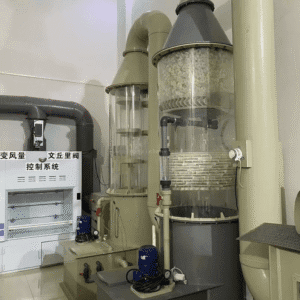
- System integration ready. Fume hoods connect to the building exhaust system or to a dedicated scrubber/filtration system. We provide the complete chain: fume hood → PP duct → exhaust fan → scrubber or carbon filter → atmospheric discharge. All components are corrosion-resistant and sized as a matched system.
Send your laboratory requirements to xicheng023@outlook.com. We’ll specify the right hood configuration, VAV components, and exhaust treatment system.
Core Advantages
- Superior Chemical Resistance: Virgin PP construction resists acids, alkalis, and organic solvents that corrode standard steel hoods.
- VAV Energy Efficiency: Sensor-driven automatic air volume adjustment reduces HVAC energy consumption by 40-60%.
- Uniform Containment: 0.3-0.5 m/s face velocity evenly distributed across the sash opening for reliable operator protection.
- Easy Installation and Maintenance: Lightweight PP construction for simpler rigging; smooth non-porous surfaces for easy decontamination.
- Custom Configuration: Size, sash type, work surface, VAV components, and exhaust connection all configurable.
Key Specifications
| Model No. | XC-23 |
| Material | Virgin PP (Polypropylene) |
| Function | Lab Experimental Operation — Chemical Containment and Exhaust |
| Ventilation Type | Variable Air Volume (VAV) with sensor-driven automatic adjustment |
| Face Velocity | 0.3-0.5 m/s |
| Sash Opening | 850 mm operable height |
| Standard Size | 2,350 x 800 x 1,200 mm (custom sizes available) |
| Color | White |
| Service Life | 8-10 Years (PP structure) |
| Brand / Origin | Xicheng / China |
Certifications and Compliance
- CE Certified – Laboratory Fume Hood
- RoHS Compliant – PP materials
- ISO 9001 – Quality Management System
- ISO 14001 – Environmental Management System
- SGS Tested – PP Sheet chemical resistance and mechanical properties
- Design Compliance – Systems designed to meet OSHA Laboratory Standard (29 CFR 1910.1450) for occupational exposure to hazardous chemicals in laboratories and US DOE laboratory fume hood energy efficiency standards
How to Order
- You send – Laboratory type, chemicals used, required hood dimensions, number of hoods, building exhaust system details
- We analyze – Chemical compatibility, face velocity requirements, VAV or CAV recommendation, exhaust treatment needs
- We design – Hood configuration (size, sash type, work surface, service fixtures), VAV component specification, duct and exhaust system integration
- You approve – Technical proposal with hood drawings, VAV control schematic, pricing, and delivery schedule
- We build – 15-25 days. PP fabricated and welded, sash and hardware installed, face velocity tested before shipment
- We ship – Installation drawings, VAV commissioning procedure, and maintenance manual included.
Contact xicheng023@outlook.com or WhatsApp +86 18927456906 — proposal within 24 hours.
Complete Your System
- Laboratory Exhaust Purification System – Scrubber + carbon filter for lab exhaust treatment
- Acid & Alkali Resistant Fume Hood – Mixed-material hood for aggressive chemistry
- PP Exhaust Duct – Corrosion-resistant ductwork for lab ventilation
- PP/FRP Centrifugal Fan – Corrosion-resistant exhaust fan
Global Shipping
We ship laboratory fume hoods worldwide across Southeast Asia, South Asia, Middle East, Africa, Europe, Americas, and Oceania. Standard sea freight; PP’s light weight reduces freight cost vs steel hoods. Export documentation included.
FAQ
What is the difference between VAV and CAV fume hoods?
Constant air volume (CAV) hoods exhaust at a fixed rate regardless of sash position or activity level — simpler to install but much more expensive to operate. Variable air volume (VAV) hoods use sensors and a controller to adjust exhaust flow in real time: higher during active work with the sash open, lower during idle with the sash closed. VAV typically reduces HVAC energy costs by 40-60% and pays back the additional controls cost within 2-3 years.
Which chemicals is a PP fume hood compatible with?
PP resists most inorganic acids (HCl, H2SO4, HNO3 at moderate concentrations, HF), alkalis (NaOH, KOH), salt solutions, and many organic solvents at ambient temperature. It is not suitable for concentrated oxidizing acids (fuming HNO3, H2SO4 above 90%), strong oxidizing agents (H2O2 above 30%, perchloric acid), or certain chlorinated solvents at elevated temperature. Send us your chemical list and we’ll verify compatibility.
How is the fume hood connected to the building exhaust?
The hood has a standard exhaust collar (typically 250-315 mm diameter) that connects to PP ductwork leading to the building’s exhaust system. We provide matching PP ducts and a corrosion-resistant exhaust fan sized for your hood’s airflow and the duct system’s pressure drop. If your building does not have a dedicated lab exhaust system, we can provide a standalone exhaust treatment system.