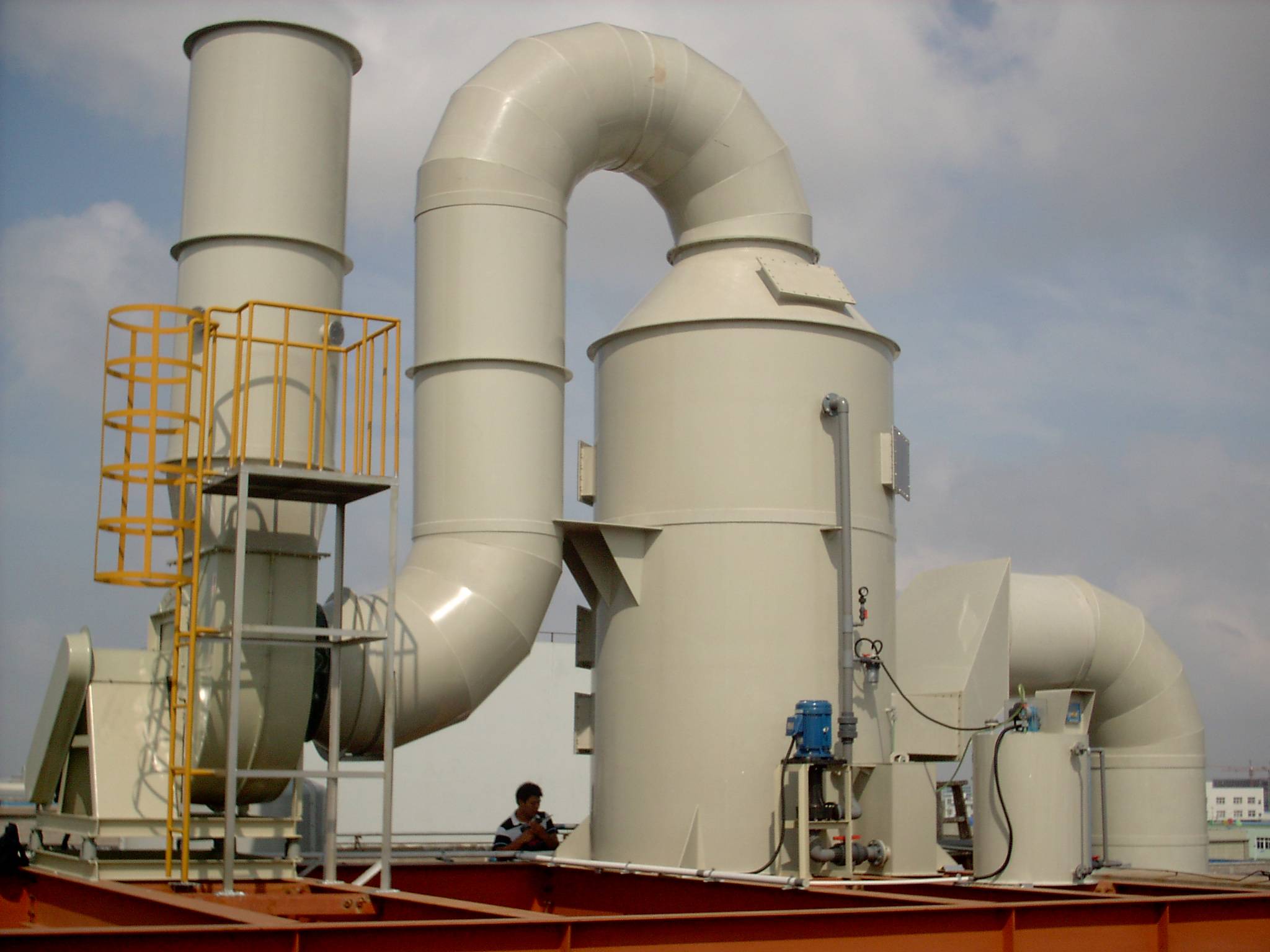
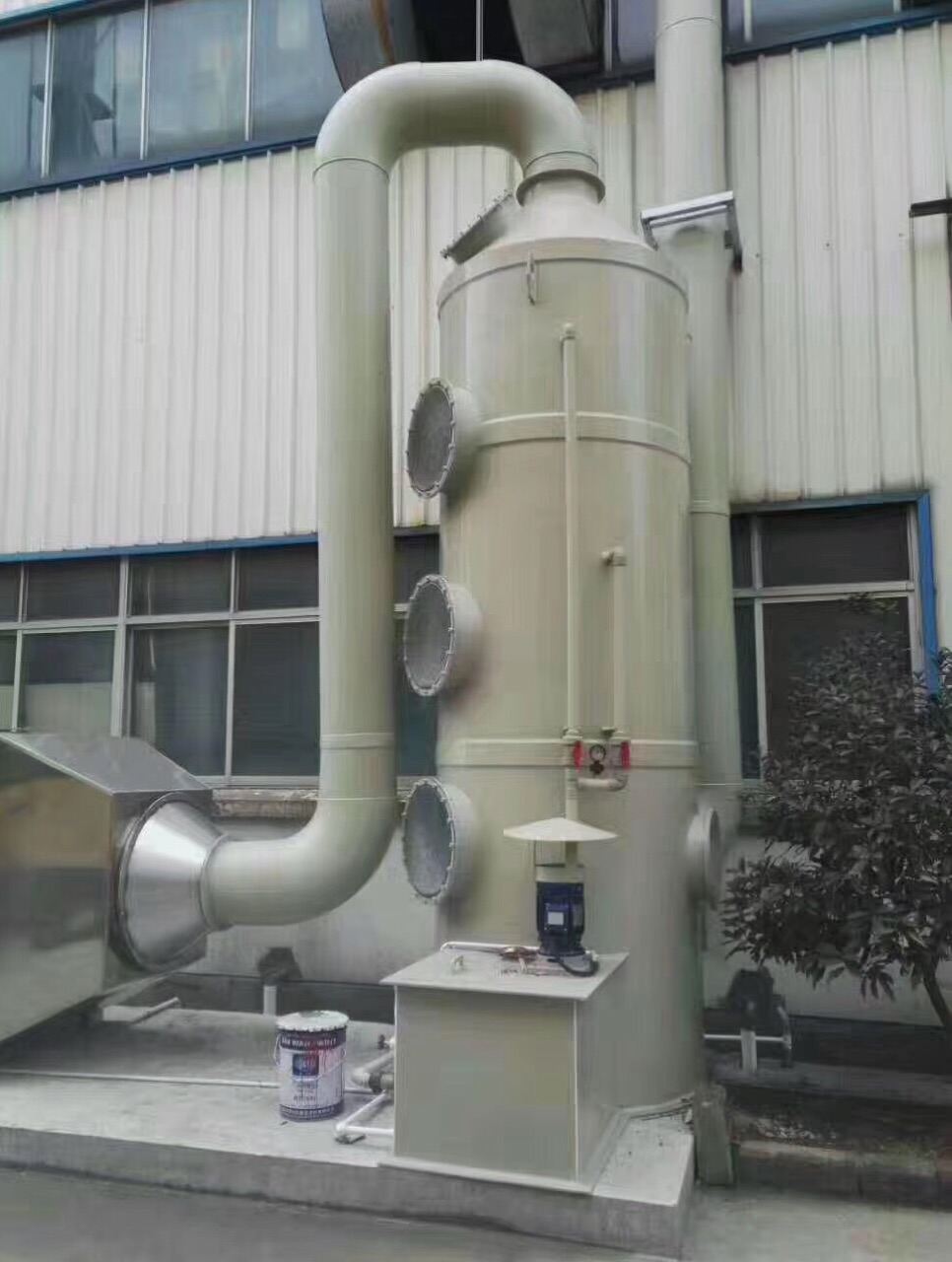
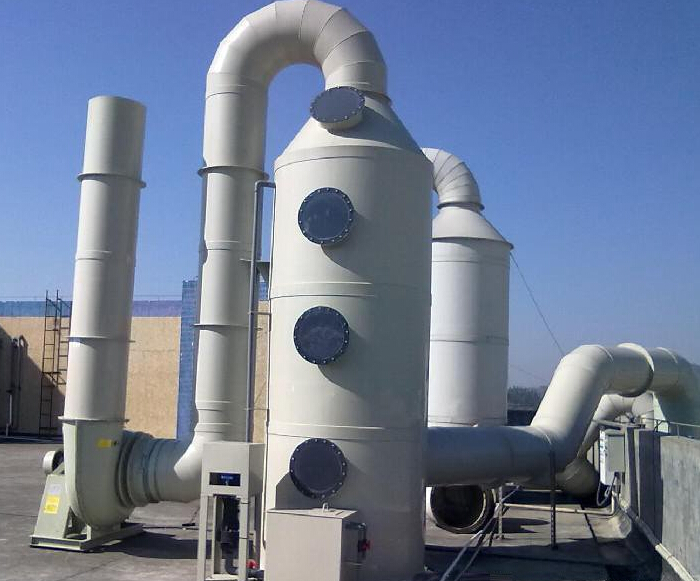
Product Overview
Industrial spray scrubber tower for acid gas and odor removal. Counter-current spray + packed bed design. Air volume 50-215000 m3/h, removal efficiency over 95%. Built-to-order from your gas composition and emission target.
| Application | Acid gas scrubber (HCl, SO2, H2S, NH3, NOx, Cl2, VOCs) |
| Material | Virgin PP / FRP / SS — per your gas and temperature |
| Sizing | Custom to your air volume and gas load |
| Regions | Supplied globally: Southeast Asia, Middle East, Africa, Europe, North America, South Asia, Oceania |
| Lead time | Standard 7-15 days; large custom 20-35 days |
| Warranty | 12 months structure warranty |
Why Xicheng
16 years, 2600+ systems shipped worldwide. We engineer the full exhaust treatment chain: scrubber, ductwork, fan, and controls from a single supplier.
- Material integrity: Virgin PP, no recycled filler. Material certs published with every order.
- Not one-size-fits-all: Spray pattern, packing depth, and scrubbing medium matched to your gas composition. We ship to the spec, not from stock.
- Full system capability: Scrubber + PP duct + centrifugal fan + automated dampers. One supplier, one warranty, one point of contact.
- Post-delivery support: Remote commissioning, maintenance schedules, and spare parts stocked in Shenzhen.
Read our comparison: Xicheng PP Wet Scrubber vs Tri-mer
Core Advantages
- High Purification Efficiency: Delivers high dust removal and desulfurization efficiency. Effectively removes various industrial organic and inorganic waste gases, including HCL, HF, NH3, H2SO4, CrO3, HCN, NAOH, H2S, and HCHO.
- Durable and Premium Material: Manufactured using new PP material, offering excellent anti-corrosion and wear-resistant properties, ensuring a long service life and high cost-performance.
- Compact Design and Low Consumption: Features a simple structure that occupies minimal space. Operates stably with low energy consumption.
- Easy Installation and Operation: Improved with a floating packing layer, it is highly practical, easy to install, and simple to operate.
- Flexible Customization and After-Sales Service: Supports personalized customization; sizes and specifications can be adjusted according to customer needs and drawings. Comes with a 1-year warranty, professional installation guidance, and comprehensive overseas after-sales support.
Key Specifications
| Model No. | XC-1 |
| Material | New PP (Polypropylene) Material |
| Function | Waste Gas Treatment (Chemical Treatment) |
| Purifying Technology | HEPA |
| Automation | Automatic |
| Service Life | 8-10 Years |
| Color | Beige / Dark Grey |
| Environmental Temperature | Normal Temperature |
| Brand / Origin | Xicheng / China |
Certifications & Compliance
- CE Certified – Wet Scrubber, Exhaust Fan, Air Valve
- RoHS Compliant – Adsorption Tower materials
- ISO 9001 – Quality Management System
- ISO 14001 – Environmental Management System
- SGS Tested – PP Sheet, FR-PP Flame Retardant Sheet, PP Pipe, FR-PP Flame Retardant Pipe, PVC Sheet
- Design Compliance – Systems designed to meet EU Industrial Emissions Directive (2010/75/EU) and US EPA Chemical Manufacturing NESHAP per project requirements
Model Selection Table
Standard model range — all dimensions in millimeters. Custom sizes outside this range available on request.
| Air Volume (m3/h) | Diameter (mm) | Thickness (mm) | Drain Outlet | Water Tank (mm) | Inlet/Outlet Pipe | Pump (kW) | Air Resistance (Pa) |
|---|---|---|---|---|---|---|---|
| 3,000 | 800 | 8 | DN32 | 600x700xH700 | 315 | 0.75 | 500 |
| 5,000 | 1,000 | 8 | DN40 | 600x800xH700 | 400 | 1.5 | 500 |
| 8,000 | 1,200 | 8 | DN40 | 600x1000xH700 | 500 | 2.2 | 500 |
| 10,000 | 1,500 | 10 | DN40 | 700x1000xH700 | 550 | 2.2 | 500 |
| 12,000 | 1,600 | 10 | DN50 | 700x1000xH700 | 600 | 3.75 | 500 |
| 15,000 | 1,800 | 10 | DN50 | 700x1200xH700 | 650 | 3.75 | 500 |
| 20,000 | 2,000 | 10 | DN50 | 700x1200xH700 | 750 | 5.5 | 500 |
| 25,000 | 2,200 | 10 | DN50 | 700x1200xH700 | 950 | 5.5 | 600 |
| 30,000 | 2,500 | 12 | DN65 | 700x1200xH700 | 1,000 | 5.5 | 600 |
| 35,000 | 2,700 | 12 | DN65 | 1000x700xH700 | 1,100 | 7.5 | 600 |
| 40,000 | 2,900 | 12 | DN65 | 1000x700xH700 | 1,200 | 7.5 | 600 |
| 45,000 | 3,000 | 12 | DN65 | 1000x700xH700 | 1,250 | 7.5 | 600 |
Custom sizes: Up to 215,000 m3/h air volume. Contact our engineers for sizing beyond the standard model range — xicheng023@outlook.com.
Technical Specifications
| Material | Virgin PP (0.92 g/cm3; calcium-filled optional) |
| Structure | Vertical counter-current: inlet – sump – packing layer – spray nozzles – demister – outlet |
| Packing media | PP Pall rings / Tellerette rings / hollow balls (application-specific) |
| Spray system | PP spiral nozzles, 360-degree coverage, 0.3-0.5 MPa |
| Recirculation pump | Chemical-duty PP/FRP centrifugal |
| Demisting | PP mesh or chevron, outlet moisture under 75 mg/Nm3 |
| Max inlet temp | 60 C standard / 80 C reinforced |
| Particle tolerance | under 150 mg/m3 inlet |
| Purification efficiency | over 95% (gas-specific; ask us for your composition) |
| Scrubbing media | NaOH, KOH, Na2CO3, H2SO4, or water – per your gas |
| Design standard | GB/T 13931-2017; CE certified. See US EPA Chemical Manufacturing NESHAP for applicable emission requirements. |
| System includes | Scrubber body + packing + demister + recirculation pump + pH control (optional) |
Gas Purification Rate
| Gas Name | Formula | Cleaning Agent | Removal Efficiency |
|---|---|---|---|
| Hydrochloric Acid | HCl | H2O | 90-95% |
| NaOH | 95-99% | ||
| Hydrofluoric Acid | HF | H2O | 90-95% |
| NaOH | 95-99% | ||
| Ammonia Gas | NH3 | H2O | 90-95% |
| H2SO4 | over 99% | ||
| Cyanic Acid | HCN | NaOH | 90-98% |
| Sulfur Dioxide | SO2 | NaOH | 95-99% |
| Chlorine | Cl2 | NaOH | 95-99% |
| Hydrogen Sulfide | H2S | NaOH | 95-99% |
| Sulfuric Acid | H2SO4 | H2O | 95-99% |
| Chromic Acid | CrO3 | H2O | 95-99% |
| Sodium Hydroxide | NaOH | H2O | 95-99% |
| Nitric Acid | HNO3 | H2O | 90-99% |
Not sure which configuration fits your gas? Gas Scrubber Selection Guide (Multi-Stage)
PP vs FRP material decision: PP vs FRP Wet Scrubber Comparison
How to Order
- You send – Gas composition, air volume (m3/h), target emission standard, site constraints
- We design – Scrubber diameter, packing depth, nozzle layout, pump selection, P&ID drawing
- You approve – Technical proposal with performance guarantee and pricing
- We build – 7-35 days fabrication + quality inspection
- We ship – Packaged for sea freight; installation drawings included
- You operate – Remote commissioning support included; spare parts available
Contact our engineers at xicheng023@outlook.com or WhatsApp +86 18927456906 — proposal within 24 hours.
Complete Your System
- PP Exhaust Duct and Fittings – Corrosion-resistant ductwork to connect scrubber to emission source
- PP Centrifugal Fan/Blower – Matched fan sized to scrubber pressure drop
- PP Electric Air Dampers – Automated airflow control for multi-source systems
- PP Activated Carbon Adsorption Tower – Downstream VOC/odor polishing stage
Global Shipping
We ship worldwide with documented export experience across:
- Southeast Asia: Malaysia, Singapore, Indonesia, Philippines, Thailand, Vietnam, Myanmar, Cambodia
- South Asia: India, Pakistan, Bangladesh, Sri Lanka
- Middle East: UAE, Saudi Arabia, Qatar, Oman, Kuwait, Bahrain, Israel
- Africa: Kenya, Nigeria, South Africa, Egypt, Ethiopia, Tanzania, Ghana
- Europe: Germany, UK, France, Italy, Spain, Netherlands, Poland, Turkey, Russia
- Americas: USA, Canada, Mexico, Brazil, Chile, Colombia, Argentina
- Oceania: Australia, New Zealand
Sea freight is our standard; air freight available for small units. We handle all export documentation including Certificate of Origin, packing list, and bill of lading.
Internal Structure & Working Process
Tower Internal Structure
- Liquid storage tank: Stores absorption liquid and provides circulation for the spray system
- Air inlet section: Distributes incoming gas evenly across the tower cross-section
- Packing layer: Filled with PP Pall rings or Raschig rings to maximize gas-liquid contact area
- Spray system: Multiple layers of high-efficiency nozzles that atomize absorption liquid into fine droplets
- Demister layer: Removes liquid droplets from the treated gas before discharge
Two Operating Modes
Mode 1: Continuous Industrial Waste Gas Treatment
- Contaminated gas is drawn into the tower through the air inlet by a centrifugal fan
- Gas flows upward through the packing layer, countercurrent to the downward-spraying absorption liquid
- Pollutants are absorbed into the liquid phase through mass transfer
- Treated gas passes through the demister to remove entrained droplets
- Clean gas is discharged through the exhaust stack
- Absorption liquid is collected in the tank and recirculated by the pump
Mode 2: Chlorine Leakage Emergency Treatment
- Chlorine leakage alarms in the cylinder room and chlorination room detect gas presence
- System automatically activates, closing ventilation dampers and starting the fan and pump
- Contaminated air is drawn from the sealed room into the absorption tower
- Chlorine reacts with ferrous chloride solution in the packing layer
- Treated air is returned to the sealed room, creating a closed circulation
- Reaction liquid flows to the regeneration tank where iron filings convert ferric chloride back to ferrous chloride
- Regenerated absorbent is pumped back to the spray system for continuous use
Typical Application Scenarios
General Industrial Applications
- Chemical plants: Treatment of acid mist, alkaline fumes and organic solvent vapors
- Electroplating & metal finishing: Removal of chromic acid, sulfuric acid and cyanide fumes
- Pharmaceutical manufacturing: Exhaust gas treatment from production processes
- Semiconductor industry: Treatment of toxic process gases and chemical fumes
- Wastewater treatment plants: Odor control and hydrogen sulfide removal
Specialized Chlorine Treatment Applications
- Water treatment plants with chlorine disinfection systems
- Chlorine production and storage facilities
- Pulp and paper mills using chlorine bleaching
- Swimming pool chlorination facilities
- Chemical warehouses storing chlorine cylinders
Matching System Components
- PP Ventilation Ducts and fittings
- Anti-corrosion Centrifugal Fans
- Activated Carbon Adsorption Towers for VOC and odor removal
- PP Storage Tanks for absorbent storage
- PP Butterfly Valves for flow control
- Chlorine Leakage Alarms and control systems
Operation & Maintenance Guidelines
Best Fit Applications
Not Recommended / Engineering Limits
- Fine dust (<5 micron): Packing will blind rapidly. Use a venturi scrubber or wet ESP for fine particulate.
- Sticky/tarry particulate: Tars and polymers will foul packing irreversibly. Pre-treatment required.
- Very high dust loading (>NEEDS_HUMAN_INPUT mg/Nm³): A cyclone or baghouse upstream is necessary.
This packed tower scrubber handles simultaneous gas and dust removal:
- Target gases: Soluble acid gases + moderate particulate loading
- Airflow: 3,000–45,000 m³/h
- Particulate size: >5 microns (finer particles require a mist eliminator or wet ESP downstream)
- Removal efficiency: >99% gas, >95% particulate at design conditions
- Best industries: Chemical processing, metal finishing, incineration exhaust
Regular Maintenance Schedule
- Daily: Check liquid level in the storage tank, monitor pump and fan operation
- Weekly: Inspect spray nozzles for clogging, clean filters
- Monthly: Test emergency operation system for 10 minutes, check pH level of absorbent
- Quarterly: Inspect packing layer for fouling, clean or replace as needed
- Annually: Perform comprehensive inspection of all components, replace worn parts
Safety Precautions
- Ensure the control box has uninterrupted power supply at all times
- Keep chlorine cylinder rooms and chlorination rooms closed when not in use
- In case of chlorine leakage, immediately close all doors and windows and activate the emergency system
- Always wear appropriate personal protective equipment when handling absorption liquid
- If absorption liquid comes into contact with skin or eyes, rinse immediately with plenty of water
- Perform regular maintenance on pumps and fans to ensure reliable operation
<h2
Selection Notes
When a Spray Tower Is a Good Fit
- Gas contains moderate particulate loading that would foul packed beds
- Open tower design is preferred for low-maintenance or intermittent operation
- Airflow range within 1,000–50,000 m³/h (single tower)
- Temperature up to 80 °C (PP), 120 °C (FRP)
When Other Technologies May Perform Better
- High-efficiency requirement (>99%): Packed bed scrubbers typically achieve higher mass transfer than spray towers at equivalent energy input.
- Very high concentration gas: Spray towers rely on droplet surface area, which is lower than packed bed surface area. Confirm removal efficiency with engineering for concentrations above NEEDS_HUMAN_INPUT ppm.
- Sub-micron particulate: Open spray towers are less effective for fine particulate (<5 micron). Consider venturi scrubber or wet ESP.
Datasheet and Project Review
A detailed engineering datasheet with dimensional drawing, nozzle schedule, pump specification, and weight estimate can be prepared once the project configuration is confirmed.
To prepare a quotation, we require: gas composition and concentration, flow rate (m³/h) and temperature, target removal efficiency, particulate loading (if applicable), material preference (PP, FRP, SS), and delivery location.
Request a Quote for Spray Tower Scrubber →
>FAQ
Can I get a price without sending specs?
We can give a budget range based on air volume, but an accurate quote requires gas composition and emission targets. A 5,000 m3/h HCl scrubber typically falls in a different range than a 50,000 m3/h multi-gas unit.
What is the smallest/largest scrubber you make?
50 m3/h (single lab fume hood) to 215,000 m3/h (full plant exhaust). Over 215,000 m3/h, we use parallel towers.
What are your payment terms?
T/T (telegraphic transfer) is standard. 30% deposit with order, 70% balance before shipment. For large projects, milestone-based payment schedules are available.
How do you ship and what about customs?
We handle all export documentation. Standard packaging is fumigated wooden crates or reinforced cartons for sea freight. Customs clearance assistance provided.
Gas Scrubber Operating Cost Guide
Acid Scrubber Maintenance Guide
Learn More on Our Blog
Sizing and Design
- How to Size a PP Wet Scrubber
- Gas Scrubber Selection (Multi-Stage)
- Scrubber Packing Media Selection
- Acid Scrubber System Design Engineering
Comparisons
Cost and Maintenance
- Gas Scrubber Operating Cost
- Hidden Costs of Industrial Wet Scrubbers
- Acid Scrubber Maintenance Guide
<!–
Frequently Asked Questions
What gases can this scrubber remove?
This depends on the design configuration. Contact our engineering team with your gas composition for a specific recommendation.
What is the typical lifespan?
PP scrubbers typically last 8-15 years depending on operating temperature and chemical exposure. Annual inspection is recommended after 5 years.
What information is needed for a quotation?
Gas composition and concentration, flow rate (m3/h), temperature, and material preference.
xicheng-engineering-contact:start –>
Contact the Xicheng Engineering Team Today.
Send us your SOx exhaust specifications.
Manufacturing Head Office: No. 34 Zhenxing Road, Shenzhen, China
WhatsApp: +86 189 2745 6906
Email: xicheng023@outlook.com