Product Overview
What This HCl Scrubber Is
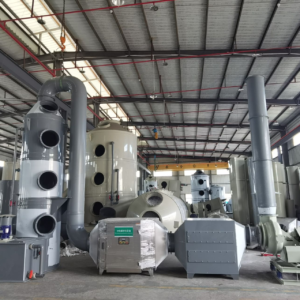
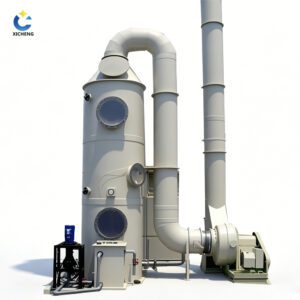
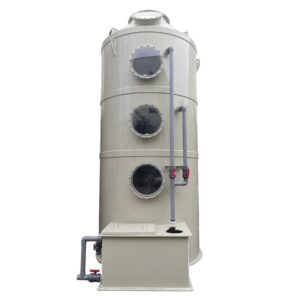
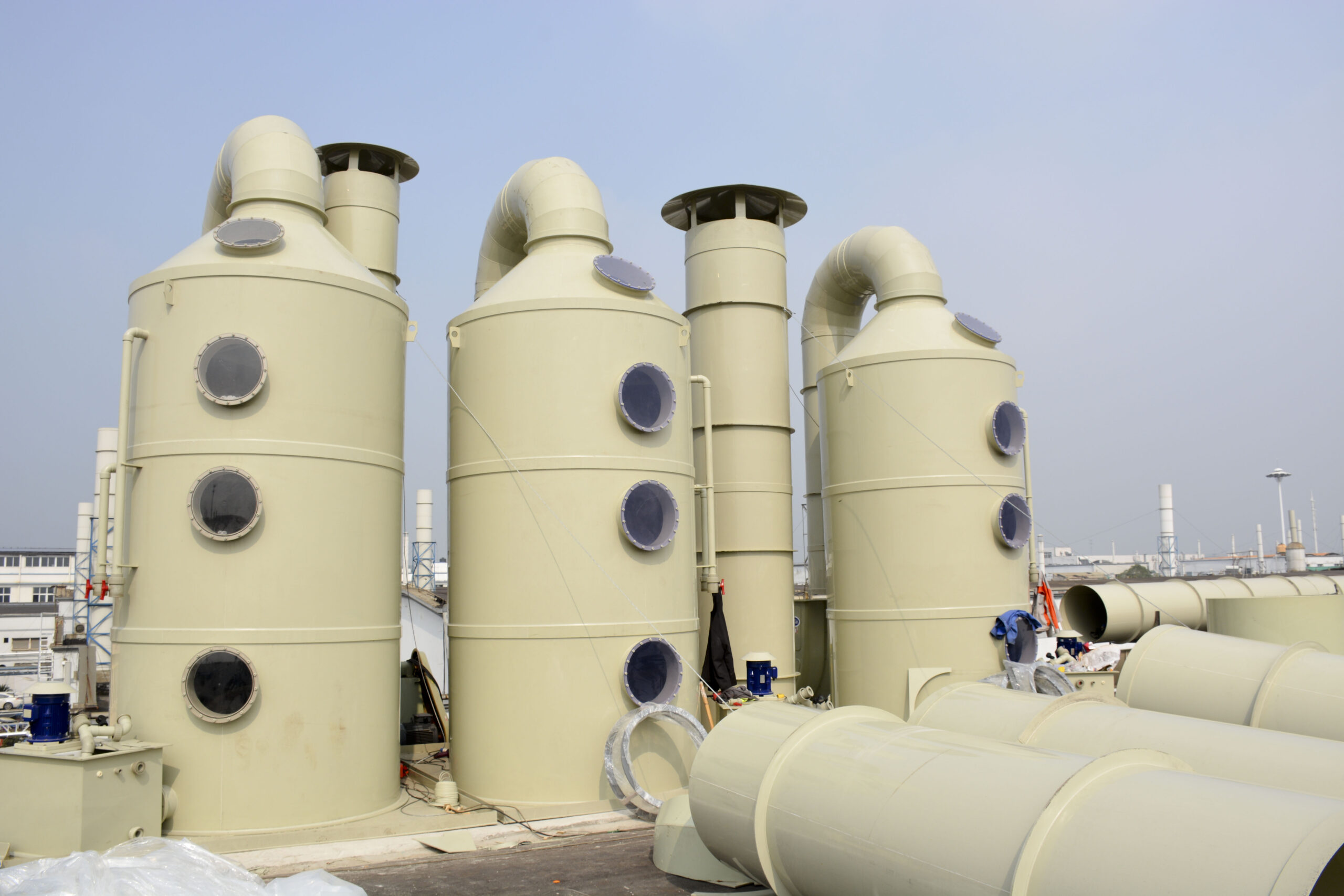
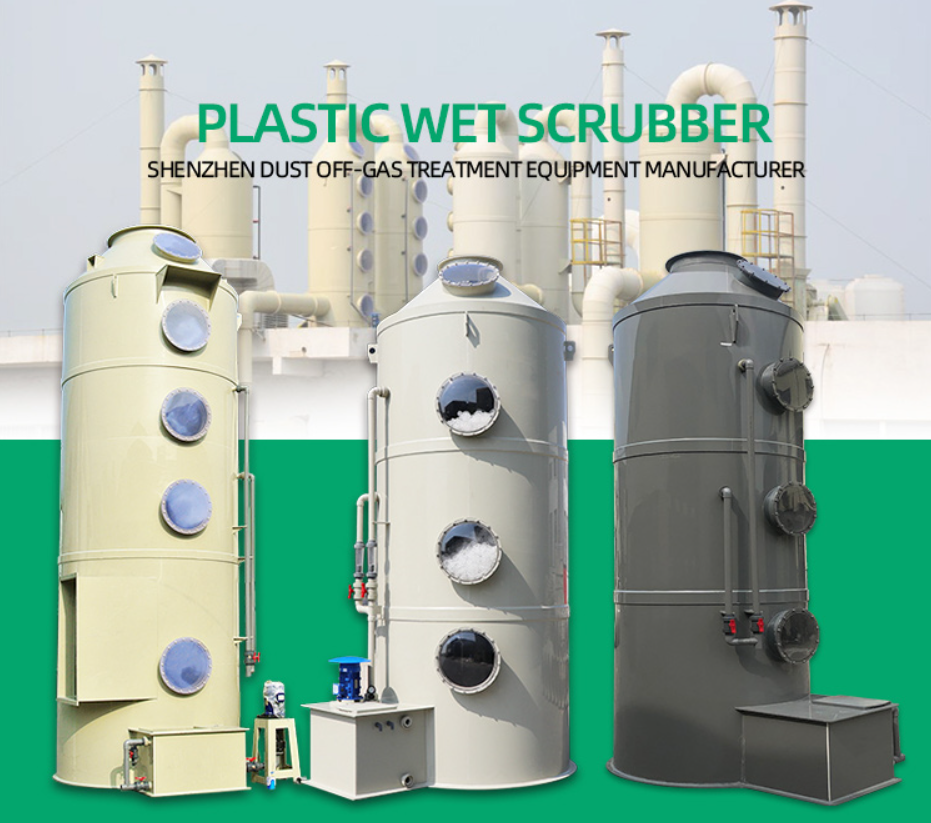
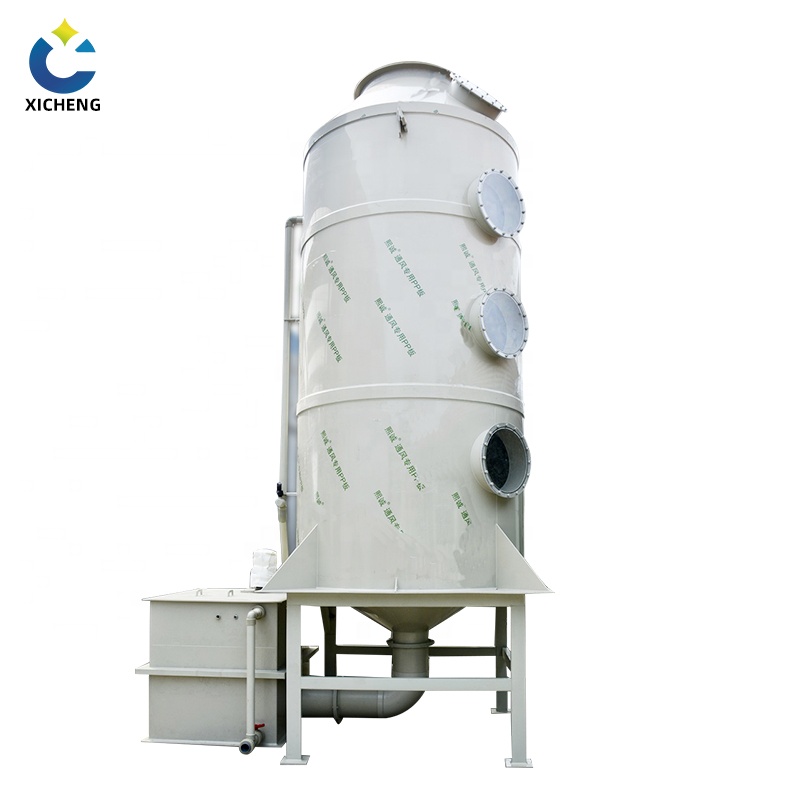
An HCl scrubber is a counter-current packed bed gas absorption system designed to remove hydrochloric acid (HCl) gas and acid mist from industrial exhaust streams. The gas enters at the bottom and flows upward through a bed of packing media while a scrubbing liquid (water or caustic solution) flows downward, absorbing HCl into the liquid phase through gas-liquid mass transfer. The cleaned gas exits through a mist eliminator at the tower outlet.
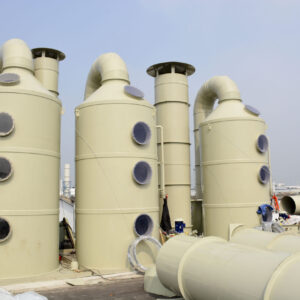
XICHENG EP HCl scrubbers are fabricated from polypropylene (PP), which is inherently resistant to chloride attack — a critical advantage over stainless steel in wet HCl service. Standard units handle inlet concentrations up to NEEDS_HUMAN_INPUT ppm with removal efficiency exceeding 99% at design conditions. Operating temperature range for PP construction is up to 80 °C continuous; FRP construction is available for higher-temperature streams.
Each scrubber is engineered for the specific gas composition, concentration, temperature, and site conditions. No two installations are identical.
System Boundary: Scrubber vs Complete System
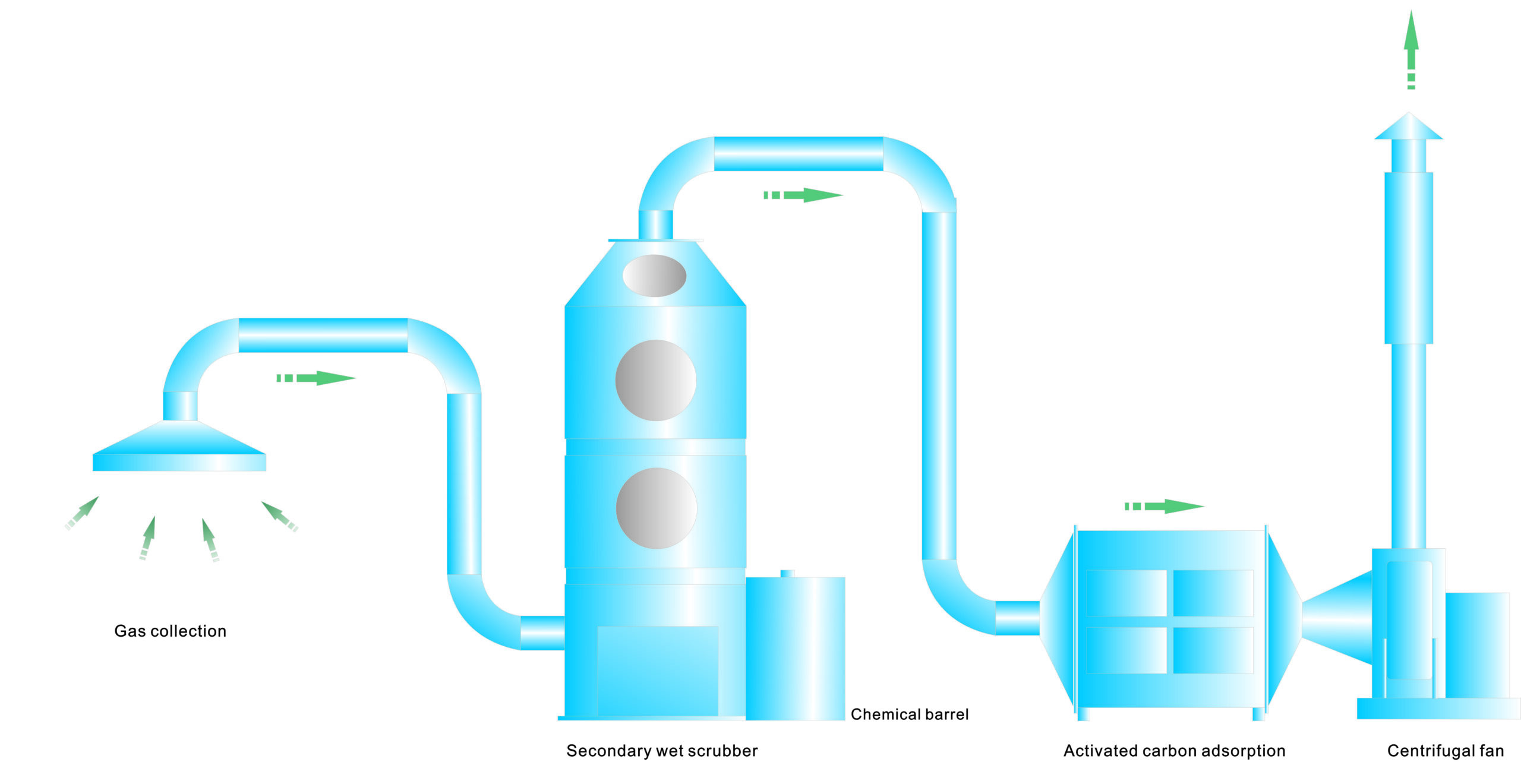
The HCl scrubber supply includes the tower vessel, packing media, liquid distribution system, and mist eliminator. The following are selected separately: exhaust fan, ductwork, recirculation pump, chemical dosing skid (for NaOH), pH control panel, and quench section (for hot gas). Specify your full system requirements when requesting a quotation.
How Buyers Should Evaluate Fit
- Gas temperature: Is the gas temperature below 80 °C (PP) or can a quench section be added for hotter gas?
- Concentration: Is the HCl inlet concentration within the absorption capacity of a single packed bed?
- Particulate loading: Does the gas contain dust or scale that could foul the packing?
Steel Pickling Lines
In continuous and batch pickling operations, HCl is used to remove mill scale and rust from steel surfaces. The exhaust contains HCl vapor at 50–500 ppm with fluctuating loads depending on bath condition and line speed. PP packed bed scrubbers with caustic recirculation provide consistent removal efficiency while resisting chloride attack that would damage metallic equipment.
Chemical Reactor Vents
Chemical processes using HCl as a reactant or generating HCl as a byproduct require continuous scrubbing of reactor vents, storage tank breathers, and loading station exhaust. Our scrubbers can be configured with dual-speed fans for batch processes where exhaust flow varies between production and standby modes.
Key Features
PP Construction — Chloride-Resistant by Design
PP is chemically resistant across the full pH range and is unaffected by chloride ions that cause pitting corrosion in stainless steel. The scrubber shell is fabricated from 8–12 mm PP sheet with welded seams for leak-free operation in continuous HCl service.
Counter-Current Packed Bed for High Removal Efficiency
The counter-current flow configuration maximizes the concentration gradient between gas and liquid phases, achieving >99% removal efficiency for HCl at design liquid-to-gas ratios.
Automatic pH Control Option
An optional pH controller with dosing pump maintains recirculating liquid pH at the optimal setpoint, reducing chemical consumption and ensuring consistent outlet concentration even with fluctuating inlet loads.
Technical Specifications
| Parameter | Specification |
|---|---|
| Product Type | HCl packed bed wet scrubber |
| Material (Standard) | PP (polypropylene), 8–12 mm wall |
| Material (Optional) | FRP (up to 120 °C), PVC (low-temp) |
| Removal Efficiency | >99% at design conditions (HCl) |
| Inlet Concentration Range | NEEDS_HUMAN_INPUT ppm (single stage) |
| Operating Temperature (PP) | Up to 80 °C continuous |
| Operating Temperature (FRP) | Up to 120 °C continuous |
| Pressure Drop | 300–800 Pa (typical) |
| Liquid-to-Gas Ratio | 1.5–3.0 L/m³ (project-based) |
| Absorption Media | Water or NaOH solution (pH 7–9) |
| Mist Eliminator | Mesh pad or vane type |
| Material Note | 304/316 SS NOT recommended for wet HCl |
Project-specific values should be confirmed during quotation.
HCl Absorption Chemistry
Water Absorption vs Caustic Scrubbing
HCl is highly soluble in water (approximately 72 g/100 mL at 20 °C), making water absorption feasible for low to moderate inlet concentrations. The reaction is: HCl(g) → H⁺ + Cl⁻, which is exothermic (approximately −74 kJ/mol). For higher concentrations or stricter outlet limits, NaOH caustic scrubbing is preferred: HCl + NaOH → NaCl + H₂O. Caustic scrubbing provides faster kinetics and neutralizes the acid, reducing corrosion risk in the recirculation system.
pH Control and Chemical Consumption
For NaOH scrubbing, the recirculating liquid pH should be maintained between 7 and 9. A pH controller with dosing pump automates chemical feed. Typical NaOH consumption is approximately 1.1 kg per kg of HCl removed at stoichiometric conditions; actual consumption is 1.2–1.5 times stoichiometric due to pH overfeed and CO₂ absorption from air.
Byproduct Management
The reaction produces sodium chloride (NaCl) — common table salt — which is non-hazardous and can be discharged to drain within most municipal limits. For zero-liquid-discharge requirements, the blowdown can be directed to an evaporator or crystallizer.
Construction and Material Selection
Polypropylene (PP) for Chloride Service
PP is the standard material for HCl scrubbers. It is resistant to chloride attack across the full concentration range, unlike stainless steel which suffers pitting corrosion at low chloride concentrations in acidic conditions. PP is suitable for continuous operation up to 80 °C.
FRP for High Temperature
Fiberglass-reinforced plastic (FRP) extends the operating range to 120 °C. A corrosion-resistant vinyl ester or epoxy resin layer is required for HCl service.
Stainless Steel — Not Recommended for Wet HCl
304 and 316 stainless steels are NOT recommended for wet HCl service. Chloride pitting and stress corrosion cracking occur rapidly at low pH and chloride concentrations above a few ppm. If metallic construction is required for mechanical reasons, specify duplex stainless steel, Hastelloy, or lined carbon steel.
Mist Elimination for White Plume Control
Sub-micron HCl mist can pass through a packed bed and form a visible white plume at the stack outlet. A high-efficiency mesh pad or vane-type mist eliminator at the tower outlet captures entrained droplets. For strict plume opacity requirements, a wet electrostatic precipitator can be added downstream.
Available Sizes and Model Selection
Size Reference (Project-Based Configuration)
Tower diameter, height, and packing depth are configured according to gas flow rate, inlet concentration, and target outlet concentration. The table below shows typical reference ranges:
| Airflow (m³/h) | Tower Diameter (mm) | Packing Depth (mm) | Liquid Flow (m³/h) |
|---|---|---|---|
| 1,000–3,000 | 600–900 | 800–1,200 | 2–6 |
| 3,000–10,000 | 900–1,400 | 1,000–1,500 | 5–20 |
| 10,000–25,000 | 1,400–2,000 | 1,200–1,800 | 15–50 |
| 25,000–50,000 | 2,000–2,600 | 1,500–2,000 | 40–100 |
Note: Values shown are typical reference ranges. Final dimensions are determined during project engineering.
Applications
Steel Pickling and Metal Treatment
HCl is the primary acid used in steel pickling to remove mill scale and rust. Pickling line exhaust contains HCl vapor and acid mist at fluctuating concentrations. PP packed bed scrubbers with caustic recirculation provide reliable removal and meet EPA MACT standards for pickling operations.
Chemical Processing
HCl is used as a reactant in chemical synthesis (PVC production, organic chlorination, ion exchange resin regeneration). Process vents and reactor exhaust require continuous scrubbing to maintain compliance.
Semiconductor Etching
Wafer fabrication processes use HCl for oxide etching and cleaning. PP scrubbers provide corrosion-free service and high removal efficiency for these high-purity applications.
Waste Incineration
Municipal and hazardous waste incinerators produce HCl from combustion of chlorinated plastics. A quench section is typically required before the packed bed due to high inlet gas temperature.
Laboratory Exhaust
Central HCl scrubbing for laboratory fume hood exhaust where multiple hoods discharge into a common treatment system.
System Compatibility
Integration with Existing Exhaust Systems
HCl scrubbers are installed after the exhaust fan or between the process source and the fan. Flanged connections simplify tie-in to existing PP, FRP, or PVC ductwork. A bypass line with isolation damper allows maintenance access without shutting down the process.
Downstream Treatment Options
For applications with strict plume opacity limits, a high-efficiency mist eliminator or wet ESP can be added at the tower outlet. If the exhaust also contains organic vapors, an activated carbon polishing bed can be installed downstream.
Selection Notes
When an HCl Scrubber Is a Good Fit
- Primary pollutant is HCl gas or HCl acid mist
- Gas temperature is below 80 °C (PP) or can be quenched before the packed section
- Inlet concentration is within the absorption capacity of a single packed bed (NEEDS_HUMAN_INPUT ppm)
- Exhaust contains minimal particulate or sticky components
- Continuous or semi-continuous operation with regular maintenance access
When Other Solutions May Be Needed
- Hot dry HCl gas (>80 °C): Standard PP construction cannot withstand dry HCl above 80 °C. A quench section, FRP construction, or SS with lining is required.
- High dust loading: If the exhaust carries scale, rust particles, or polymerization residues, install a pre-scrubber, cyclone, or baghouse upstream.
- Very high HCl concentration (>NEEDS_HUMAN_INPUT ppm): The exothermic heat of absorption may raise the tower temperature beyond PP limits. A multi-stage or cooled design may be needed. Confirm with engineering.
- Low HCl concentration (<NEEDS_HUMAN_INPUT ppm): A smaller packed bed or carbon adsorption may be more economical. Confirm with engineering.
How to Prepare for Model Selection
Before contacting our engineering team, confirm: gas composition and HCl concentration (preferably stack test data), gas flow rate (m³/h) at operating temperature, gas temperature (normal and peak), target outlet concentration or removal efficiency, dust or particulate loading (if any), and material preference (PP, FRP).
Packaging, Warranty, and Quotation Information
Standard Packaging and Warranty
Each scrubber is crated or shrink-wrapped for export. Standard warranty: 12 months from commissioning or 15 months from shipment. Extended warranty available on request.
Quotation Requirements
To prepare a quotation, we require: gas composition and HCl concentration (continuous and peak), gas flow rate (m³/h) and temperature, target outlet concentration or removal efficiency, preferred material (PP, FRP), and delivery location and timeline.
Request a Quote for HCl Scrubber →
Why Xicheng
XICHENG EP LTD has 16+ years of experience in manufacturing corrosion-resistant exhaust gas treatment equipment. We have supplied 2,600+ wet scrubber systems across 60+ countries. Our HCl scrubbers are engineered with direct factory pricing, custom design per project, and full certification including CE, ISO 9001, ISO 14001, and SGS. Each unit is backed by our engineering team with installation support and after-sales service.
Certifications and Compliance
- CE (Pressure Equipment Directive 2014/68/EU)
- ISO 9001:2015 Quality Management
- ISO 14001:2015 Environmental Management
- SGS Product Compliance Verification
- RoHS Directive 2011/65/EU
- Compliant with EPA MACT standards for HCl emissions where applicable
Datasheet_and_Project_Review”>Datasheet and Project Review
Engineering Datasheet Available on Request
A detailed datasheet including dimensional drawing, packing specification, recirculation rate, and weight estimate can be prepared once the project configuration is confirmed.
Information Needed for Technical Review
For complete technical review: process flow diagram, gas composition and HCl concentration, flow rate and temperature, particulate loading (if applicable), material preference and site constraints, and utility availability.
Related Products
- Acid Fume Scrubber — For mixed acid mist and vapor removal (HCl, H₂SO₄, HNO₃, HF)
- NO₂ Scrubber — For NOx removal where oxidation-absorption is required
- SOx Wet Scrubber System — For SO₂ and multi-pollutant removal from combustion exhaust
- View All Wet Scrubber Products →
Frequently Asked Questions
Can a PP scrubber handle hot HCl gas?
PP is suitable for HCl gas up to 80 °C continuous operation. If the inlet gas temperature exceeds 80 °C, a quench section is required upstream of the packed bed, or FRP construction should be specified.
What is the typical removal efficiency for HCl?
For HCl gas at design conditions in a packed bed scrubber, removal efficiency exceeds 99%. Actual efficiency depends on inlet concentration, liquid-to-gas ratio, and packing depth. Project-specific performance is confirmed during engineering review.
Is stainless steel suitable for HCl service?
No. 304 and 316 stainless steels are NOT recommended for wet HCl service. Chloride pitting and stress corrosion cracking occur rapidly. PP, FRP, or lined carbon steel are the correct materials for HCl scrubbing.
What is the difference between water scrubbing and caustic scrubbing?
Water absorption relies on HCl’s high water solubility and is suitable for moderate concentrations. Caustic scrubbing (NaOH) neutralizes HCl to NaCl, providing faster kinetics and higher capacity. Caustic scrubbing is preferred when outlet concentration must be very low or when inlet concentration is high.
What maintenance does an HCl scrubber require?
Weekly: check recirculation pH and dosing chemical level. Monthly: inspect packing distribution and differential pressure. Annually: open inspection hatch, inspect packing condition, clean or replace mist eliminator pads, and check nozzle spray pattern.
How do I prevent white plume from my HCl scrubber stack?
White plume is caused by sub-micron HCl mist passing through the packed bed. Install a high-efficiency mesh pad mist eliminator at the tower outlet. For strict opacity limits, a wet electrostatic precipitator (WESP) can be added downstream.
What is the typical caustic consumption for HCl scrubbing?
Approximately 1.1 kg NaOH per kg HCl removed at stoichiometric conditions. Actual consumption is typically 1.2–1.5 times stoichiometric due to pH overfeed and CO₂ absorption from air. An automatic pH controller reduces chemical waste by maintaining the optimal setpoint.
How do I dispose of the scrubber blowdown?
The blowdown from NaOH scrubbing contains sodium chloride (NaCl) at near-neutral pH. In most municipal areas, this can be discharged to sanitary sewer within standard chloride limits. If limits apply, a small neutralization tank or dilution system can be provided.
What is the warranty period?
Standard warranty is 12 months from commissioning or 15 months from shipment, whichever occurs first. Extended warranty options are available on request.
Engineering guide: Use the HCl, HF, and sulfuric acid scrubber selection guide to compare chemistry, materials, and compliance inputs.
Contact the Xicheng Engineering Team Today.
Send us your HCl exhaust gas composition and concentration, flow rate, temperature, and preferred material. Our engineers will prepare a material-specific HCl scrubber configuration, system integration proposal, and quotation within 24 hours.
🎯 Manufacturing Head Office: No. 34 Zhenxing Road (Shengtaian Heavy Industrial Park B), Loucun, Guangming New District, Shenzhen, Guangdong, China
☎️ Direct Hotline / WhatsApp: +86 189 2745 6906
📬 Engineering Mailbox: xicheng023@outlook.com