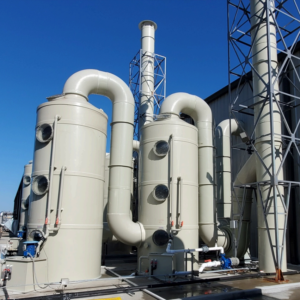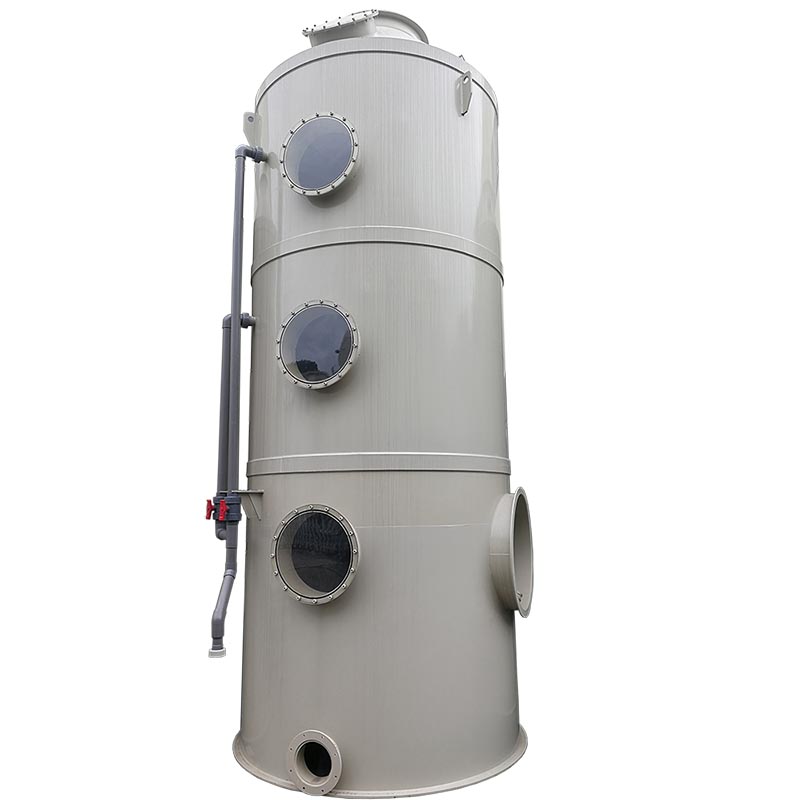

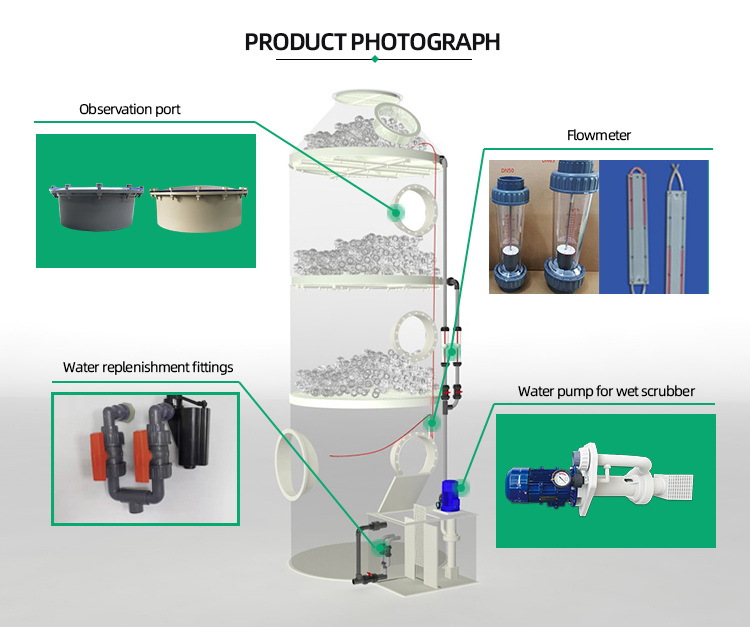
Who Needs This NO₂ Scrubber System?
Datasheet and Project Review
An engineering datasheet with dimensional drawing, specification confirmation, and system integration notes can be prepared once the project configuration is confirmed.
To request a quotation, provide: gas composition and concentration, flow rate (m³/h) and temperature, material preference, and delivery location.
According to the EPA NOx emission control guidelines, nitrogen oxides (NOₓ) are among the most regulated air pollutants due to their contribution to smog, acid rain, and respiratory health issues. Our PP NO₂ scrubber system is specifically engineered for the reliable treatment of NO₂ and mixed NO/NO₂ exhaust streams.
Nitric Acid Production Plants: Ideal for treating tail gas from nitric acid manufacturing processes, where NO₂ concentrations can reach 2000 mg/m³. The system ensures compliance with strict environmental standards for acid production facilities.
Metal Pickling & Surface Treatment: Effectively removes NO₂ generated during stainless steel pickling and passivation processes using nitric acid solutions. Protects workers and surrounding communities from toxic fume exposure.
Semiconductor & Electronics Manufacturing: Treats exhaust from wafer etching and cleaning processes that use nitric acid and other nitrogen-based chemicals, maintaining cleanroom air quality and regulatory compliance.
Waste Incineration Facilities: Controls NOₓ emissions from municipal solid waste and hazardous waste incinerators, where high-temperature combustion produces significant amounts of nitrogen oxides.
Not Recommended For: NO/NO₂ ratios greater than 1:3 without additional oxidation pre-treatment, flue gas temperatures exceeding 82°C/180°F without pre-cooling, and NOₓ concentrations above 2000 mg/m³.
Why Engineers Choose Our PP NO₂ Scrubber
1. 98%+ NOₓ Comprehensive Removal Efficiency
Our proprietary oxidation-absorption dual-process design achieves a minimum 98% removal rate for NO₂ and 90%+ for total NOₓ. The system first oxidizes insoluble NO to soluble NO₂ using a specialized oxidizing agent, then neutralizes both gases in the packed bed absorption section.
Field data from 130+ NOₓ installations confirms consistent compliance with global emission standards, including EU BREF and India CPCB requirements.
2. 15+ Year Nitric Acid Corrosion Resistance
Constructed entirely from homogeneous polypropylene (PP) with seamless welding, our system is inherently resistant to nitric acid and other corrosive byproducts of NO₂ absorption. Unlike stainless steel, which suffers from intergranular corrosion in nitric acid service, PP maintains structural integrity for 15+ years.
This superior corrosion resistance eliminates mid-life vessel replacements and reduces long-term repair costs by 60% compared to metallic alternatives.
3. Integrated ORP Automatic Control System
The system features advanced ORP (Oxidation-Reduction Potential) online monitoring that automatically adjusts oxidizing agent dosage based on inlet NO concentration. This precision control reduces chemical consumption by 30% compared to manual dosing systems.
Automatic operation reduces manual labor requirements and eliminates the risk of human error in chemical handling—a critical feature for consistent NOₓ removal performance.
4. Dual-Stage Packing for Zero NOₓ Penetration
Our system features two independent packed bed absorption stages in series. The first stage removes 90-95% of incoming NO₂, while the second stage polishes the gas to ensure complete removal, even during process upsets or high concentration spikes.
This redundant design eliminates the risk of NOₓ breakthrough, protecting both worker safety and environmental compliance. The system pairs seamlessly with our anti-corrosion centrifugal fan for optimal performance.
5. Modular Design for Fast Installation
Our NO₂ scrubber systems are pre-fabricated in standard modules and shipped ready for assembly. This modular approach reduces on-site installation time by 40% compared to custom-built systems, minimizing production downtime.
Standardized components also simplify future upgrades and expansions, allowing you to increase treatment capacity as your facility grows.
Technical Specifications
| Air Volume (m³/h) | Tower Diameter (mm) | Wall Thickness (mm) | Drain Outlet | Water Tank Size (mm) | Inlet/Outlet Size (mm) | Pump Power (kW) | Wind Resistance (Pa) | Max NOₓ Inlet (mg/m³) | NOₓ Removal Rate |
|---|---|---|---|---|---|---|---|---|---|
| 50-4,000 | 800 | 8 | DN63 | 700×550×600 | 315 | 0.75 | 500 | 1000 | 95%+ |
| 4,000-5,500 | 1,000 | 8 | DN63 | 750×600×600 | 400 | 1.5 | 500 | 1000 | 95%+ |
| 5,500-8,000 | 1,200 | 8 | DN63 | 750×600×600 | 500 | 1.5 | 500 | 1200 | 96%+ |
| 8,000-12,000 | 1,500 | 8 | DN63 | 750×600×600 | 600 | 2.2 | 500 | 1200 | 96%+ |
| 12,000-17,000 | 1,800 | 10 | DN63 | 850×600×700 | 650 | 3 | 500 | 1500 | 97%+ |
| 17,000-21,000 | 2,000 | 10 | DN63 | 850×600×700 | 700 | 4 | 500 | 1500 | 97%+ |
| 21,000-25,000 | 2,200 | 10 | DN63 | 950×600×700 | 750 | 4 | 600 | 1800 | 98%+ |
| 25,000-32,000 | 2,500 | 12 | DN63 | 950×600×700 | 800 | 5.5 | 600 | 1800 | 98%+ |
| 32,000-40,000 | 2,800 | 12 | DN63 | 1,000×700×700 | 900 | 7.5 | 600 | 2000 | 98%+ |
| 40,000+ | 3,000+ | 12+ | DN63 | Custom | Custom | Custom | 600 | Custom | 98%+ |
Note: All specifications are based on a typical design gas velocity of 1.5-2.5 m/s. For NO/NO₂ ratios greater than 1:3, an additional oxidation pre-treatment stage is required. Custom sizes available for air volumes exceeding 215,000 m³/h.
Selection Notes
Good Fit Conditions
This product is suitable when the application matches the design specifications listed in the technical table above. Confirm gas composition, airflow, temperature, and material compatibility before ordering.
When to Review with Engineering
- Gas temperature exceeds the material limit for standard construction
- Particulate or sticky components are present in the exhaust stream
- Mixed pollutants require multi-stage or dual-reagent treatment
- Site constraints limit available footprint, headroom, or utility connections
Frequently Asked Questions
Q1: How is a NO₂ scrubber different from a regular acid mist scrubber?
While both use alkaline absorption, a NO₂ scrubber requires specialized design features to handle the unique properties of nitrogen oxides. Most importantly, NO (nitric oxide) is insoluble in water and cannot be removed by simple alkali washing—it must first be oxidized to NO₂ using a chemical oxidizing agent.
A standard acid mist scrubber will only remove 30-40% of total NOₓ, while our dedicated NO₂ scrubber achieves 98%+ removal through integrated oxidation and absorption processes. Learn more about configuration options in our multi-stage NOx scrubber design guide.
Q2: How do you treat NO (nitric oxide) in the exhaust stream?
NO is treated through a two-step process: first, it is oxidized to NO₂ using a specialized oxidizing agent (typically sodium hypochlorite or hydrogen peroxide) in the oxidation section of the scrubber. The resulting NO₂ is then easily absorbed and neutralized by the sodium hydroxide solution in the packed bed section.
Our ORP control system automatically maintains the optimal oxidation potential to ensure complete conversion of NO to NO₂, maximizing overall NOₓ removal efficiency.
Q3: What chemicals are used in a NO₂ scrubber?
Our NO₂ scrubbers use two primary chemicals: sodium hydroxide (NaOH) for neutralizing NO₂ and an oxidizing agent (sodium hypochlorite or hydrogen peroxide) for converting NO to NO₂. The exact concentration and dosage depend on the inlet NOₓ concentration and NO/NO₂ ratio.
Our automatic dosing system precisely controls both chemical feeds to maintain optimal performance while minimizing waste and operating costs.
Q4: What is ORP control and why is it important for NOₓ treatment?
ORP (Oxidation-Reduction Potential) is a measure of the oxidizing power of the scrubbing solution. For NOₓ treatment, maintaining the correct ORP level (typically 500-700 mV) is critical to ensure complete oxidation of NO to NO₂.
If the ORP is too low, NO will not be fully oxidized and will pass through the scrubber untreated. If it is too high, excess oxidizing agent is wasted. Our integrated ORP controller automatically adjusts oxidant dosage to maintain the optimal range.
Q5: How do I calculate the correct size NO₂ scrubber for my facility?
NO₂ scrubber sizing depends on four critical factors: total exhaust air volume, inlet NOₓ concentration, NO/NO₂ ratio, and required outlet emission limit. For NOₓ treatment, it is essential to account for the additional oxidation requirement in the design.
Our engineers can provide a detailed sizing calculation based on your specific operating conditions. You can also refer to our NO2 scrubber sizing calculation guide for more information.
Q6: How do I handle the wastewater from a NO₂ scrubber?
The wastewater from a NO₂ scrubber contains sodium nitrate, sodium nitrite, and excess sodium hydroxide. This solution is typically alkaline and may require neutralization and reduction of nitrates before discharge.
Most facilities either send the wastewater to their existing industrial wastewater treatment plant or use a dedicated biological denitrification system. Our engineers will help you develop a wastewater management plan that meets local discharge regulations.
Q7: What maintenance does a NO₂ scrubber system require?
With proper operation, our NO₂ scrubber systems require minimal maintenance. We recommend daily checks of pH and ORP levels, weekly inspections of spray nozzles and packing, and quarterly calibration of sensors.
A complete annual service, including pump inspection and electrical system testing, is also recommended. Download our NOx system maintenance checklist for a detailed schedule.
Q8: What are the most common NO₂ scrubber problems?
The most common issues are insufficient NO oxidation (caused by low ORP levels), nozzle clogging, and packing fouling. Insufficient oxidation is usually the result of improper chemical dosing or sensor calibration issues.
Regular maintenance and proper system monitoring can prevent most of these issues. For troubleshooting guidance, see this comprehensive guide on common NO2 scrubber troubleshooting.
Q9: Are your NO₂ scrubbers compliant with OSHA and EPA regulations?
Yes, our NO₂ scrubbers are designed to meet or exceed all relevant OSHA and EPA regulations for nitrogen oxide treatment. The 98%+ removal efficiency ensures that outlet concentrations are well below the OSHA NO2 permissible exposure limit of 5 ppm.
Our systems have been installed in over 30 countries and comply with all major international environmental standards, including EU BREF and India CPCB.
Q10: Can I upgrade my existing scrubber to treat NOₓ?
Yes, in many cases, existing acid mist scrubbers can be upgraded to treat NOₓ by adding an oxidation section and ORP control system. For facilities requiring higher removal efficiency, we can add a second absorption stage or an activated carbon polishing stage for final treatment.
For facilities with both SO₂ and NOₓ emissions, we recommend upgrading to a combined SOx/NOx scrubber system that handles both pollutants in a single unit.
About the Author & Our Expertise
Best Fit Applications
Not Recommended / Engineering Limits
- High NO/NO₂ ratio (>90% NO): NO is practically insoluble. Requires upstream oxidation (ozone, H₂O₂, or catalytic) before scrubbing.
- Low concentration (<50 ppm NOx): Dry or adsorptive methods may be more economical.
- Hot exhaust (>60 °C continuous): PP construction not suitable above 60 °C for wet NOx service.
This NO₂ scrubber is designed for:
- Target gas: NO₂ and NO/NO₂ mixtures (NO oxidation required for >95% total NOx removal)
- Inlet concentration: 100–5000 ppm NOx (higher requires multi-stage or enriched oxidation)
- Airflow: 1,000–30,000 m³/h per tower
- Removal efficiency: >98% for NO₂; >90% total NOx with integrated oxidation stage
- Best industries: Chemical nitration, metal etching, nitric acid production, explosives manufacturing
Written by Corbin Deng, Process Engineer
12 years of experience in industrial nitrogen oxide treatment systems design
XICHENG EP LTD is a leading manufacturer of industrial environmental protection equipment based in Shenzhen, China. With 16 years of specialized experience in NOₓ treatment technology, we have delivered over 500 systems to customers in more than 30 countries worldwide.
Our team of experienced engineers provides complete turnkey solutions for NO₂ and other acid gas treatment, from initial system design and manufacturing to installation, commissioning, and after-sales support. We are committed to delivering the highest level of performance and reliability for our customers.
Recent NO₂ Scrubber Installation References
- China Nitric Acid Plant: 25,000 m³/h NO₂ scrubber for production tail gas treatment
- Malaysia Stainless Steel Factory: 18,000 m³/h system for pickling line exhaust
- Singapore Semiconductor Fab: 12,000 m³/h NOₓ scrubber for wafer etching processes
Certifications
- ISO 9001:2015 Quality Management System
- CE Marking for European Union
- China Environmental Protection Product Certification
Contact the Xicheng Engineering Team Today.
Send us your project specifications. Our engineers will prepare a product configuration, system integration proposal, and quotation within 24 hours.
🎯 Manufacturing Head Office: No. 34 Zhenxing Road (Shengtaian Heavy Industrial Park B), Loucun, Guangming New District, Shenzhen, Guangdong, China
☎️ Direct Hotline / WhatsApp: +86 189 2745 6906
📬 Engineering Mailbox: xicheng023@outlook.com