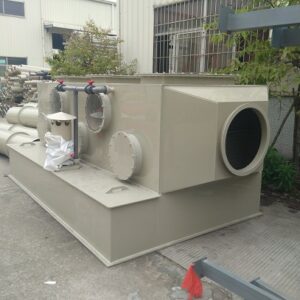

XiCheng EP is a professional manufacturer of custom biogas scrubbers and chemical-resistant spray towers with over 16 years of industry experience. Our PP polypropylene scrubbers are specifically engineered to remove hydrogen sulfide (H₂S), acid mist, ammonia and odors from biogas and industrial exhaust streams, delivering 95%+ purification efficiency and compliance with global emission standards.
This versatile wet scrubber combines advanced packing absorption technology with a corrosion-resistant all-PP construction, making it ideal for both biogas upgrading projects and general industrial acid waste gas treatment. It integrates seamlessly with our activated carbon air filters and centrifugal fans to form a complete turnkey waste gas treatment solution.
Core Advantages of XiCheng Biogas Scrubbers
An engineering datasheet with dimensional drawing, specification confirmation, and system integration notes can be prepared once the project configuration is confirmed.
To request a quotation, provide: gas composition and concentration, flow rate (m³/h) and temperature, material preference, and delivery location.
1. Superior Corrosion Resistance
- 100% virgin PP polypropylene construction, resistant to HCl, H₂SO₄, HNO₃, H₂S and most corrosive chemicals
- Passed 1000-hour salt spray test, designed for 15+ years of service life in harsh industrial environments
- No rusting or degradation, eliminating the need for frequent replacement of metal components
2. High-Efficiency Biogas Purification
- Specialized design for biogas H₂S removal, achieving up to 99% H₂S reduction
- Multi-stage countercurrent flow design maximizes gas-liquid contact time
- Uses sodium hydroxide (NaOH) or other alkaline absorbents for effective neutralization
- Compatible with our H₂S removal activated carbon filters for polishing treatment
3. Optimized Structural Design
- Compact vertical structure saves up to 30% floor space compared to horizontal designs
- Backwash system prevents packing clogging and reduces maintenance frequency
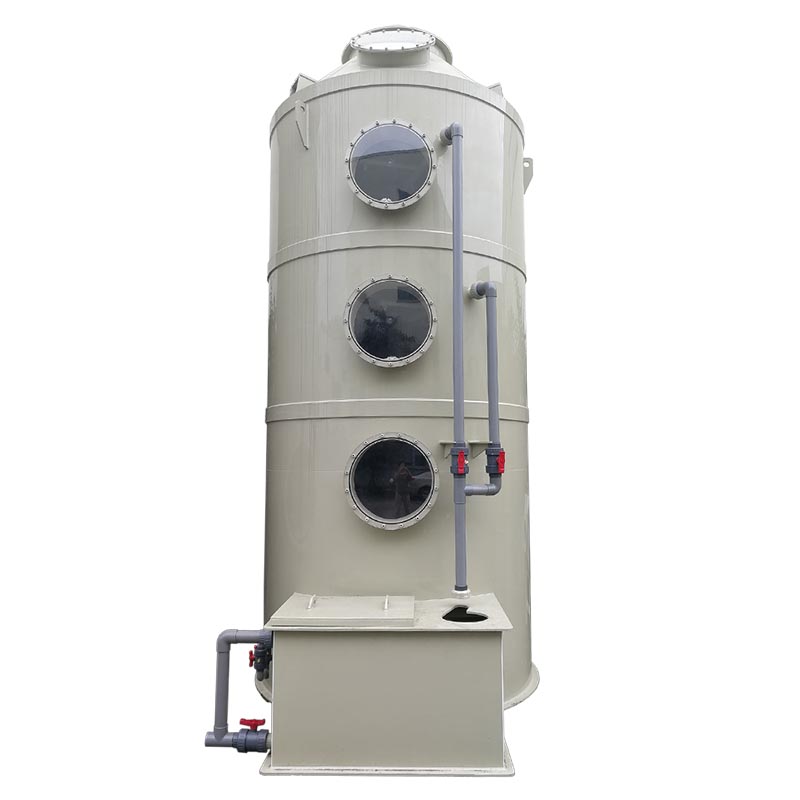
- Multiple inspection windows and access ports for easy cleaning and maintenance
- Modular design allows for easy expansion and customization
4. Low Operating & Maintenance Costs
- Low pressure drop (500-600 Pa) reduces fan energy consumption
- Automatic pH control system minimizes chemical usage
- Easy access to all components for quick maintenance
- No moving parts inside the tower, ensuring long-term reliable operation
5. Comprehensive Customization Capabilities
- Airflow capacities from 50 to 215,000 m³/h to meet any project size
- Custom dimensions and configurations to fit your available space
- Multiple material options (PP, FRP, PP-FRP composite) for different applications
- Optional automatic control systems with remote monitoring capabilities
Working Principle
Biogas Purification Process
Our biogas scrubber uses a countercurrent packing absorption principle to remove contaminants:
- Raw biogas containing H₂S, CO₂ and other impurities enters the tower from the bottom inlet
- Gas flows upward through the packing layer, where it comes into contact with downward-spraying alkaline absorbent
- H₂S and other acidic gases react with the absorbent to form harmless salts
- A demister layer at the top of the tower removes entrained liquid droplets
- Purified biogas exits through the top outlet, ready for use or further processing
- Spent absorbent is collected in the bottom tank and recirculated by the pump
Industrial Acid Mist Treatment Process
For general industrial acid waste gas treatment:
- Acid mist is collected by hoods and transported through PP ventilation ducts to the scrubber
- Gas flows upward through the packing layer, countercurrent to the spray solution
- Acid-base neutralization reaction occurs in the packing layer
- Clean gas passes through the demister and is discharged through the chimney
- The automatic dosing system maintains the optimal pH level of the absorbent
Complete Product Structure
Our chemical-resistant spray tower consists of three main systems:
1. Tower Body System
- Water storage tank: Stores circulating absorbent, equipped with level control and drain outlet
- Packing layer: Filled with high-efficiency multi-faceted hollow balls for maximum gas-liquid contact
- Spray layer: Multiple layers of PP spiral nozzles for uniform liquid distribution
- Demisting layer: Removes liquid droplets from the treated gas
- Observation windows: Allow visual inspection of internal operation
- Access ports: For maintenance and packing replacement
2. Circulating Water System
- Vertical anti-corrosion water pump
- UPVC circulating water pipeline
- PP spiral nozzles
- Float valve for automatic water level control
3. Automatic Control & Dosing System
- pH online detector for real-time monitoring of absorbent pH
- Dosing metering pump for precise chemical addition
- Dosing mixing barrel
- Electric control panel for centralized control of all system components
Factory-Tested Technical Specifications
All parameters are verified through rigorous factory testing before shipment:
| Air Volume Range (m³/h) | Tower Diameter (mm) | Wall Thickness (mm) | Drain Outlet (mm) | Water Tank Size (mm) | Inlet/Outlet Size (mm) | Pump Power (kW) | Wind Resistance (Pa) |
|---|---|---|---|---|---|---|---|
| 50-4,000 | 800 | 8 | DN63 | 700×550×H600 | 315 | 0.75 | 500 |
| 4,000-5,500 | 1,000 | 8 | DN63 | 750×600×H600 | 400 | 1.5 | 500 |
| 5,500-8,000 | 1,200 | 8 | DN63 | 750×600×H600 | 500 | 1.5 | 500 |
| 8,000-12,000 | 1,500 | 8 | DN63 | 750×600×H600 | 600 | 2.2 | 500 |
| 12,000-17,000 | 1,800 | 10 | DN63 | 850×600×H700 | 650 | 3 | 500 |
| 17,000-21,000 | 2,000 | 10 | DN63 | 850×600×H700 | 700 | 4 | 500 |
| 21,000-25,000 | 2,200 | 10 | DN63 | 950×600×H700 | 750 | 4 | 600 |
| 25,000-32,000 | 2,500 | 12 | DN63 | 950×600×H700 | 800 | 5.5 | 600 |
| 32,000-40,000 | 2,800 | 12 | DN63 | 1,000×700×H700 | 900 | 7.5 | 600 |
| 40,000+ | 3,000+ | 12+ | DN63+ | Custom | Custom | 7.5+ | 600+ |
Customization Available: Larger sizes, special materials and custom configurations available upon request.
Typical Application Scenarios
Biogas Industry Applications
- Agricultural biogas plants
- Livestock farm biogas systems
- Food waste anaerobic digestion facilities
- Sewage treatment plant biogas upgrading
- Landfill gas treatment systems
Industrial Waste Gas Treatment Applications
- Metal surface treatment and hardware pickling lines
- Anodizing and electroplating workshops
- Glass panel etching processes
- Chemical plant acid and alkaline exhaust systems
- Pharmaceutical and biotech production facilities
- Laboratory fume hood exhaust systems
- Petrochemical industry reactor emissions
View our project gallery to see our biogas scrubbers in operation around the world.
Matching System Components
Complete your waste gas treatment system with our high-quality compatible products:
- PP Ventilation Ducts and fittings
- Anti-corrosion Centrifugal Fans
- Activated Carbon Adsorption Towers for odor and VOC removal
- H₂S Removal Activated Carbon Filters
- Motorized Duct Dampers for airflow control
- PP Storage Tanks for chemical storage
Step-by-Step Installation Guide
- Foundation Positioning: Place the scrubber on a level concrete foundation and align the exhaust gas inlet direction
- Inlet Duct Installation: Connect the front exhaust duct to the scrubber inlet using PP flanges
- Fan Installation: Mount the centrifugal fan at the system outlet using negative pressure extraction
- Chimney Installation: Install the exhaust chimney after the fan
- Dosing System Installation: Connect the dosing device to the scrubber water tank
- Electrical Installation: Wire the circulating pump, fan and dosing system to the control panel
- Testing Port Installation: Install testing ports and access platforms as required
- System Commissioning: Test run the system and adjust air volume and flow rate for optimal performance
Ordering Information
To provide you with the most accurate quote and custom solution, please provide the following information:
- Composition and concentration of the waste gas to be treated
- Exhaust gas collection method and total required airflow
- Available installation space dimensions
- Local power supply voltage and frequency
- Whether you have an existing wastewater treatment system
- Water supply availability for the scrubber system
Why Choose XiCheng EP?
Best Fit Applications
Not Recommended / Engineering Limits
- Low-solubility gases (CO, NO, CH₄): Alternative technology required — catalytic oxidation, adsorption, or thermal treatment.
- High temperature (>60 °C for PP): Specify FRP or SS construction.
- Fine particulate (<5 micron): Packing or spray may not capture sub-micron particles adequately.
This wet scrubber is designed for:
- Target gases: Acid gases, NH₃, and soluble organic vapors
- Airflow: 1,000–50,000 m³/h depending on configuration
- Removal efficiency: >90% for soluble gases at design conditions
- Temperature: Up to 60 °C (PP) or 120 °C (FRP)
- Best used for: General industrial exhaust where gas composition varies
- 16 Years of Manufacturing Experience: Specialized in anti-corrosion environmental protection equipment
- On-Time Delivery: 7-15 days for mass orders, standard models in stock for immediate shipment
- Comprehensive Warranty: 12-month warranty on all equipment
- Professional Team: Experienced design engineers and sales staff
- Technical Support: On-site installation support and operator training
- Low MOQ: Minimum order quantity of 1 piece accepted
- Factory Direct Pricing: No middleman markup, ensuring the best value for your investment
For a custom quote or technical consultation, contact our engineering team today. You can also reach us via email at xicheng023@outlook.com, or WhatsApp: +86 13378669672 (Lora Wu).
Selection Notes
Good Fit Conditions
This product is suitable when the application matches the design specifications listed in the technical table above. Confirm gas composition, airflow, temperature, and material compatibility before ordering.
When to Review with Engineering
- Gas temperature exceeds the material limit for standard construction
- Particulate or sticky components are present in the exhaust stream
- Mixed pollutants require multi-stage or dual-reagent treatment
- Site constraints limit available footprint, headroom, or utility connections
Frequently Asked Questions (FAQ)
Q: What pollutants can this scrubber remove?
A: Our biogas scrubber effectively removes H₂S, CO₂, HCl, H₂SO₄, HNO₃, HF, ammonia and various odorous compounds. It can achieve 95%+ removal efficiency for most acid gases and up to 99% for H₂S.
Q: How often do I need to replace the absorbent?
A: The absorbent replacement frequency depends on the pollutant concentration and airflow. For typical biogas applications with 2,000 ppm H₂S, the absorbent needs to be replaced every 3-6 months. Our automatic pH control system helps optimize chemical usage and extend service life.
Q: Can the scrubber be installed outdoors?
A: Yes, our PP scrubbers are UV-stabilized and can be installed outdoors. For extremely cold climates, we recommend adding insulation to prevent freezing.
Q: Do you provide turnkey solutions?
A: Yes, we offer complete turnkey solutions including system design, manufacturing, installation, commissioning and training. Our engineering team can handle projects of any size from small laboratory systems to large industrial facilities.
Q: What is the difference between PP and FRP scrubbers?
A: PP scrubbers offer excellent chemical resistance at a lower cost and are ideal for most applications. FRP scrubbers provide higher mechanical strength and are better suited for larger systems and outdoor installations. We also offer PP-FRP composite scrubbers that combine the advantages of both materials.
Biogas scrubbing targets H₂S and siloxanes, which damage CHP engines and boilers. Unlike industrial acid gas scrubbers handling steady-state exhaust, biogas scrubbers must accommodate fluctuating H₂S levels (500–5000 ppm) and the presence of siloxanes that foul packing.
- H₂S removal: Two common approaches — biological (iron-oxidizing bacteria in a trickling filter, operating cost ≈$0.01–0.03/m³) and chemical (NaOH + NaOCl, faster kinetics, ≈$0.05–0.10/m³). The chemical approach is preferred for H₂S >2000 ppm or when footprint is limited.
- Siloxane management: Siloxanes form SiO₂ deposits on engine components at >3 mg/Nm³. They are NOT significantly removed by caustic scrubbing. A carbon bed or chiller (−25 °C) is required after the wet scrubber specifically for siloxane removal.
- Oxygen control: Biogas contains <1% O₂. If using biological oxidation, ensure sufficient O₂ transfer (micro-aeration) or switch to chemical dosing during peak H₂S events.
Contact the Xicheng Engineering Team Today.
Send us your project specifications. Our engineers will prepare a product configuration, system integration proposal, and quotation within 24 hours.
🎯 Manufacturing Head Office: No. 34 Zhenxing Road (Shengtaian Heavy Industrial Park B), Loucun, Guangming New District, Shenzhen, Guangdong, China
☎️ Direct Hotline / WhatsApp: +86 189 2745 6906
📬 Engineering Mailbox: xicheng023@outlook.com