Product Overview
What This Packed Bed Scrubber Is
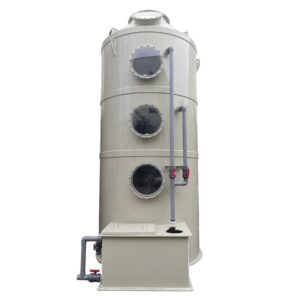
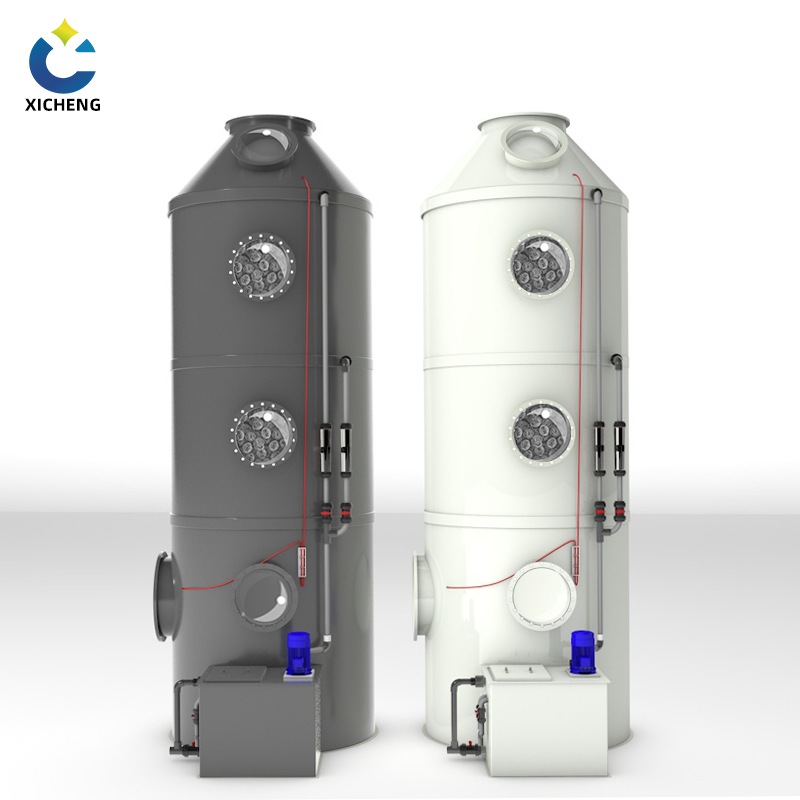
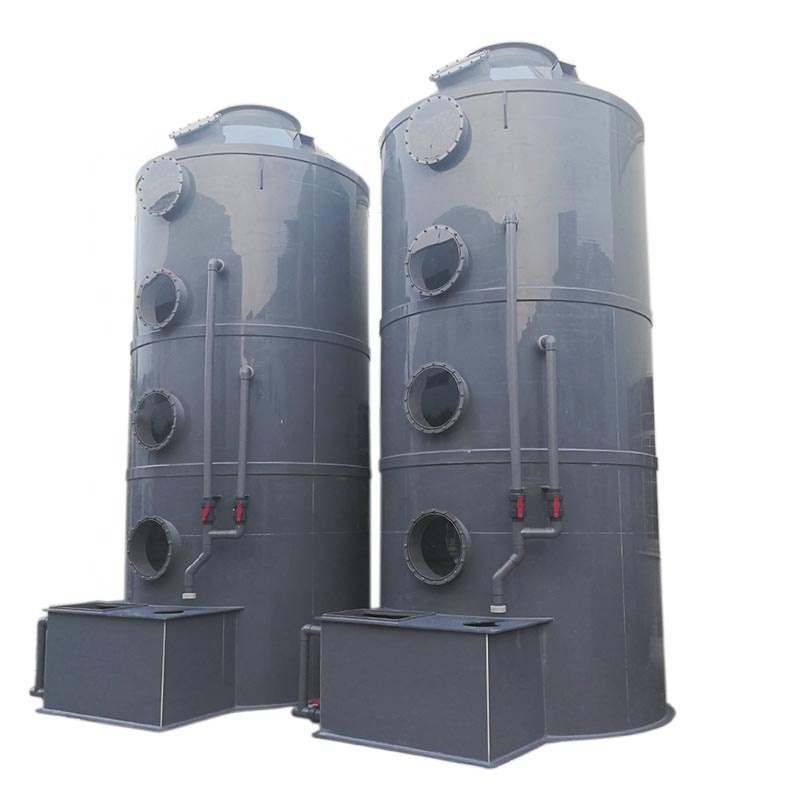
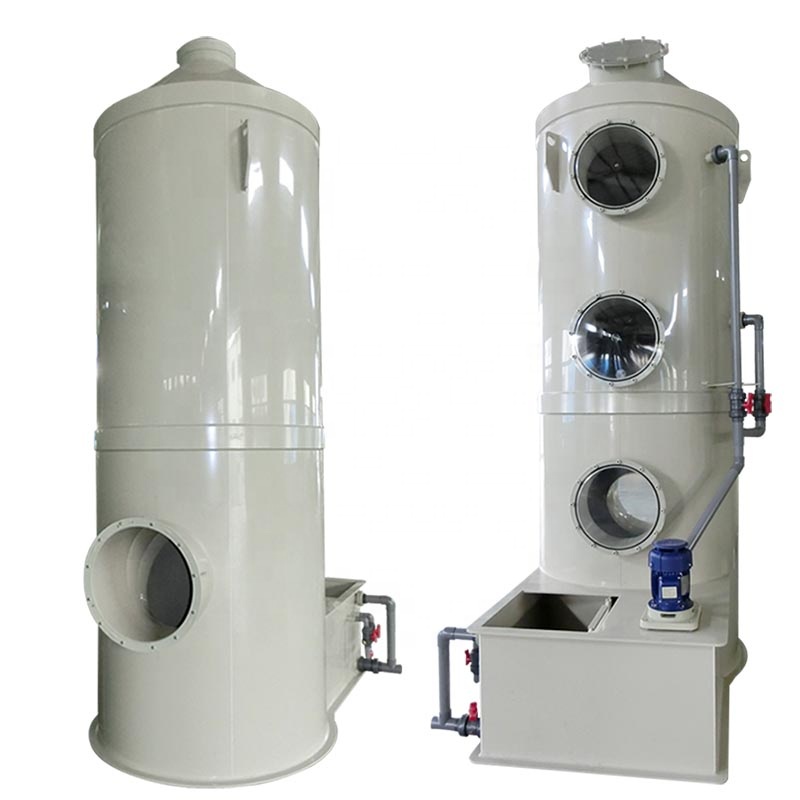
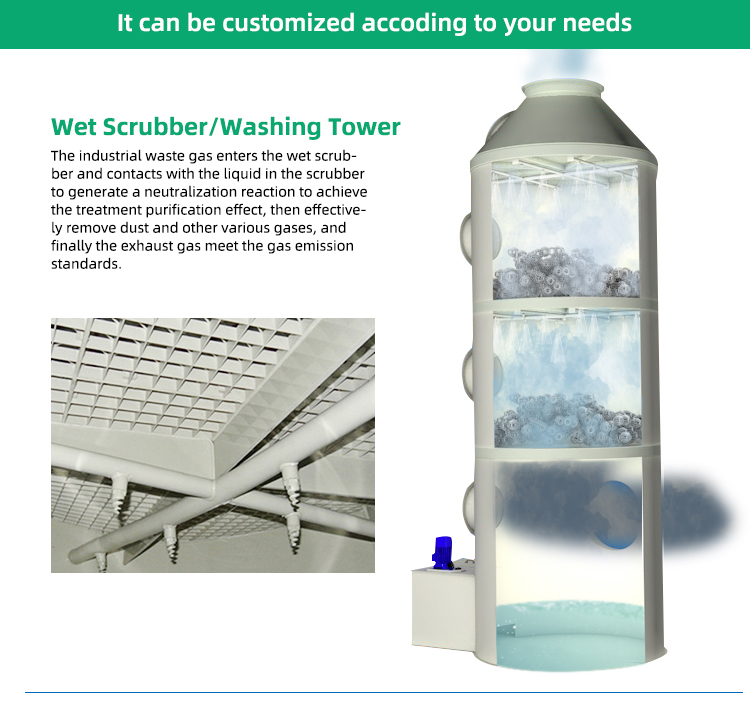
A packed bed scrubber is a counter-current gas absorption column used to remove soluble acid gases, ammonia, and certain organic vapors from industrial exhaust streams. The gas enters at the bottom and flows upward through a bed of packing media while scrubbing liquid is distributed from above, flowing downward by gravity across the packing surface. This maximizes gas-liquid contact area for mass transfer.
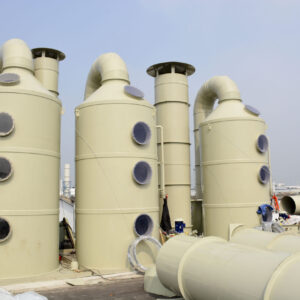
XICHENG EP PP packed bed scrubbers are available in three material grades: PP (polypropylene) for standard corrosive service up to 80 °C, FRP (fiberglass) for high-temperature applications up to 120 °C, and stainless steel for special process conditions. Standard air flow capacity ranges from 3,000 to 45,000 m³/h per tower, with removal efficiency exceeding 95% for highly soluble gases at design conditions.
Each scrubber is custom-engineered for the specific gas composition, concentration, airflow, and site requirements. No two installations are identical — we configure packing type, bed depth, liquid recirculation rate, material, and auxiliary equipment based on project data.
System Boundary: Tower vs Complete Exhaust System
The packed bed scrubber assembly includes the tower vessel, packing media, liquid distribution system, mist eliminator, and support grid components. The following items are selected separately according to project scope and are not automatically included unless specified: exhaust fan, interconnecting ductwork, recirculation pump, chemical dosing skid, pH/ORP control panel, and storage tanks for reagent or blowdown.
When requesting a quotation, specify which auxiliary components you need as part of the supply package so we can include them in the system design and pricing.
How Buyers Should Evaluate Fit
Three conditions determine whether a packed bed scrubber is the right solution for your application:
- Gas solubility: Is the target gas readily soluble in water, caustic, or acid? Packed beds work best for gases with high to moderate solubility (HCl, HF, H₂SO₄, NH₃, H₂S, soluble VOCs).
- Airflow and concentration: Does your exhaust volume fall within the 3,000–45,000 m³/h range? Can the inlet concentration be handled by a single-stage system?
- Temperature and particulate: Is the gas temperature below the material limit (80 °C for PP)? Is the particulate loading low enough to prevent packing fouling?
Multi-Gas Removal for Chemical Plants
Chemical facilities often generate mixed acid gas streams containing HCl, H₂SO₄ mist, HF, and NH₃ simultaneously. A packed bed scrubber with pH-controlled recirculation can handle varying loads across these gases, with caustic addition neutralizing acids and water-soluble compounds.
Pharmaceutical Intermediate Manufacturing
Pharmaceutical batch processes generate intermittent acid gas releases with varying composition. Packed bed scrubbers with dual-reagent dosing (NaOH + NaOCl) can handle both acid gases and oxidizable organic vapors in a single vessel.
Key Features
PP Construction for Corrosive Service
The standard PP scrubber shell is fabricated from 8–12 mm polypropylene sheet with welded seams, providing chemical resistance across the full pH range (1–14) at operating temperatures up to 80 °C. PP is unaffected by chloride ions, making it the preferred material for HCl and chlorinated service where stainless steel would suffer pitting corrosion.
High-Efficiency Packing Media Options
We offer six packing types including polyhedral balls, Pall rings, structured packing, ceramic saddles, tellerettes, and Tri-Packs. Packing selection depends on gas composition, liquid-to-gas ratio, allowed pressure drop, and fouling risk. Specific surface area ranges from 100 to 350 m²/m³ depending on packing type and size.
Low Pressure Drop Design
Typical operating pressure drop is 300–800 Pa, depending on packing depth and type, gas velocity, and liquid loading. A lower pressure drop reduces fan energy consumption and allows use of a smaller exhaust fan.
Modular Customization
Tower height, diameter, number of packing beds, mist eliminator type, nozzle configuration, access ports, and material grade are all configurable to match project requirements.
Technical Specifications
| Parameter | Specification |
|---|---|
| Product Type | Packed bed wet scrubber |
| Material (Standard) | PP (polypropylene), 8–12 mm wall thickness |
| Material (Optional) | FRP (fiberglass, up to 120 °C), SS304/316 |
| Airflow Capacity | 3,000–45,000 m³/h per tower |
| Removal Efficiency | >95% for highly soluble gases at design conditions |
| Operating Temperature (PP) | Up to 80 °C continuous |
| Operating Temperature (FRP) | Up to 120 °C continuous |
| Pressure Drop | 300–800 Pa (typical, depends on packing) |
| Liquid-to-Gas Ratio | 1.5–3.0 L/m³ (typical) |
| Packing Types | Polyhedral balls, Pall rings, structured packing, ceramic saddles, Tri-Packs |
| Packing Specific Surface | 100–350 m²/m³ |
| Mist Eliminator | Mesh pad or vane type (specify based on droplet size requirement) |
| Connection | Flanged (standard), butt weld (custom) |
| Application | Acid gas removal, ammonia scrubbing, odor control, soluble VOC absorption |
Note: Project-specific values (marked as NEEDS_HUMAN_INPUT where applicable) should be confirmed during quotation when they depend on gas composition, concentration, temperature, and site conditions.
Available Sizes and Model Selection
Typical Size Reference (Project-Based Configuration)
| Airflow Range (m³/h) | Typical Tower Diameter (mm) | Typical Tower Height (mm) | Packing Depth (mm) | Pressure Drop (Pa) |
|---|---|---|---|---|
| 3,000–5,000 | 800–1,000 | 3,000–4,000 | 800–1,000 | 300–500 |
| 5,000–10,000 | 1,000–1,400 | 3,500–4,500 | 1,000–1,200 | 400–600 |
| 10,000–20,000 | 1,400–1,800 | 4,000–5,000 | 1,200–1,500 | 400–700 |
| 20,000–30,000 | 1,800–2,200 | 4,500–5,500 | 1,500–1,800 | 500–800 |
| 30,000–45,000 | 2,200–2,600 | 5,000–6,000 | 1,800–2,000 | 600–800 |
Note: The values above are typical reference ranges for preliminary planning. Final dimensions and model designation are confirmed during project engineering review and depend on gas composition, concentration, and site-specific requirements. Contact our engineering team for project-specific sizing.
Construction and Material Details
Polypropylene (PP) Construction
PP is the standard material for packed bed scrubbers serving acid gas and general chemical exhaust. It offers excellent chemical resistance across the full pH range, low cost relative to alloys, light weight, and ease of fabrication. PP is suitable for continuous operation up to 80 °C and short-term exposure to 100 °C. Not recommended for strong oxidizing acids above 50 °C or aromatic solvent exposure.
Fiberglass (FRP) for High Temperature
FRP construction extends the operating range to 120 °C continuous using vinyl ester or epoxy resin systems. FRP towers are lighter than steel for large diameters but require careful handling during transport and installation. Specify FRP when gas temperature exceeds 80 °C or when PP mechanical strength is insufficient for large-diameter vessels.
Stainless Steel Options
SS304 and SS316 are available for process conditions where polymer materials are not suitable. However, note that 304/316 stainless steel is NOT recommended for wet HCl service due to chloride pitting corrosion risk. Consult with our engineering team for material selection based on your specific gas chemistry.
Packing Media Selection
Six packing types are available, each suited to different conditions: polyhedral balls for general service at low cost; Pall rings for higher capacity and lower pressure drop; structured packing for high-efficiency mass transfer with low pressure drop; ceramic saddles for high-temperature service; tellerettes for fouling-resistant service; Tri-Packs for mass transfer where low pressure drop is critical. The selection is confirmed during the engineering review based on your gas composition, L/G ratio, and pressure drop allowance.
Applications
Chemical Processing
Removal of HCl, H₂SO₄ mist, HF, NH₃, and soluble organic vapors from reactor vents, storage tank breathing losses, and process exhaust. Packed bed scrubbers are the most common air pollution control device in chemical batch and continuous processes.
Metal Pickling and Surface Treatment
Acid fumes from hydrochloric and sulfuric acid pickling baths, anodizing lines, and galvanizing operations are effectively captured and neutralized using packed bed scrubbers with caustic recirculation.
Electronics and Semiconductor
Wafer fabrication, etching, and cleaning processes generate HCl, HF, HNO₃, and NH₃ exhaust. PP packed bed scrubbers provide corrosion-free service and high removal efficiency for these high-purity applications.
Water and Wastewater Treatment
Odor control for H₂S, NH₃, and organic mercaptans from sewage treatment plants, pumping stations, and industrial wastewater facilities. Chemical or biological scrubbing configurations available.
Laboratory and Research Exhaust
Central scrubber systems for multi-hood laboratory exhaust, handling variable chemical loads and intermittent operation.
System Compatibility
Integration with Existing Exhaust Systems
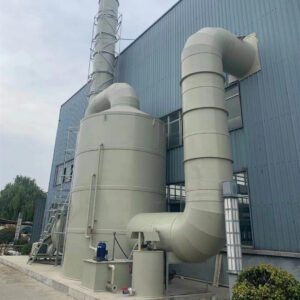
Packed bed scrubbers are designed for installation after the exhaust fan (blow-through) or before the fan (draw-through), depending on material compatibility and temperature requirements. Flanged connections at standard duct diameters simplify tie-in to existing PP, FRP, or stainless steel ductwork.
Downstream Treatment Options
For applications requiring particulate removal after scrubbing, a mist eliminator or wet electrostatic precipitator can be added at the tower outlet. For VOC polishing, an activated carbon bed can be installed downstream of the scrubber.
Related System Components
A complete exhaust treatment system typically includes: the packed bed scrubber (tower + packing), exhaust fan (centrifugal or axial, PP/FRP/SS), connecting ductwork (PP round or square), recirculation pump with piping, chemical dosing skid (for automatic pH control), pH/ORP control panel, and blowdown treatment (neutralization pit or dosing). These components are selected according to project scope and are not automatically included with the scrubber supply.
Selection Notes
When a Packed Bed Scrubber Is a Good Fit
- Target gases are soluble in water, caustic, or acid (HCl, HF, H₂SO₄ mist, NH₃, H₂S, soluble VOCs)
- Airflow range is between 3,000 and 45,000 m³/h in a single tower (larger volumes can use multiple towers or custom designs)
- Gas temperature is below 80 °C for PP construction, or below 120 °C for FRP
- Inlet particulate loading is low (<NEEDS_HUMAN_INPUT mg/Nm³)
- Continuous or semi-continuous operation with regular maintenance access
- Good for general acid gas removal, chemical processing, pickling, electronics, water treatment, and odor control
When Other Technologies May Perform Better
- High particulate loading: If inlet dust exceeds NEEDS_HUMAN_INPUT mg/Nm³, packing will blind. Consider a pre-quench spray tower or venturi scrubber first, or install a cyclone upstream.
- Sticky or tarry gases: Polymerizing or resinous gases foul packing rapidly and are not suitable for packed bed design without upstream treatment.
- Low-solubility gases: NO (nitric oxide), CO (carbon monoxide), and certain VOCs have low solubility in aqueous solutions. They require oxidation, catalytic conversion, or adsorption — not a simple packed bed.
- High-temperature gas (>80 °C for PP): PP softens above 80 °C. FRP or SS construction is required for high-temperature streams.
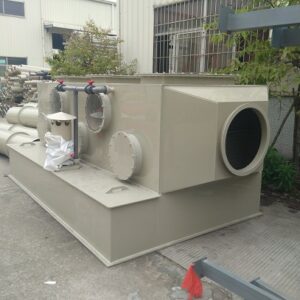
- Space-constrained installations: Packed towers require vertical clearance for packing removal. If headroom is under 3 m, consider a horizontal wet scrubber.
How to Prepare for Model Selection
Before contacting our engineering team, confirm the following: gas composition and concentration (preferably a stack test report or process data sheet), exhaust flow rate in m³/h at operating temperature, temperature range (normal, peak, minimum), available static pressure or fan head if the scrubber is retrofitted into an existing system, and preferred material or site constraints (PP, FRP, or SS).
Packaging, Warranty, and Quotation Information
Standard Packaging and Warranty
Each scrubber is securely crated or shrink-wrapped for export shipment. Standard warranty period is 12 months from commissioning or 15 months from shipment, whichever comes first. Extended warranty options are available on request.
Quotation Requirements
To prepare an accurate proposal and quotation, our engineering team requires: gas composition and inlet concentration, required outlet concentration or removal efficiency, gas flow rate (m³/h) and temperature, material preference (PP, FRP, SS), and delivery destination and timeline.
Request a Quote for Packed Bed Scrubber →
Datasheet and Project Review
Engineering Datasheet Available on Request
A detailed engineering datasheet including dimensional drawing, packing specification, liquid recirculation rate, nozzle schedule, instrument connections, and weight estimate can be prepared once the project configuration is confirmed. Standard datasheets are available for reference configurations.
Information Needed for Technical Review
For a complete technical review of your application, please provide the following: process flow diagram or P&ID showing the scrubber location, gas composition and concentration range (normal, maximum, minimum), exhaust flow rate (m³/h) at operating temperature and pressure, gas temperature (continuous and peak), particulate loading and particle size distribution (if applicable), material preference and site constraints (dimensions, seismic zone, wind load, indoor/outdoor), and utility availability (power supply, water, drain, compressed air).
Engineering Resources
- Scrubber sizing calculation and worked examples — Review the design inputs and calculation sequence before requesting a configuration.
- Scrubber packing media selection guide — Compare packing geometry, hydraulics, fouling risk, and material conditions.
Related Products
Complementary Products for Complete Exhaust Treatment
- PP/FRP Spray Tower Scrubber — Suitable for higher particulate loading and open-tower design where packing fouling is a concern
- Horizontal Wet Scrubber — Low-headroom alternative for indoor installations with limited vertical clearance
- Chlorine Gas Scrubber System — Specialized design for Cl₂ emergency and continuous scrubbing applications
- Acid Fume Scrubber — For mixed acid mist and vapor removal in electroplating and pickling applications
Exhaust System Components
- PP Duct and Fittings — Corrosion-resistant ductwork for acid exhaust systems
- View All Wet Scrubber Products →
Frequently Asked Questions
What gases can a packed bed scrubber remove?
Packed bed scrubbers are effective for water-soluble or chemically reactive gases including HCl, HF, H₂SO₄ mist, NH₃, H₂S, and certain soluble VOCs. They are not effective for sparingly soluble gases such as NO, CO, and methane.
What is the typical removal efficiency?
For highly soluble gases (HCl, NH₃) at design conditions, removal efficiency exceeds 95%. For moderately soluble gases (SO₂, Cl₂), efficiency is typically 90–95%. Final efficiency depends on packing depth, liquid-to-gas ratio, and inlet concentration.
How do I select PP vs FRP vs SS construction?
PP is standard for gas temperatures up to 80 °C. FRP is used for 80–120 °C. Stainless steel is used only when polymer materials are incompatible with the gas chemistry. Our engineering team can confirm the appropriate material based on your gas composition and temperature.
What is the lifespan of a PP packed bed scrubber?
PP scrubbers typically last 8–15 years depending on operating temperature, chemical exposure, and UV exposure (for outdoor installations). Periodic inspection of welds and wall thickness is recommended after 5 years of continuous service.
Can this scrubber handle variable airflow?
Yes, packed bed scrubbers can operate effectively across a range of airflow rates. However, significant deviation from design flow will affect removal efficiency, pressure drop, and liquid-to-gas ratio. For frequently varying flows, specify a VFD-controlled fan and recirculation pump.
What maintenance does a packed bed scrubber require?
Weekly: check recirculation pH and dosing chemical level. Monthly: inspect packing distribution and differential pressure. Annually: open inspection hatch, inspect packing condition, clean or replace mist eliminator pads, and check nozzle spray pattern.
Certifications and Compliance
- CE (Pressure Equipment Directive 2014/68/EU)
- ISO 9001:2015 Quality Management
- ISO 14001:2015 Environmental Management
- SGS Product Compliance Verification
- RoHS Directive 2011/65/EU
Contact the Xicheng Engineering Team Today.
Send us your exhaust gas composition and concentration, flow rate, temperature, and site requirements. Our engineers will prepare a material-specific packed bed scrubber configuration, system integration proposal, and quotation within 24 hours.
🎯 Manufacturing Head Office: No. 34 Zhenxing Road (Shengtaian Heavy Industrial Park B), Loucun, Guangming New District, Shenzhen, Guangdong, China
☎️ Direct Hotline / WhatsApp: +86 189 2745 6906
📬 Engineering Mailbox: xicheng023@outlook.com