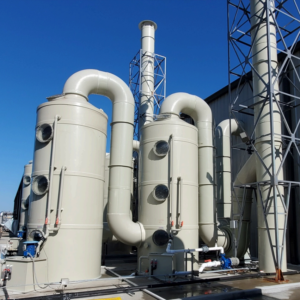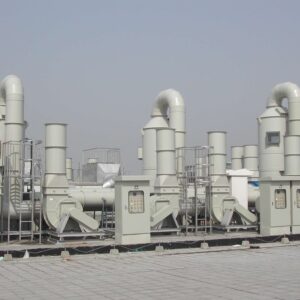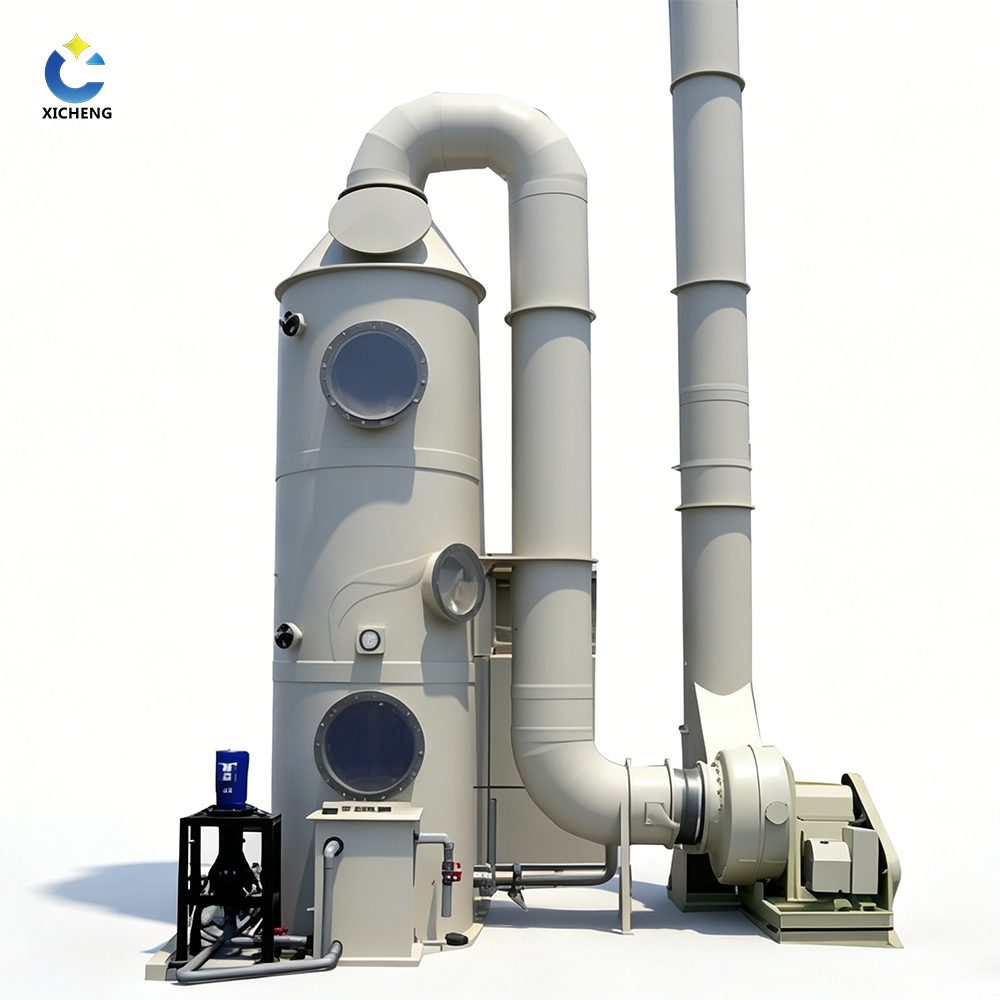

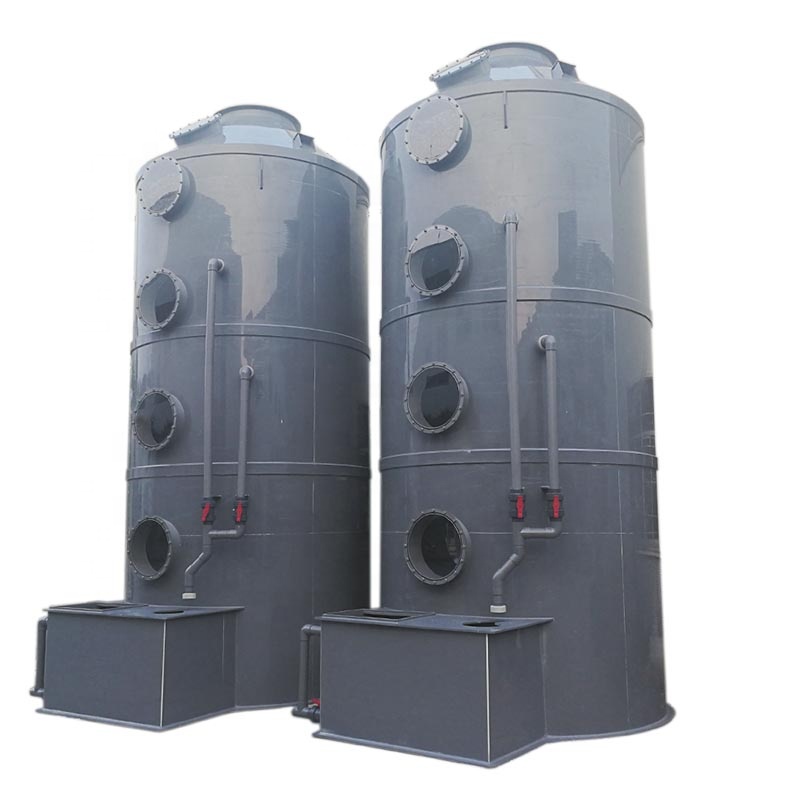
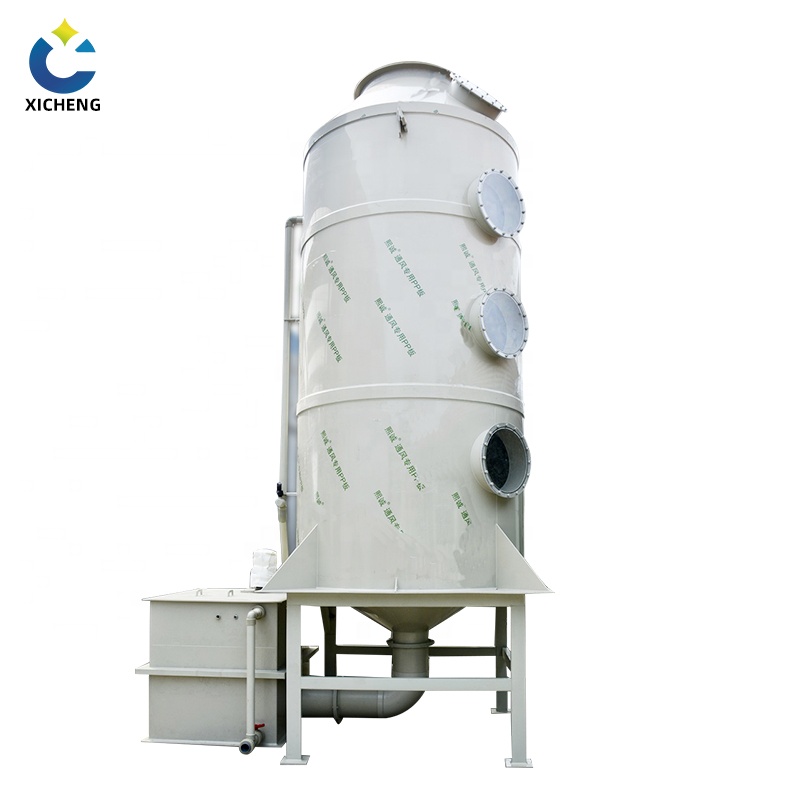
Who Needs This Ammonia Gas Scrubber?
Ammonia (NH₃) is a pungent alkaline gas with an OSHA permissible exposure limit of 25 ppm over an 8-hour workday and a narrow explosive range of 15-28% by volume in air. Unlike all acidic industrial gases, ammonia requires specialized acid washing technology for effective treatment. Our PP ammonia scrubber is purpose-built to address these unique challenges.
Large-Scale Livestock & Poultry Farms: The #1 application for ammonia scrubbers. Our system treats ammonia emissions from pig, chicken, and cattle barns, eliminating odor complaints from neighboring communities and complying with agricultural air quality regulations.
Fertilizer & Nitrogen Chemical Plants: Effectively controls ammonia off-gas from urea production, ammonium nitrate manufacturing, and fertilizer storage facilities, where concentrations can reach 3000 mg/m³.
Landfill Leachate Treatment Stations: Removes ammonia released during anaerobic digestion of landfill leachate, preventing toxic gas buildup and odor issues in residential areas near landfills.
Food & Seafood Processing: Treats ammonia emissions from refrigeration systems, fish processing plants, and dairy facilities, ensuring a safe and odor-free working environment.
Not Recommended For: Ammonia concentrations above 3000 mg/m³, gas mixtures within the explosive range without additional safety measures, and flue gas temperatures exceeding 82°C/180°F without pre-cooling.
Why Engineers Choose Our PP NH₃ Scrubber
1. 99.8%+ Ammonia Removal & Zero Odor Complaints
Our optimized countercurrent acid washing design uses dilute sulfuric acid to neutralize ammonia, achieving 99.8%+ removal efficiency with outlet concentrations consistently below 1 ppm—well below the human odor threshold of 5 ppm.
Field data from 160+ ammonia installations confirms zero odor complaints over 10 years, eliminating the risk of regulatory fines and community disputes.
2. ATEX-Compliant Explosion-Proof Design
Ammonia forms explosive mixtures with air at concentrations between 15-28%. Our scrubber features ATEX-certified electrical components, static grounding, and pressure relief valves to prevent ignition and explosion hazards.
All systems are paired with our explosion-proof PP centrifugal fan for complete system safety in hazardous locations.
3. Two-Stage Acid Wash + Carbon Deodorization
Our system uses two independent acid washing stages to ensure complete ammonia neutralization, followed by an activated carbon deodorization module to remove any residual odors and trace organic compounds.
This combined approach eliminates both ammonia and secondary odors, providing comprehensive air purification for sensitive residential areas.
4. Ammonium Salt Recovery for Resource Recycling
The neutralization reaction between ammonia and sulfuric acid produces ammonium sulfate—a valuable liquid fertilizer. Our system is designed to concentrate and recover this ammonium sulfate solution, which can be directly used for agricultural irrigation or sold as a byproduct.
For a 20,000 m³/h livestock farm system, this generates approximately 120 tons of ammonium sulfate per year, offsetting 30% of operating costs.
5. Anti-Crystallization System for Continuous Operation
Ammonium sulfate crystals can form and clog nozzles and packing at high concentrations. Our system features automatic dilution control, heated spray nozzles, and periodic backwashing to prevent crystallization and ensure 24/7 continuous operation.
This reduces maintenance downtime by 70% compared to generic scrubbers in high-concentration ammonia applications.
Technical Specifications
| Air Volume (m³/h) | Tower Diameter (mm) | Wall Thickness (mm) | Drain Outlet | Water Tank Size (mm) | Inlet/Outlet Size (mm) | Pump Power (kW) | Wind Resistance (Pa) | Max NH₃ Inlet (mg/m³) | NH₃ Removal Rate | 防爆等级 |
|---|---|---|---|---|---|---|---|---|---|---|
| 3,000 | 800 | 8 | DN32 | 600×700×700 | 315 | 0.75 | 500 | 1000 | 99.8%+ | Ex II BT4 |
| 5,000 | 1,000 | 8 | DN40 | 600×800×700 | 400 | 1.5 | 500 | 1200 | 99.8%+ | Ex II BT4 |
| 8,000 | 1,200 | 8 | DN40 | 600×1000×700 | 500 | 2.2 | 500 | 1500 | 99.8%+ | Ex II BT4 |
| 10,000 | 1,500 | 10 | DN40 | 700×1000×700 | 550 | 2.2 | 500 | 1800 | 99.8%+ | Ex II BT4 |
| 12,000 | 1,600 | 10 | DN50 | 700×1000×700 | 600 | 3.75 | 500 | 2000 | 99.8%+ | Ex II BT4 |
| 15,000 | 1,800 | 10 | DN50 | 700×1200×700 | 650 | 3.75 | 500 | 2200 | 99.8%+ | Ex II BT4 |
| 20,000 | 2,000 | 10 | DN50 | 700×1200×700 | 750 | 5.5 | 500 | 2500 | 99.8%+ | Ex II BT4 |
| 25,000 | 2,200 | 10 | DN50 | 700×1200×700 | 950 | 5.5 | 600 | 2800 | 99.8%+ | Ex II BT4 |
| 30,000-45,000 | 2,500-3,000 | 12 | DN65 | 1000×700×700 | 1000-1250 | 5.5-7.5 | 600 | 3000 | 99.8%+ | Custom |
Note: All specifications based on design wind speed 1.8m/s. For high-concentration ammonia applications, add an ammonium sulfate recovery system. Custom sizes available for air volumes exceeding 215,000 m³/h.
Selection Notes
Good Fit
NH3 scrubbing with H2SO4 acid. Suitable when inlet concentration is within design range and temperature below 60C (PP).
Review with Engineering
- High concentration (>NEEDS_HUMAN_INPUT ppm) requiring multi-stage
- Hot gas >60C requiring FRP or quench
- Ammonium salt crystallization risk in cold climates
Datasheet and Quotation Information
Engineering datasheet available on request. For quotation: NH3 concentration, flow rate, temperature, material preference.
Best Fit Applications
- Target: NH3 at 50-5000 ppm, soluble in water, highly reactive with H2SO4
- Airflow: 1,000-40,000 m3/h
- Removal: >99% with acid scrubbing
- Industries: fertilizer, refrigeration, chemical synthesis, wastewater
Not Recommended / Engineering Limits
- Hot NH3 >60C: PP softens. Use FRP or quench.
- High concentration (>NEEDS_HUMAN_INPUT ppm): Exothermic reaction may overheat tower.
- Crystallization risk: Ammonium salts may plug packing in cold climates.
Frequently Asked Questions
Q1: Why do we use acid washing for ammonia instead of alkali washing?
Ammonia is a highly soluble alkaline gas that reacts with acids to form harmless ammonium salts. Alkali washing has no effect on ammonia and will actually increase ammonia emissions by raising the pH of the scrubbing solution.
Our system uses dilute sulfuric acid (H₂SO₄) as the absorbent, which reacts with ammonia to form ammonium sulfate—a valuable fertilizer byproduct. Learn more in our ammonia emission compliance guidelines.
Q2: How do you completely eliminate ammonia odor?
Ammonia has a very low human odor threshold of 5 ppm. Our two-stage acid washing design reduces ammonia concentrations to below 1 ppm, which is undetectable by the human nose.
For extremely sensitive locations, we add an activated carbon polishing stage to remove any residual odors and trace organic compounds, ensuring zero odor complaints from surrounding communities.
Q3: Why is explosion-proof design necessary for ammonia scrubbers?
Ammonia forms explosive mixtures with air at concentrations between 15-28% by volume. Even small electrical sparks or static electricity can ignite these mixtures, causing catastrophic explosions.
Our ATEX-compliant scrubbers use explosion-proof electrical components, static grounding, and pressure relief valves to eliminate ignition sources and protect personnel and equipment.
Q4: How do you handle ammonium sulfate wastewater?
Ammonium sulfate is a valuable nitrogen fertilizer. Our system can be configured to concentrate and recover the ammonium sulfate solution, which can be directly used for agricultural irrigation or sold as a commercial byproduct.
For facilities without agricultural use, the solution can be neutralized and discharged to the municipal wastewater system or treated on-site using biological denitrification.
Q5: Is PP material resistant to ammonia corrosion?
Yes, polypropylene (PP) is completely resistant to ammonia and ammonium sulfate solutions at temperatures up to 82°C. Unlike steel, which corrodes rapidly in ammonia environments, PP maintains structural integrity for 15+ years.
PP is also lightweight, easy to install, and cost-effective, making it the industry standard material for ammonia scrubbers worldwide.
Q6: How do I size an ammonia scrubber for my livestock farm?
Ammonia scrubber sizing for livestock farms depends on three factors: total barn air volume, average ammonia concentration, and required outlet emission limit. As a rule of thumb, allow 1.5-2.0 m/s empty tower velocity for optimal gas-liquid contact.
Our engineers can provide a detailed sizing calculation based on your specific farm size, animal population, and ventilation rate. Refer to our ammonia scrubber sizing calculation guide for more information.
Q7: What maintenance does an ammonia scrubber require?
With proper operation, our ammonia scrubber systems require minimal maintenance. We recommend daily checks of pH and conductivity levels, weekly inspections of spray nozzles and packing, and quarterly calibration of sensors.
A complete annual service, including pump inspection and electrical system testing, is also recommended. Download our NH3 scrubber anti-crystallization maintenance checklist for detailed procedures.
Q8: What are the most common ammonia scrubber problems?
The most common issues are ammonium sulfate crystallization (clogging nozzles and packing), pH control drift, and odor breakthrough. Crystallization can be prevented by automatic dilution control and regular backwashing.
pH control drift is usually caused by improper acid dosing or sensor calibration issues. For troubleshooting guidance, see this comprehensive guide on common ammonia scrubber troubleshooting.
Q9: Are your ammonia scrubbers compliant with global regulations?
Yes, our ammonia scrubbers are designed to meet or exceed all relevant global regulations, including EPA 40 CFR Part 60, OSHA 29 CFR 1910.94, EU BREF, and ATEX explosion protection standards.
The 99.8%+ removal efficiency ensures that outlet concentrations are well below the OSHA ammonia permissible exposure limit of 25 ppm and most national odor control standards.
Q10: Can you customize a scrubber for mixed ammonia and other gases?
Yes, we can design custom systems for mixed gas streams containing ammonia, hydrogen sulfide, and volatile organic compounds (VOCs). For mixed streams, we may recommend a multi-stage system with acid washing, alkali washing, and activated carbon adsorption to optimize removal efficiency for each gas.
For facilities with both acidic and alkaline gas emissions, we can design an integrated system that shares components and reduces overall capital and operating costs.
About the Author & Our Expertise
Written by Corbin Deng, Process Engineer
12 years of experience in industrial alkaline and odor gas treatment systems design
XICHENG EP LTD is a leading manufacturer of industrial air pollution control equipment based in Shenzhen, China. With 16 years of specialized experience in ammonia scrubber technology, we have delivered over 500 systems to customers in more than 30 countries worldwide.
Our team of experienced engineers provides complete turnkey solutions for ammonia and other alkaline gas treatment, from initial system design and manufacturing to installation, commissioning, and after-sales support. We are committed to delivering the highest level of safety, reliability, and environmental performance for our customers.
Recent Ammonia Scrubber Installation References
- Guangdong Pig Farm: 25,000 m³/h ammonia scrubber for 10,000-head pig barn
- Shandong Fertilizer Plant: 30,000 m³/h system for urea production off-gas
- Singapore Landfill: 12,000 m³/h ammonia scrubber for leachate treatment station
Certifications
- ISO 9001:2015 Quality Management System
- CE Marking for European Union
- ATEX Explosion-Proof Certification
- China Environmental Protection Product Certification
Contact the Xicheng Engineering Team Today.
Send us your project specifications for a configuration and quotation within 24 hours.
Manufacturing Head Office: No. 34 Zhenxing Road, Shenzhen, China | WhatsApp: +86 189 2745 6906 | Email: xicheng023@outlook.com