
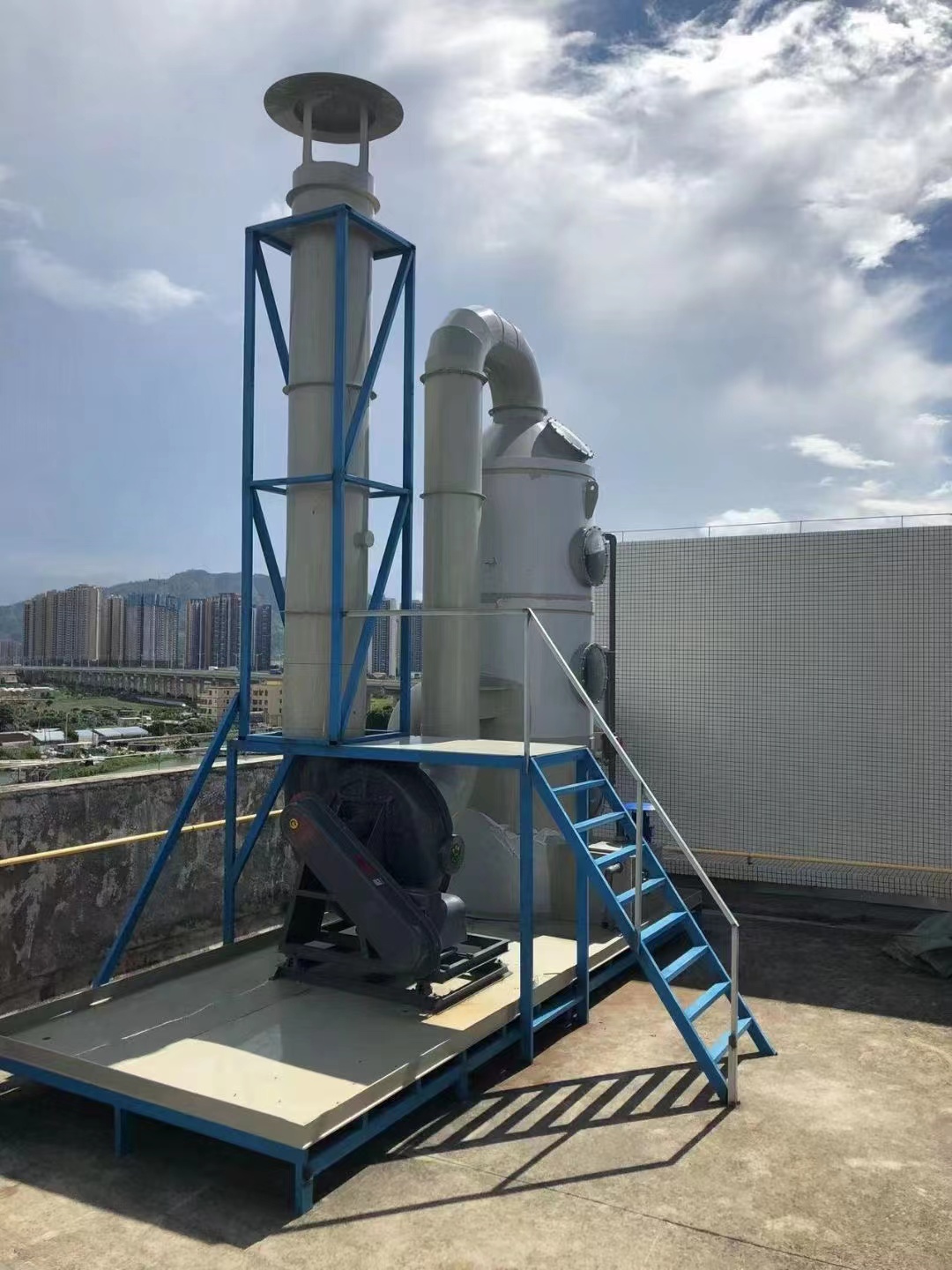
What Is a Wet Scrubber
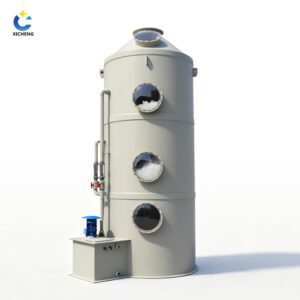
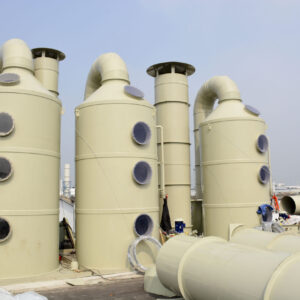
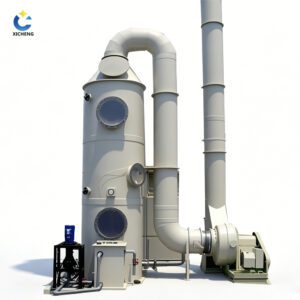
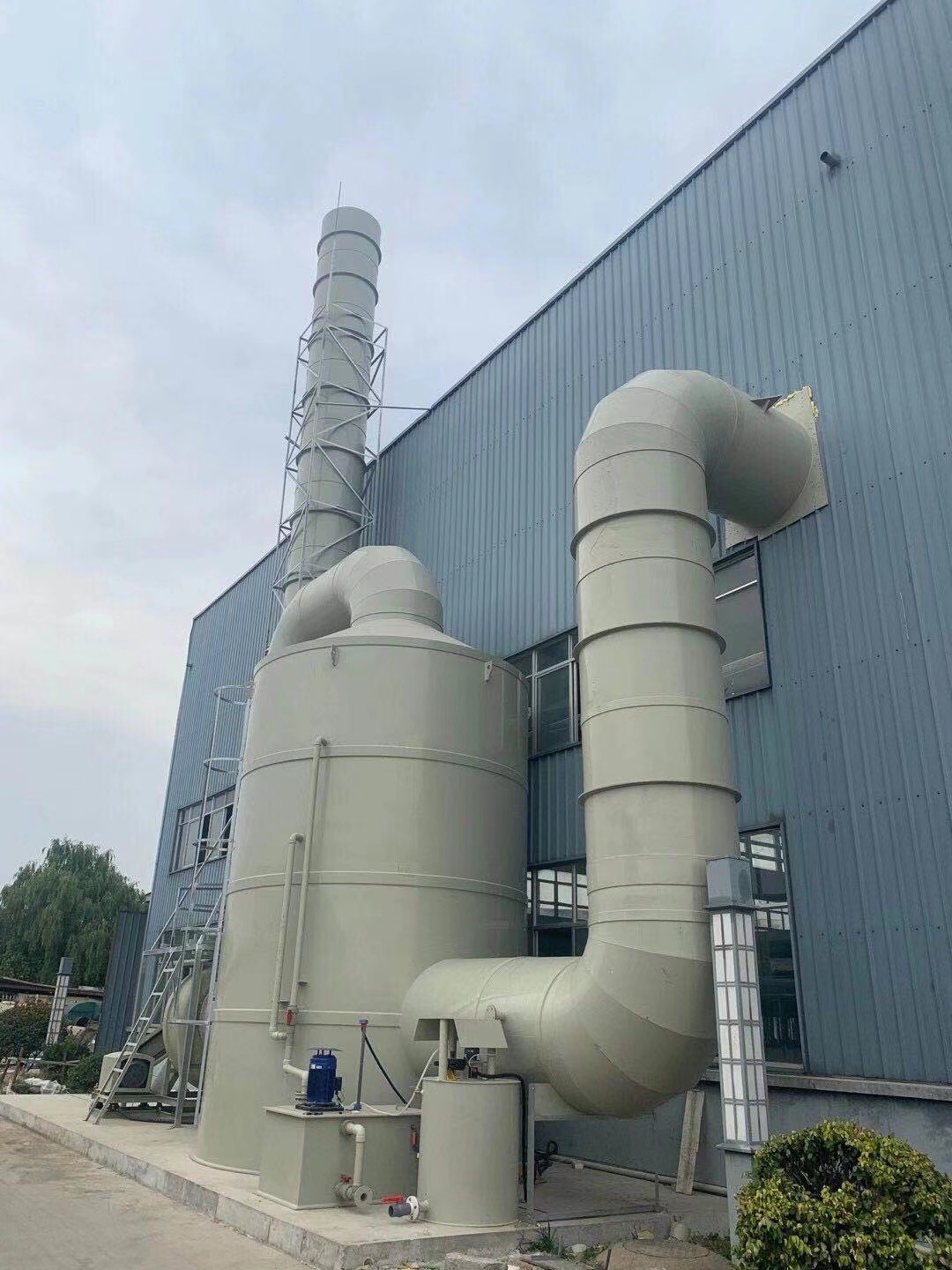
A wet scrubber uses liquid (usually water or a chemical solution) to remove pollutants from industrial exhaust gas. The scrubbing liquid contacts the gas stream — absorbing acid gases, capturing particulates, and neutralizing odorous compounds — before clean air is discharged to atmosphere. Wet scrubbers are the most widely used air pollution control technology for industries handling corrosive, hot, humid, or combustible exhaust streams.
Xicheng has manufactured wet scrubbers since 2009, with over 2,600 systems shipped worldwide. We build five configurations matched to your pollutant type, concentration, and emission target — not a one-size-fits-all catalog product.
Scrubber Types We Manufacture
| Type | Best for | Efficiency | Product page |
|---|---|---|---|
| Spray Scrubber Tower | General acid gas: HCl, SO2, H2S, NH3 at moderate concentrations | over 95% | View product |
| Packed Bed Scrubber | Maximum efficiency for tight emission limits; low-solubility gases like SO2, NOx, Cl2 | over 98% | View product |
| Horizontal Scrubber | Low-headroom installations under 3m ceiling; retrofits; containerized systems | over 95% | View product |
| Chlorine Gas Scrubber | Cl2 removal with oxidation-stabilized PP for aggressive chlorine service | over 95% | View product |
| Acid Fume Scrubber | Electroplating, pickling, and chemical process acid mists including CrO3 | over 95% | View product |
| Flue Gas Desulfurization | Boiler and furnace SO2 removal with integrated quench for hot flue gas | over 95% | View product |
| Chemical Scrubber | Chemical process exhaust requiring specific reagent chemistry | over 95% | View product |
| Ammonia Gas Scrubber | NH3 removal with H2SO4 scrubbing for fertilizer, refrigeration, chemical plants | over 99% | View product |
| Wet Dust Collector | Sticky, explosive, or hygroscopic dust; simultaneous gas absorption | over 85% | View product |
| Exhaust Purification System | Turnkey multi-stage systems for complex multi-pollutant exhaust | Per spec | View product |
How to Choose the Right Scrubber
If you know your pollutant and air volume but are not sure which scrubber configuration fits, send us your gas composition, air volume, and emission target. We will recommend the right type and size — not push the most expensive option. If your pollutant is water-soluble and your emission limit is moderate, a spray tower is usually sufficient. If your emission limit is very tight or your gas has low solubility, a packed bed is worth the additional cost. If your ceiling height is tight, we will confirm whether horizontal makes sense. Contact xicheng023@outlook.com.
Read our guides: Gas Scrubber Selection (Multi-Stage) | How to Size a PP Wet Scrubber
Key Specifications
| Model No. | XC-1 |
| Material | New PP (Polypropylene); also FRP, SS per application |
| Function | Waste Gas Treatment (Chemical Absorption + Particulate Removal) |
| Automation | Automatic pH-controlled dosing |
| Service Life | 8-10 Years |
| Color | Beige / Dark Grey |
| Brand / Origin | Xicheng / China |
Model Selection Table
Standard model range across all configurations — all dimensions in millimeters.
| Air Volume (m3/h) | Diameter (mm) | Thickness (mm) | Drain Outlet | Water Tank (mm) | Inlet/Outlet Pipe | Pump (kW) | Air Resistance (Pa) |
|---|---|---|---|---|---|---|---|
| 3,000 | 800 | 8 | DN32 | 600x700xH700 | 315 | 0.75 | 500 |
| 5,000 | 1,000 | 8 | DN40 | 600x800xH700 | 400 | 1.5 | 500 |
| 8,000 | 1,200 | 8 | DN40 | 600x1000xH700 | 500 | 2.2 | 500 |
| 10,000 | 1,500 | 10 | DN40 | 700x1000xH700 | 550 | 2.2 | 500 |
| 12,000 | 1,600 | 10 | DN50 | 700x1000xH700 | 600 | 3.75 | 500 |
| 15,000 | 1,800 | 10 | DN50 | 700x1200xH700 | 650 | 3.75 | 500 |
| 20,000 | 2,000 | 10 | DN50 | 700x1200xH700 | 750 | 5.5 | 500 |
| 25,000 | 2,200 | 10 | DN50 | 700x1200xH700 | 950 | 5.5 | 600 |
| 30,000 | 2,500 | 12 | DN65 | 700x1200xH700 | 1,000 | 5.5 | 600 |
| 35,000 | 2,700 | 12 | DN65 | 1000x700xH700 | 1,100 | 7.5 | 600 |
| 40,000 | 2,900 | 12 | DN65 | 1000x700xH700 | 1,200 | 7.5 | 600 |
| 45,000 | 3,000 | 12 | DN65 | 1000x700xH700 | 1,250 | 7.5 | 600 |
Custom sizes: Up to 215,000 m3/h air volume. Contact our engineers — xicheng023@outlook.com.
Certifications and Compliance
- CE Certified – Wet Scrubber, Exhaust Fan, Air Valve
- RoHS Compliant – Adsorption Tower materials
- ISO 9001 – Quality Management System
- ISO 14001 – Environmental Management System
- SGS Tested – PP Sheet, FR-PP, PP Pipe, PVC Sheet
- Design Compliance – Systems designed to meet EU Industrial Emissions Directive (2010/75/EU) and US EPA NESHAP
Gas Purification Rate
| Gas Name | Formula | Cleaning Agent | Removal Efficiency |
|---|---|---|---|
| Hydrochloric Acid | HCl | H2O | 90-95% |
| NaOH | 95-99% | ||
| Hydrofluoric Acid | HF | H2O | 90-95% |
| NaOH | 95-99% | ||
| Ammonia Gas | NH3 | H2O | 90-95% |
| H2SO4 | over 99% | ||
| Cyanic Acid | HCN | NaOH | 90-98% |
| Sulfur Dioxide | SO2 | NaOH | 95-99% |
| Chlorine | Cl2 | NaOH | 95-99% |
| Hydrogen Sulfide | H2S | NaOH | 95-99% |
| Sulfuric Acid | H2SO4 | H2O | 95-99% |
| Chromic Acid | CrO3 | H2O | 95-99% |
| Sodium Hydroxide | NaOH | H2O | 95-99% |
| Nitric Acid | HNO3 | H2O | 90-99% |
Why Xicheng
16 years, 2600+ systems shipped worldwide. We engineer the full exhaust treatment chain: scrubber, ductwork, fan, and controls from a single supplier.
- Material integrity: Virgin PP, no recycled filler. Material certs published with every order.
- Not one-size-fits-all: Configuration, packing depth, and chemistry matched to your gas composition.
- Full system capability: Scrubber + PP duct + centrifugal fan + automated dampers. One supplier, one warranty.
Core Advantages
- High Purification Efficiency: Delivers high dust removal and desulfurization efficiency. Effectively removes various industrial waste gases.
- Durable and Premium Material: New PP material offering excellent anti-corrosion and wear-resistant properties.
- Compact Design and Low Consumption: Simple structure, minimal space, low energy consumption.
- Easy Installation and Operation: Floating packing layer, practical, simple to operate.
- Flexible Customization and After-Sales: Personalized sizing, 1-year warranty, overseas support.
How to Order
- You send – Gas composition, air volume, emission target, site constraints
- We recommend – The right scrubber type and configuration for your specific case
- We design – Sizing, packing, chemistry, P&ID drawing
- You approve – Proposal with performance guarantee and pricing
- We build – 7-35 days fabrication + quality inspection
- We ship – Sea freight worldwide; remote commissioning included
Contact xicheng023@outlook.com or WhatsApp +86 18927456906 — proposal within 24 hours.
Global Shipping
We ship worldwide: Southeast Asia (Malaysia, Singapore, Indonesia, Philippines, Thailand, Vietnam), South Asia (India, Pakistan, Bangladesh, Sri Lanka), Middle East (UAE, Saudi Arabia, Qatar, Oman, Kuwait, Bahrain, Israel), Africa (Kenya, Nigeria, South Africa, Egypt, Ethiopia, Tanzania, Ghana), Europe (Germany, UK, France, Italy, Spain, Netherlands, Poland, Turkey, Russia), Americas (USA, Canada, Mexico, Brazil, Chile, Colombia, Argentina), Oceania (Australia, New Zealand).
Best Fit Applications
This laboratory fume hood scrubber is designed for:
- Best pollutants: HCl, HNO₃, H₂SO₄ mist, NH₃, solvents, and acid vapors from lab fume hoods and small-scale batch processes
- Airflow range: 500–5,000 m³/h — sized for single or multiple fume hood exhaust lines
- Removal efficiency: >95% for soluble acid gases at design conditions
- Temperature: Up to 60 °C continuous (standard PP configuration)
- Best settings: University labs, analytical labs, R&D facilities, chemical storage ventilation, hospital pathology labs
Learn More on Our Blog
- What Do Scrubbers Do
- What Are Scrubbers: Types and Uses
- How Scrubbers Work
- Gas Scrubber Selection Guide
- How to Size a PP Wet Scrubber
- Gas Scrubber Operating Cost
Contact the Xicheng Engineering Team Today.
Send us your project specifications for a configuration and quotation within 24 hours.
Manufacturing Head Office: No. 34 Zhenxing Road, Shenzhen, China | WhatsApp: +86 189 2745 6906 | Email: xicheng023@outlook.com