Product Overview
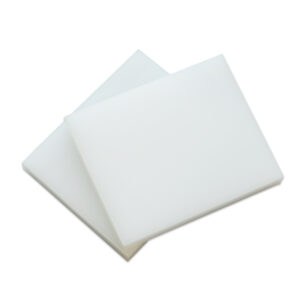
Thick PP sheet 10-25 mm — the structural-grade polypropylene for heavy industrial fabrication where the sheet is the primary load-bearing element, not a lining applied over a steel frame. At 10 mm and above, PP transitions from a fabrication material to an engineering material: capable of resisting hydrostatic pressure in freestanding chemical tank walls to 3 meters height, spanning multi-meter duct sections without intermediate bracing, and supporting continuous loads on equipment platforms and walkways. Extruded from 100% virgin PP homopolymer in beige (natural) and grey. Standard sheet sizes 1220×2440 mm, 1500×3000 mm, and 2000×3000 mm. Custom thicknesses to 50 mm, custom dimensions to 2000×6000 mm. Each sheet measured at 5 points for thickness verification, batch weldability tested. Supplied to chemical tank fabricators, electroplating line builders, water treatment equipment manufacturers, and structural plastic fabricators in 50+ countries.
| Material | 100% virgin PP homopolymer — zero recycled or regrind. Lot-traceable to incoming resin |
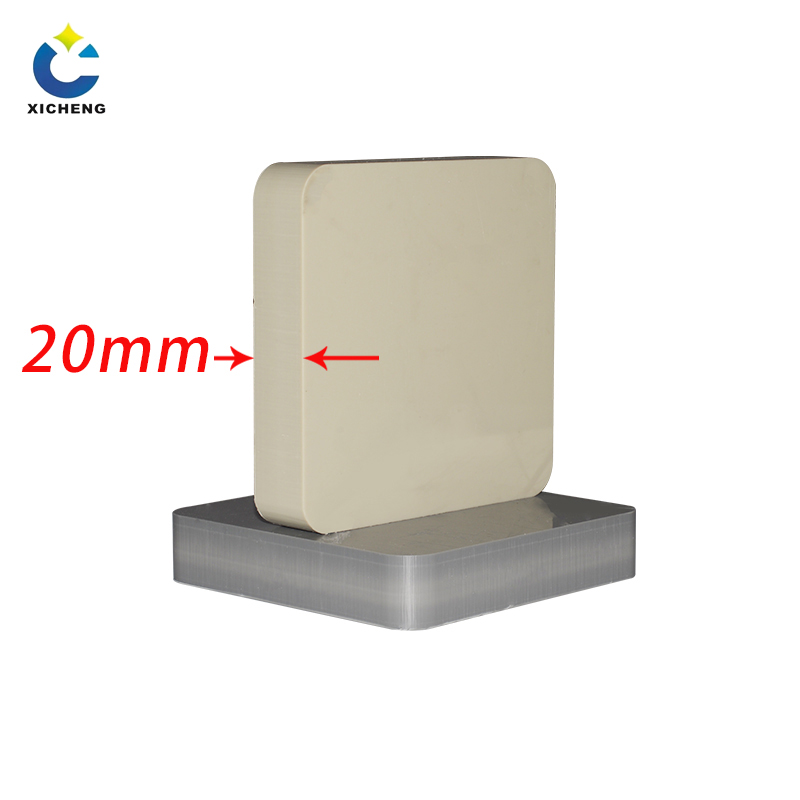
| Thicknesses | 10 mm, 12 mm, 15 mm, 20 mm, 25 mm standard. Custom to 50 mm. ±0.3 mm (10-20 mm), ±0.5 mm (>20 mm) |
| Sheet sizes | 1220×2440 mm / 1500×3000 mm / 2000×3000 mm |
| Weight (1220×2440) | 10mm: 26.7 kg | 15mm: 40.1 kg | 20mm: 80.2 kg | 25mm: 100.2 kg |
| Temperature range | -40°C to 90°C continuous |
| Colors | Beige (natural PP), Grey |
| MOQ | 1 m² — no minimum for standard thicknesses |
| Lead time | 15-25 days |
When Sheet Thickness Becomes the Engineering Variable
A 6 mm PP tank wall with external steel reinforcement is a lined structure — the steel carries the hydrostatic load, the PP provides corrosion resistance. A 15 mm PP tank wall without external steel is a monolithic structure — the PP carries both the hydrostatic load and provides corrosion resistance. The difference in thickness isn’t just about strength — it changes the failure mode, the fabrication method, and the maintenance requirements:
- The hydrostatic reality — what 15 mm can hold vs what it can’t. At the base of a 3-meter liquid column (specific gravity 1.0), hydrostatic pressure is approximately 30 kPa — about 3 tons of lateral force per meter of wall width. A 15 mm PP panel spanning 3 meters experiences approximately 45 kN of total lateral load. PP’s flexural modulus (~1,100 MPa ISO 178) is about 1/200th that of structural steel — so PP resists this load through cross-sectional depth, not material stiffness. The result: for water-like liquids up to 3 m wall height, 15 mm PP with proper butt-welded corner joints and rigid base support provides adequate structural capacity for tanks to approximately 10,000 liters. For liquids with SG above 1.0 (sulfuric acid at 50% is SG 1.4 — 40% more hydrostatic pressure at the same fill height), the required thickness scales proportionally: 15 mm becomes 20+ mm. For tanks above 10,000 liters or wall heights exceeding 3 meters, 20-25 mm sheet is required, or external steel reinforcement becomes more cost-effective than further increasing PP thickness. These are design guidelines — contact Xicheng engineering for a specific thickness calculation for your tank dimensions and liquid chemistry.
- Multi-pass welding — thickness changes the joint design. A 6 mm sheet is welded with a single-pass V-groove — the welding rod fills the groove in one pass, and the heat from the hot air torch penetrates through the full sheet thickness. A 15 mm sheet requires a multi-pass weld — the V-groove is wider and deeper, filled in 3-5 passes with progressively laid welding rod. Each pass must fuse to the previous pass and to the parent material. A void between passes becomes a leak path. Xicheng thick sheet is batch-tested for weldability — a test coupon from each production batch is welded with standard PP rod and pull-tested to verify parent-material weld strength before the batch ships.
- Field erection — thick sheet enables on-site tank assembly. Tanks above approximately 10,000 liters cannot be shipped as a single welded unit — they exceed truck bed dimensions. Thick PP sheet (15-25 mm) enables a field-erection approach: panels are cut, edge-prepared, and pre-fitted at our facility, then disassembled for flat-packed shipping. On site, a qualified hot-gas welding team reassembles and welds the panels into the finished tank. The thick cross-section provides dimensional stability during handling and welding that thin sheet cannot — 6 mm panels warp under their own weight during positioning; 15 mm panels hold their shape. For chemical storage applications see our PP water storage tanks and PP chemical acid storage tanks, both fabricated from Xicheng thick PP sheet.
Why Xicheng
16 years, 2600+ systems shipped worldwide. Thick PP sheet is the material we use to build our own chemical tanks, pickling baths, and electroplating vessels — approximately 40% of our thick sheet output is consumed in our own fabrication shop. The QC standard is the same because the material is the same:
- Internal stress relief — what happens after extrusion determines whether your tank fits. Thick PP sheet cools from the outside in during extrusion — the surface solidifies first, the core last. If cooling is too rapid or uneven, the core solidifies under compression trapped by the already-rigid surface layers. When the fabricator cuts into a stressed sheet — a straight cut for a tank wall panel — the released internal stress causes the cut edge to bow or the panel to cup. A tank built from stressed panels will not sit square on its base, and corner welds will carry uneven loading. Our thick sheet extrusion uses controlled, gradual cooling with cross-sectional temperature monitoring to minimize residual stress. Each sheet is checked for flatness after cooling — sheets exceeding our flatness tolerance are rejected before shipping, not after the fabricator has already cut into them.
- The 25 mm+ transition — when to stop adding PP and start adding steel. Above approximately 25 mm, unreinforced PP’s diminishing returns set in — the material cost and weight increase faster than the structural benefit. At this point, external steel reinforcement with 15 mm PP lining is typically more cost-effective than 30 mm monolithic PP. We tell customers this because we sell both solutions — steel-reinforced PP tanks and monolithic thick-PP tanks. The right answer depends on the chemistry (if the external environment is also corrosive, external steel may corrode), the installation (field erection favors monolithic PP), and the maintenance access (steel frames need coating inspection; monolithic PP doesn’t). Contact xicheng023@outlook.com with your tank requirements — we’ll recommend the right approach, not the one that sells more sheet.
Send your tank dimensions, liquid type and specific gravity, and operating temperature to xicheng023@outlook.com. We’ll provide a thickness calculation and quotation within 24 hours. WhatsApp: +86 18927456906.
Core Advantages
- Self-Supporting Tank Walls to 3m Height: 12-15 mm PP handles hydrostatic loads for tanks to ~10,000L without external steel bracing. 20-25 mm for larger freestanding tanks. Eliminates the corrosion-prone steel frame entirely.
- Batch Weldability Tested — Pull-Test Verified: Every production batch includes a welded test coupon pull-tested to verify parent-material weld strength before shipment. No surprises at the fabrication stage.
- Controlled Cooling for Residual Stress Relief: Gradual, monitored cooling during extrusion minimizes internal stress that causes panel warping when cut. Flatness checked on every sheet.
- Full Cross-Section Corrosion Immunity: A gouge, scratch, or surface cut into 15 mm PP exposes identical 15 mm PP — there is no coating to fail, no substrate to corrode, no corrosion initiation point.
- Field-Erectable Tank Fabrication: Panels pre-fitted at factory, flat-packed for shipping, welded on-site by qualified teams. Thick sheet provides dimensional stability during handling that thin sheet cannot.
Key Specifications
Mechanical & Physical Properties
| Material | 100% Virgin PP (Polypropylene) Homopolymer — zero recycled content |
| Thickness | 10mm, 12mm, 15mm, 20mm, 25mm standard. Custom to 50mm |
| Tolerance | ±0.3mm (10-20mm) / ±0.5mm (>20mm). 5-point verified per sheet |
| Sheet Sizes | 1220×2440mm / 1500×3000mm / 2000×3000mm |
| Density | 0.91-0.93 g/cm³ (ISO 1183) |
| Tensile Strength | 28-32 MPa (ISO 527) |
| Flexural Strength | 35-40 MPa (ISO 178) |
| Flexural Modulus | ~1,100 MPa (ISO 178) |
| Impact Strength (Notched Izod, 23°C) | 3-5 KJ/m² (ISO 180) |
| Heat Deflection Temperature (0.45 MPa) | 90-100°C (ISO 75) |
| Working Temperature | -40°C to 90°C |
| Flammability | HB (UL 94). V0 FR grade available |
| Colors | Beige (natural), Grey |
Weight & Structural Reference
| Thickness | Weight (1220×2440mm) | Handling | Structural Capacity (guideline) |
|---|---|---|---|
| 10mm | 26.7 kg | One person (heavy) | Small tanks ≤2,000L with reinforcement |
| 12mm | 32.1 kg | Two-person | Tanks 2,000-5,000L with steel frame |
| 15mm | 40.1 kg | Two-person | Tanks 5,000-10,000L, freestanding wall ≤3m |
| 20mm | 80.2 kg | Mechanical lift | Tanks >10,000L, freestanding wall ≤3m |
| 25mm | 100.2 kg | Mechanical lift | Large vessels, structural platforms |
Above 25mm, glass-fiber-reinforced PP (FRPP) or externally reinforced construction is typically more cost-effective than further increasing unreinforced PP thickness. For thin and medium-gauge applications, see our main PP polypropylene sheet 2-30mm. For structural engineering plate, see PP rigid engineering plate.
PP vs 316L Stainless Steel — Chemical Tank Material Comparison
| Criterion | PP Sheet 15mm | 316L Stainless Steel 3mm |
|---|---|---|
| Material Cost (per m²) | Lower | 3-5× higher |
| Corrosion in HCl Service | Immune | Pitting corrosion within months |
| Corrosion in Chloride Service | Immune | Stress corrosion cracking risk |
| Weight | ~14 kg/m² (15mm) | ~24 kg/m² (3mm) |
| Fabrication | Hot-gas welding | TIG welding (skilled labor) |
| Service Life (acid service) | 10-15 years | 1-5 years (depending on chemistry) |
| Repairability | Weldable on-site | Weldable, requires passivation |
PP’s corrosion immunity in acid and chloride service within its 90°C temperature limit eliminates the primary failure mode of metallic tanks in chemical processing — corrosion. Material selection for chemical containment equipment aligns with industry practice documented in US EPA hazardous waste tank compliance guidance, which recognizes non-metallic construction as a valid corrosion elimination strategy.
Certifications and Compliance
- CE Certified — PP Thick Sheet 10-25mm (3 certificates)
- RoHS Compliant — PP homopolymer
- ISO 9001:2015 — Quality Management System
- ISO 14001:2015 — Environmental Management System
- SGS Tested — Mechanical properties (tensile ISO 527, impact ISO 180, flexural ISO 178), dimensional accuracy, weldability
- Batch Weldability Certificate — Pull-test verified weld coupon from each production batch
How to Order
- You send — Required thickness (mm), sheet dimensions, quantity, application (tank/duct/platform/other), liquid type and specific gravity if for tank fabrication
- We calculate — Thickness adequacy for your application, confirm availability, provide quotation with batch weldability data
- We produce — Controlled-cooling extrusion, 5-point QC per sheet, batch weldability pull-test
- We ship — Reinforced flat pallets for thick sheet (≥20mm shipped flat to prevent warping). Sea freight (FOB Shenzhen), air freight, or land transport
Contact xicheng023@outlook.com or WhatsApp +86 18927456906 — thickness calculation and quotation within 24 hours.
Complete Your System
- PP Polypropylene Sheet 2-30mm — Full thickness range for general fabrication
- PP Rigid Engineering Plate — Beige/grey/white rigid PP plate
- Thin PP Sheet 3-10mm — Light-gauge for duct panels and covers
- PP Water Storage Tank — Tanks fabricated from Xicheng thick PP
- PP Chemical Acid Storage Tank — Heavy-duty chemical containment
- PP PVC Welding Rod — Color-matched welding rod for tank fabrication
FAQ
What thickness do I need for my chemical storage tank?
For rectangular tanks with external steel reinforcement: up to 2,000L use 10mm; 2,000-5,000L use 12mm; 5,000-10,000L use 15mm. For freestanding tanks without steel frame: >10,000L use 20-25mm. For liquids with SG above 1.0, thickness scales proportionally (SG 1.4 = 40% more hydrostatic pressure, so 15mm → 20+ mm). These are design guidelines — contact Xicheng with your tank dimensions, stored liquid specific gravity, and operating temperature for a specific thickness calculation. We provide this design support at no charge with quotation.
At what point does thick PP replace stainless steel?
When the process chemistry attacks stainless steel: HCl at any concentration, H₂SO₄ above 10% at elevated temperature, chloride-containing solutions (pitting and stress corrosion cracking risk). Within PP’s 90°C limit, PP eliminates corrosion as a failure mode entirely. The material cost of 15mm PP is a fraction of 316L stainless of equivalent structural capacity.
Can thick PP sheet be welded on-site for field-erected tanks?
Yes. Multi-pass extrusion welding with PP welding rod produces full-strength butt joints between panels. On-site welding requires a qualified fabricator, hot-gas welding equipment, and dry conditions. For large field-erected tanks, panels are fabricated and pre-assembled at our facility for fit-check, then disassembled for shipping and re-welded on-site.
Why not just use thin PP with more steel reinforcement?
Steel reinforcement in a corrosive chemical environment requires ongoing coating maintenance — the steel frame must be inspected and repainted periodically. A monolithic thick PP tank eliminates this maintenance burden entirely. The trade-off is higher upfront material cost (thick PP costs more than thin PP + steel) for lower lifecycle cost (no coating maintenance, no steel replacement). For installations where maintenance access is difficult or downtime is expensive, monolithic PP typically provides lower total cost of ownership.