Product Overview
PP (polypropylene) water storage tank — injection-molded or hot-gas welded from virgin PP sheet for industrial and commercial water storage, chemical solution holding, and process liquid containment. Unlike HDPE tanks that stress-crack under certain chemical exposures, or steel tanks that rust from the inside out when water chemistry changes, PP provides consistent corrosion resistance across a wide range of liquids without requiring internal linings, coatings, or cathodic protection. Standard capacities from 100 to 10,000 liters in cylindrical and rectangular configurations. Custom sizes, fittings, and reinforcement available.
| Application | Industrial water storage, process water holding, chemical solution containment, fire water reserve, rainwater harvesting, wastewater equalization |
| Material | Virgin PP sheet — hot-gas extrusion welded. UV-stabilized PP for outdoor installation |
| Capacity range | 100-10,000 liters standard; custom capacities to 50,000+ liters |
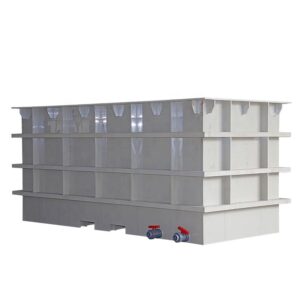
| Configuration | Cylindrical (vertical or horizontal) or rectangular — matched to available space |
| Wall thickness | 5-15 mm depending on capacity and liquid specific gravity; engineered per application |
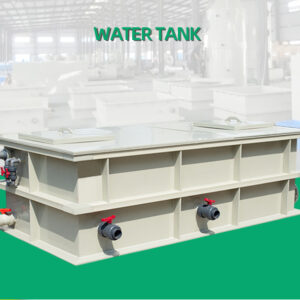
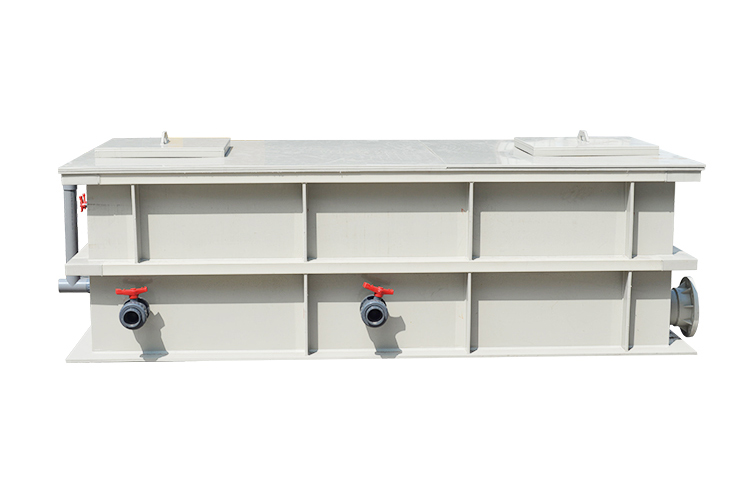
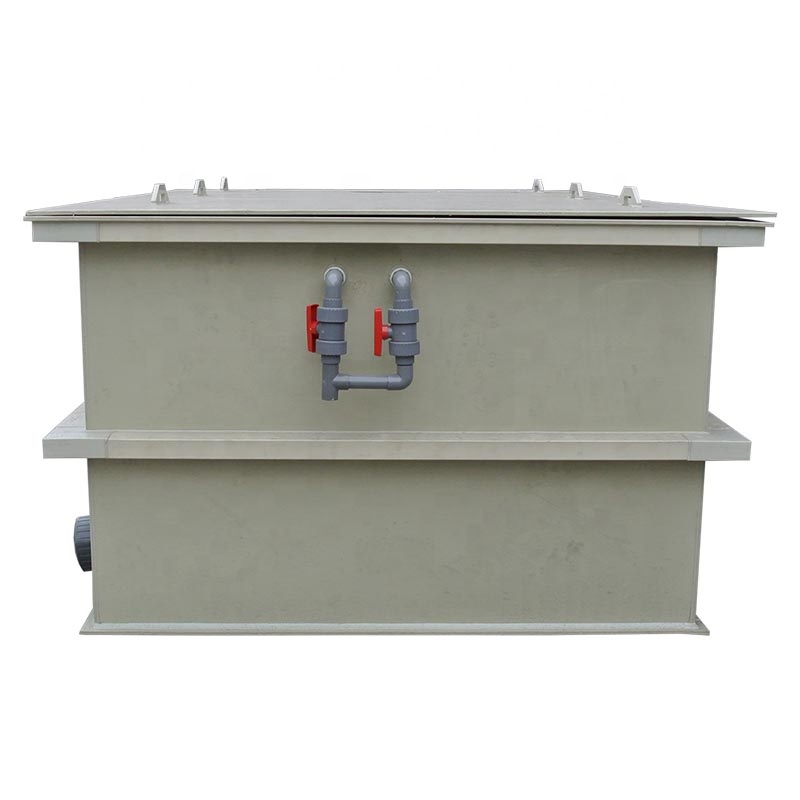
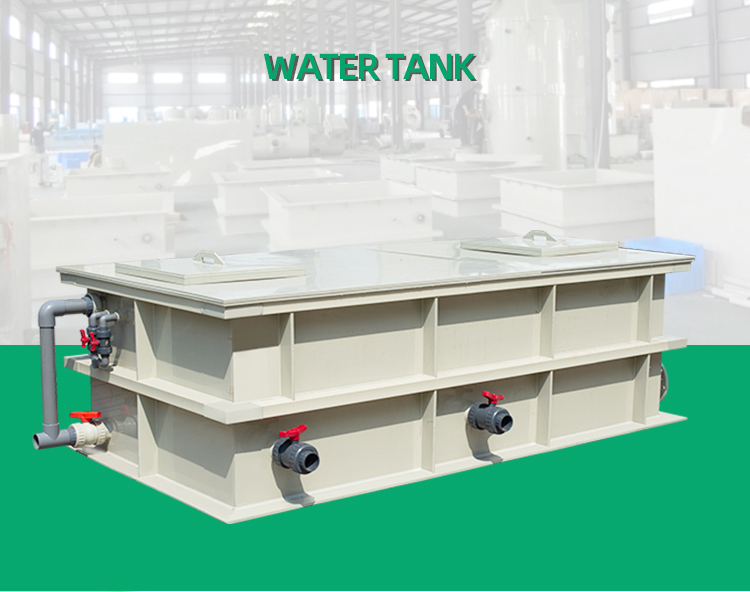
| Fittings | Flanged inlet/outlet, overflow, drain, level indicator, inspection hatch — configured to order |
| Color | Beige / Dark Grey / White |
| Lead time | 10-20 days standard; 15-25 days custom |
PP vs Other Tank Materials
| Material | Advantages | Limitations | Best For |
|---|---|---|---|
| PP | Broad chemical resistance (acids, alkalis, salts), no internal coating needed, weld-repairable, lightweight for transport and installation | Temperature ≤80degC for continuous liquid contact. Not for strong oxidizers (conc. HNO3, H2O2 above 30%) or aromatic/chlorinated solvents. UV stabilizer required for outdoor use. | Chemical plant water storage, electroplating rinse water, wastewater treatment, any application where liquid chemistry varies or includes corrosive agents |
| HDPE | Lower cost, good impact resistance, widely available | Environmental stress cracking from detergents, surfactants, and certain chemicals. Not weld-repairable in the field. | Potable water, rainwater, non-aggressive liquids where lowest cost is the primary driver |
| SS316L | High temperature capability, high structural strength | Pitting and crevice corrosion in chloride-containing water. Expensive material and fabrication. Heavy — requires structural support and lifting equipment. | High-temperature liquids above 80degC, high-pressure vessels, applications requiring metal’s structural rigidity |
| FRP | Higher temperature than PP (to 120degC), higher mechanical strength | Chemical resistance differs from PP — strong alkalis attack polyester resin. Higher cost. Cannot be easily modified after fabrication. | Elevated temperature chemical storage where PP’s 80degC limit is insufficient |
Why Xicheng
16 years, 2600+ systems shipped worldwide. A water tank that leaks is not a water tank — it’s a liability. The difference between a tank that holds for 15 years and one that fails at a weld seam within 3 years is in the welding quality, material selection, and fabrication engineering:
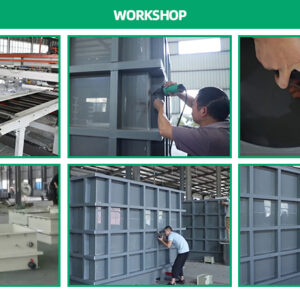
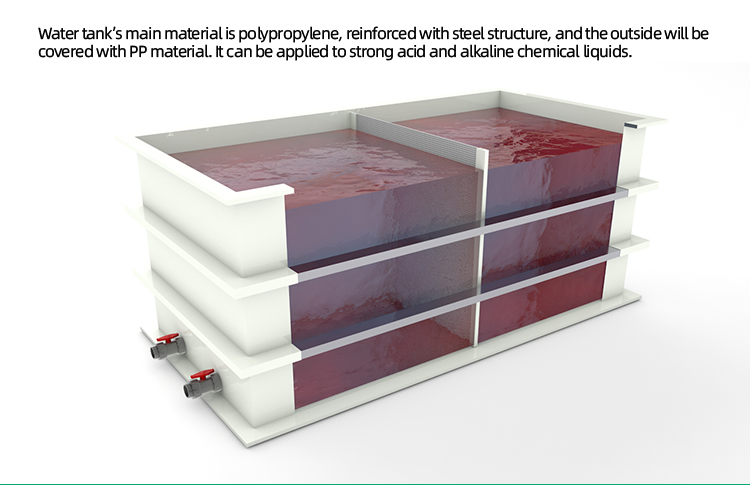
- Hot-gas extrusion welded — seams as strong as the parent material. Each tank is fabricated from PP sheet by hot-gas extrusion welding — the molten PP welding rod fuses with the parent sheet to create a joint with mechanical properties approaching those of the original material. Unlike bolted tanks with gasketed seams (every gasket is a future leak point) or rotationally-molded tanks (limited to simple shapes), welded PP tanks can incorporate stiffening ribs, internal baffles, divider walls, and custom fitting placements that molded tanks cannot achieve.
- Wall thickness engineered for your liquid, not a generic standard. A tank holding water (specific gravity 1.0) requires less wall thickness than a tank holding sulfuric acid solution (SG 1.2-1.8 depending on concentration). A tank 2 meters tall has twice the hydrostatic pressure at the bottom than a tank 1 meter tall. We calculate wall thickness for your specific liquid density, tank height, and required safety factor — not a one-thickness-fits-all standard. Design methodology aligns with the structural and containment principles recognized in US EPA Underground Storage Tank Standards for liquid containment integrity, applied to above-ground industrial tank fabrication.
- Custom fittings where you need them — not where the mold puts them. Molded tanks have fixed fitting locations — the inlet, outlet, overflow, and drain are where the mold designer decided. Fabricated PP tanks have fittings where your installation requires them. This eliminates the field modifications (drilling, tapping, and sealing) that compromise molded tank integrity and void manufacturer warranties.
Send your tank capacity, liquid type, and fitting requirements to xicheng023@outlook.com. We’ll design the tank and provide a quotation. WhatsApp: +86 18927456906.
Core Advantages
- PP Throughout — No Linings, No Coatings: Solid PP wall from the liquid-contact surface to the exterior. A scratch reveals the same material — no steel substrate waiting to rust.
- Hot-Gas Welded Seams = Parent Material Strength: Each weld joint fuses PP welding rod with parent sheet — mechanical properties approaching original material. No gaskets to age and leak.
- Wall Thickness Engineered Per Application: Calculated for your liquid density, tank height, and safety factor — not a generic one-size-fits-all thickness.
- Custom Fitting Placement: Inlet, outlet, overflow, drain, level ports, inspection hatch — positioned where your piping layout requires them, not where a mold dictates.
- Weld-Repairable in the Field: A damaged PP tank can be repaired by hot-gas welding on site — no tank replacement, no factory return, no extended downtime.
Key Specifications
| Material | Virgin PP (UV-stabilized for outdoor); PVC or FRP available |
| Capacity | 100-10,000 liters standard; custom to 50,000+ liters |
| Configuration | Cylindrical (vertical/horizontal) or rectangular |
| Wall Thickness | 5-15 mm — engineered for liquid SG and tank height |
| Liquid Temperature | PP: ≤80degC continuous; FRP: ≤120degC |
| Fittings | Flanged inlet/outlet/overflow/drain; level indicator; inspection hatch |
| Service Life | 10-15 Years |
| Brand / Origin | Xicheng / China |
Certifications and Compliance
- CE Certified – PP Storage Tank
- RoHS Compliant – PP material
- ISO 9001 – Quality Management System
- ISO 14001 – Environmental Management System
- SGS Tested – PP sheet mechanical properties, weld integrity
- Design Compliance – Tanks designed to meet relevant static head and structural loading requirements
How to Order
- You send – Required capacity (liters), liquid type and specific gravity, operating temperature, fitting list with sizes and locations, installation (indoor/outdoor)
- We design – Tank configuration, wall thickness, stiffening rib layout, fitting placement, and pricing
- You approve – Tank drawing with dimensions, fitting schedule, and delivery timeline
- We fabricate – 10-20 days standard; 15-25 days custom
Contact xicheng023@outlook.com or WhatsApp +86 18927456906 — quotation within 24 hours.
Complete Your System
- PP Chemical & Acid Storage Tank – Enhanced chemical resistance for aggressive liquids
- PP Rectangular Storage Tank – Space-efficient rectangular configurations
- PP Acid Pickling Tank – Pickling and surface treatment tanks
- PP Industrial Pipe – Matching pipe for tank connections
FAQ
PP or HDPE — which tank material should I choose?
PP is preferred when the stored liquid has any corrosive potential (acids, alkalis, chemical solutions), when the tank will be outdoors (UV-stabilized PP), or when future modifications are anticipated (PP is weld-repairable). HDPE is adequate for potable water, rainwater, and non-aggressive liquids at the lowest cost — but HDPE cannot be reliably field-welded for repairs. If your water chemistry could change (seasonal variations, process changes, chemical addition), PP provides the chemical resistance margin that HDPE lacks.
What is the maximum tank size you can produce?
Standard capacities to 10,000 liters. Larger tanks to 50,000+ liters are fabricated as field-assembled units — the tank panels are produced in our factory, transported to site, and welded together by our installation team. This approach overcomes the shipping constraints that limit factory-built tanks to approximately 10,000 liters (a 10,000-liter tank is approximately 2.4 m diameter × 2.4 m height — the maximum that fits on a standard flatbed truck).
Can you add heating or cooling to the tank?
Yes — PP tanks can be fitted with external heating jackets, internal PP or PVDF heating coils, or immersion heaters with PP-compatible sheath materials. The heating method must be specified at the design stage — retrofitting heating into an existing PP tank is more expensive than including it in the original fabrication.