

Product Overview
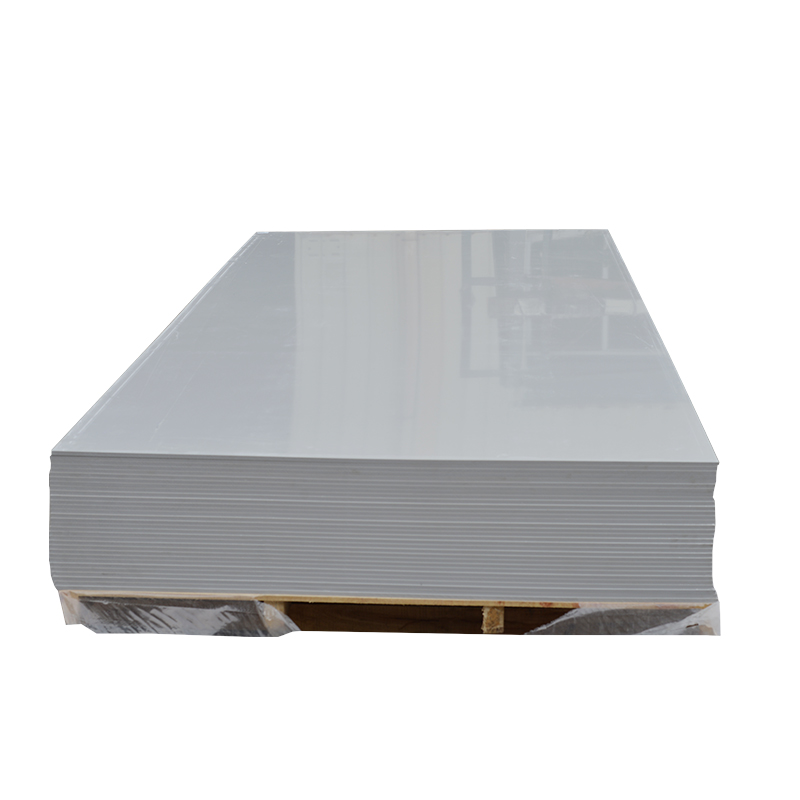
PVC rigid sheet (PVC-U, unplasticized polyvinyl chloride) — the cost-effective industrial plastic board for indoor, mild-environment fabrication where higher room-temperature rigidity and inherent flame retardancy are required. Extruded in thicknesses from 2 mm to 30 mm, standard sheet sizes 1220×2440 mm (4×8 ft) and 1500×3000 mm. Grey and white finishes. Unlike PP sheet, PVC provides approximately 2× the flexural strength at ambient temperature (70-80 MPa vs 35-40 MPa) and carries an inherent UL 94 V0 flame rating without additive flame retardants — the chlorine in the polymer backbone (approximately 57% by weight) provides natural self-extinguishing behavior. Supplied to general ventilation contractors, water treatment equipment builders, construction panel installers, and industrial enclosure fabricators in 50+ countries.
| Material | Rigid PVC-U (Unplasticized Polyvinyl Chloride) — no plasticizer migration, no flexibility loss over time |
| Thickness range | 2-30 mm standard. Tolerance ±0.2 mm (≤10mm), ±0.3 mm (10-20mm), ±0.5 mm (>20mm) |
| Sheet sizes | 1220×2440 mm (4×8 ft) / 1500×3000 mm. Custom dimensions available |
| Temperature range | -10°C to 60°C continuous service. NOT for applications exceeding 60°C |
| Density | 1.38-1.45 g/cm³ — approximately 50% heavier than PP. A 1220×2440×6mm sheet weighs ~24 kg |
| Flexural strength | 70-80 MPa (ISO 178) — approximately 2× PP’s stiffness at room temperature |
| Flame rating | UL 94 V0 — inherent, chlorine-based. Self-extinguishing. Produces HCl gas and dense smoke when burned — see fire safety notes below |
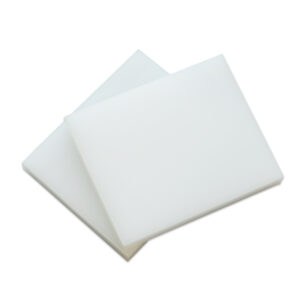
| Colors | Grey, White |
| MOQ | 1 m² — no minimum for standard thicknesses and colors |
| Lead time | 15-25 days |
When PVC Makes Sense — And When It Doesn’t
PVC rigid sheet is not a one-for-one substitute for PP. Each material has a distinct performance envelope, and specifying the wrong one can fail quickly — often in ways that aren’t visible until it’s too late. Understanding PVC’s specific advantages and its hard limits is the difference between a material choice that lasts 15 years and one that fails within 15 months:
- Higher rigidity — but only at room temperature. PVC’s flexural strength of 70-80 MPa at 20°C is approximately double PP’s 35-40 MPa. This means a PVC duct panel of given thickness spans wider between supports with less deflection than an equivalent PP panel — fewer brackets, less support structure, simpler installation. However, PVC’s stiffness degrades rapidly above 50°C — by 60°C, its mechanical properties have declined substantially while PP at 60°C is still operating well within its envelope (rated to 90°C). Specify PVC for indoor, ambient-temperature installations. Never specify PVC for equipment that handles heated process liquids, steam condensate, or hot exhaust gases.
- Inherent V0 — with a smoke toxicity tradeoff. PVC’s chlorine content makes it naturally self-extinguishing — remove the flame source and PVC stops burning. This inherent V0 rating requires no additive flame retardant package. However, when PVC does burn, the chlorine (57% by weight) converts to dense, corrosive hydrogen chloride (HCl) gas combined with atmospheric moisture to form hydrochloric acid — the same acid that attacks metal building structures, electrical equipment, and human respiratory tissue downstream of a fire. The OSHA HCl exposure limit is 5 ppm (ceiling) — a concentration easily exceeded in enclosed-space PVC fires. For occupied building ventilation, laboratory fume hoods, and electrical enclosures where people may be present during a fire, our FR PP (V0) provides equivalent fire rating without the toxic smoke penalty. For outdoor or unoccupied industrial installations, PVC’s inherent V0 remains functionally adequate and cost-effective. For comprehensive chemical resistance and higher-temperature applications, see our primary PP polypropylene sheet.
- Lower cost — at the expense of chemical versatility. PVC sheet is typically less expensive than PP of equivalent thickness. For mild, ambient-temperature, non-critical applications — general ventilation ductwork, equipment enclosures, interior construction panels — PVC delivers adequate performance at lower material cost. But PVC’s chemical resistance is narrower: it handles mineral acids (HCl, H₂SO₄) at moderate concentrations and ambient temperatures, but is attacked by oxidizing acids (HNO₃), many organic solvents, and strong alkalis at elevated temperatures. PP’s chemical resistance spectrum is broader — it handles the full range of aqueous acids including HF (which attacks glass and many metals), all concentrations of caustic soda, and most salt solutions to 90°C. For chemical service, the material cost difference between PVC and PP is negligible compared to the cost of a failed tank or duct.
Why Xicheng
16 years, 2600+ systems shipped worldwide. PVC sheet extrusion requires tighter thermal process control than PP — the window between the temperature at which PVC melts and the temperature at which it thermally degrades (releasing HCl and discoloring) is narrower. A PVC extruder that runs too hot produces yellowed, embrittled sheet that fabricators will reject. A PVC extruder that runs too cold produces sheet with residual stress that warps the moment a fabricator cuts into it:
- Thermal stability verified before extrusion. Every incoming PVC compound batch is tested for thermal stability (Congo Red test per ISO 182) before entering production. Compound outside thermal stability specification is rejected — we do not compensate by lowering extrusion temperature because that introduces residual stress. The extrusion melt temperature is monitored at the die throughout the production run — any deviation beyond the defined window triggers an automatic alarm and operator intervention.
- No recycled PVC — no unknown thermal history. Recycled PVC carries unknown thermal history — each prior heat cycle degrades the polymer chains slightly, narrowing the processing window further. A batch of recycled PVC flake may contain PVC from pipes (processed at one temperature), window profiles (processed at another), and cable insulation (processed at a third) — each with different stabilizer packages that interact unpredictably during re-extrusion. Every Xicheng PVC sheet is extruded from virgin PVC-U compound with known thermal stability characteristics.
- Honest about PVC’s limits. PVC is the right material for specific applications: indoor, ambient temperature, mild chemical environment, where cost and rigidity matter more than broad chemical resistance or fire safety. For applications outside this envelope, we will recommend PP or FR PP — not because we don’t want to sell PVC, but because a material failure damages our reputation more than a lost sale. Contact xicheng023@outlook.com with your application details and we’ll help you select correctly.
Send your sheet specifications to xicheng023@outlook.com for a quotation within 24 hours. WhatsApp: +86 18927456906.
Core Advantages
- 2× PP’s Flexural Stiffness at Room Temperature: 70-80 MPa flexural strength — fewer supports, wider spans, simpler installation for ambient-temperature ductwork and panels.
- Inherent V0 Without FR Additives: Self-extinguishing behavior from chlorine in the polymer backbone — no additive flame retardant package required.
- Lower Material Cost Than PP: Economical choice for mild-environment, indoor applications at scale where chemical exposure is limited.
- Hard, Scratch-Resistant Surface: Higher surface hardness than PP — better mar resistance for visible panels, equipment enclosures, and architectural surfaces.
- Better Inherent UV Resistance Than Standard PP: Grey PVC has fair UV durability — 5-8 years in sheltered outdoor service without additional UV stabilization.
Key Specifications
Mechanical & Physical Properties
| Material | Rigid PVC-U (Unplasticized Polyvinyl Chloride) — virgin compound, zero recycled content |
| Density | 1.38-1.45 g/cm³ (ISO 1183) — approximately 50% heavier than PP |
| Tensile Strength | 45-55 MPa (ISO 527) |
| Flexural Strength | 70-80 MPa (ISO 178) |
| Impact Strength (Notched Izod, 23°C) | 3-5 KJ/m² (ISO 180) |
| Heat Deflection Temperature (0.45 MPa) | 65-75°C (ISO 75) |
| Vicat Softening Point | 75-85°C (ISO 306) |
| Working Temperature Range | -10°C to 60°C |
| Water Absorption (24h) | < 0.1% (ISO 62) |
| Flammability | V0 (UL 94) — inherent, chlorine-based. Produces HCl gas and dense smoke when burned |
| Colors | Grey, White |
PVC vs PP Selection Guide
| Criterion | Choose PVC When | Choose PP When |
|---|---|---|
| Temperature | Service ≤60°C | Service 60-90°C |
| Chemical Environment | Mild — general industrial, water treatment | Aggressive — strong acids, HF, concentrated alkalis |
| Fire Safety | V0 needed; smoke toxicity not a primary concern | V0 needed AND /low-smoke required |
| Rigidity at 20°C | Higher stiffness beneficial | Moderate stiffness acceptable |
| Weight | Higher weight acceptable | Light weight matters for handling |
| Budget | Lower material cost is priority | Performance outweighs cost difference |
Certifications and Compliance
- CE Certified — PVC Rigid Sheet (3 certificates)
- RoHS Compliant — PVC-U material
- ISO 9001:2015 — Quality Management System
- ISO 14001:2015 — Environmental Management System
- SGS Tested — Mechanical properties (tensile ISO 527, impact ISO 180, flexural ISO 178), dimensional accuracy
- UL 94 V0 — Inherent flame retardancy (chlorine-based)
How to Order
- You send — Required thickness (mm), sheet dimensions (mm), color (grey/white), quantity (sheets or m²), application, and whether fire smoke toxicity is a design constraint
- We confirm — Technical feasibility, availability, pricing, lead time. If PVC is not appropriate for your application, we will tell you and recommend the right material
- We produce — Virgin PVC-U extrusion with thermal stability-verified compound, 5-point QC measurement per sheet
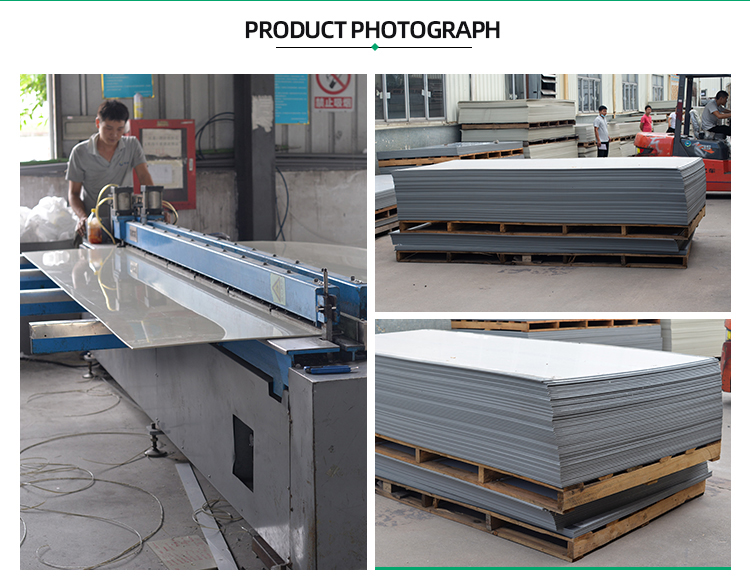
- We ship — Wood pallet with moisture barrier. Sea freight (FOB Shenzhen), air freight, or land transport
Contact xicheng023@outlook.com or WhatsApp +86 18927456906 — quotation within 24 hours.
Complete Your System
- PP Polypropylene Sheet — Broader chemical resistance, 90°C capability
- White PP Cleanroom Sheet — white sheet for GMP and cleanroom
- FR PP Sheet (V0) — Fire-rated without toxic smoke
- Thin PP Sheet 3-10mm — Light-gauge PP alternative for duct panels and covers
- PP Round Duct — Ductwork for sheet-fabricated ventilation systems
FAQ
When should I choose PVC over PP?
Choose PVC when the application is indoor, at ambient temperatures (≤60°C), with mild chemical exposure, and cost or room-temperature rigidity are the primary drivers. Choose PP for aggressive acid service, temperatures above 60°C, or fire safety requirements. For applications requiring both fire rating and broad chemical resistance in occupied spaces, upgrade to FR PP (V0).
Can PVC and PP be welded together?
No. PVC and PP are dissimilar thermoplastics with different melt temperatures (PVC 200-250°C, PP 220-280°C) and incompatible chemical structures. They cannot be welded to each other. Choose one material for the entire fabrication.
Is PVC suitable for outdoor use?
Grey PVC sheet has fair inherent UV resistance — better than standard PP. It can serve 5-8 years in sheltered outdoor applications (under canopy/eaves). For full direct-sun exposure, specify UV-stabilized grades or protect with coating/shelter. PVC’s working temperature range (-10°C to 60°C) limits its use in extreme climates.
What are the fire safety concerns with PVC?
PVC contains approximately 57% chlorine by weight. When PVC burns, it produces dense, corrosive HCl gas and toxic dioxins. In building fires, HCl gas from burning PVC materials is a primary contributor to smoke toxicity — OSHA’s ceiling exposure limit for HCl is 5 ppm. For occupied building ventilation and fire-rated ductwork in buildings, FR PP is the safer alternative. For outdoor or unoccupied industrial installations where fire smoke toxicity is not a primary concern, PVC’s inherent V0 rating is functionally adequate.