Product Overview
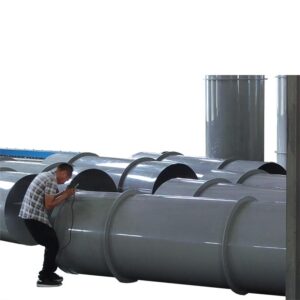
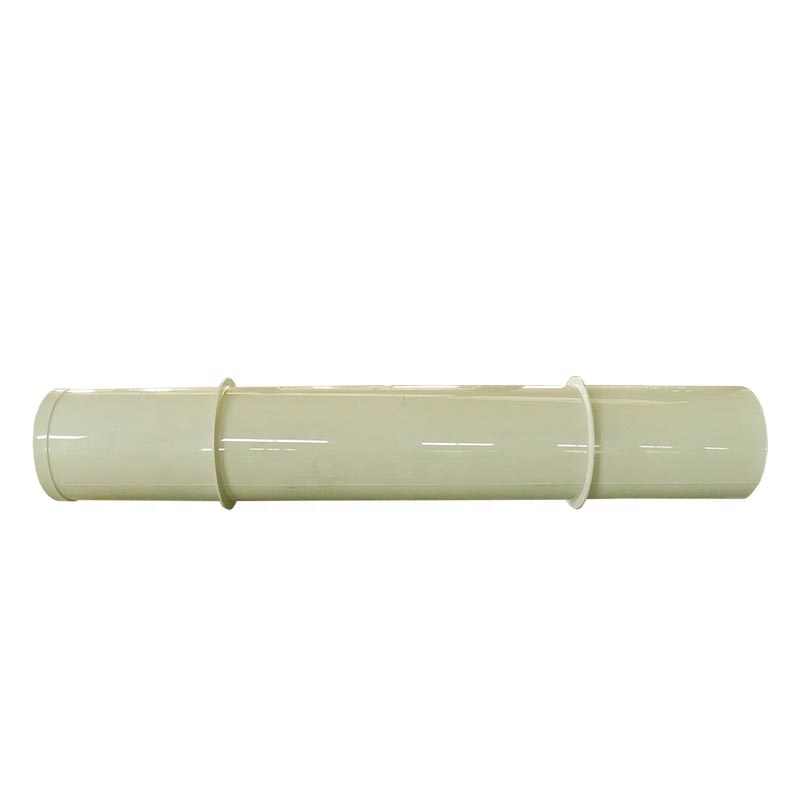
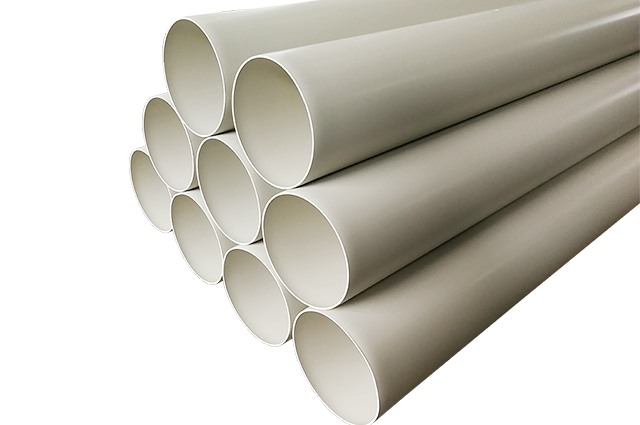
PP round ventilation duct manufactured by one-piece injection molding — producing seamless circular duct from 15 mm to 1,000 mm diameter (injection molded) with no weld joints; diameters above 1,000 mm to 1,500 mm available as welded fabrication from PP/PVC/FR-PP sheet and uniform wall thickness. Designed for industrial ventilation, corrosive exhaust transport, fresh air supply, HVAC distribution, and laboratory fume hood exhaust systems. Round duct provides the lowest pressure drop per unit airflow of any duct shape (minimum surface area for a given cross-section), reducing fan power consumption and operating cost over the life of the ventilation system.
| Application | Industrial ventilation, corrosive exhaust, fresh air supply, HVAC distribution, laboratory fume hood exhaust, dust collection ducting |
| Material | Virgin PP (standard), PVC, FR-PP (flame-retardant polypropylene, optional) — injection molded, seamless |
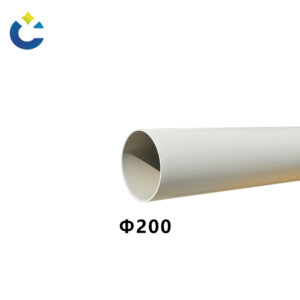
| Diameter range | 15 mm to 1,000 mm (injection molded); 1,000 mm to 1,500 mm (sheet fabricated) |
| Wall thickness | 2.5 mm to 8 mm depending on diameter |
| Standard length | 3-4 meter sections |
| Color | Beige / Dark Grey / White |
| Lead time | 10-20 days standard; 15-25 days custom |
Why Round Duct for Industrial Ventilation
Duct shape directly affects system efficiency, installation cost, and long-term reliability. Round duct offers measurable advantages over rectangular alternatives in most industrial ventilation applications:
- Lower pressure drop. For a given cross-sectional area, a circle has the smallest perimeter of any shape — meaning less wall surface area causing friction loss. Round duct typically has 10-20% lower pressure drop than an equivalent-area rectangular duct, reducing fan power consumption by the same percentage. Over a 10-year operating life, the energy savings from round duct can exceed the initial duct cost.
- Better structural performance under negative pressure. Round geometry distributes external pressure evenly around the circumference. Rectangular duct requires stiffening ribs and thicker walls to resist the same negative pressure without collapsing. Round duct handles higher vacuum levels with less material — particularly important for exhaust systems operating at -500 Pa or deeper — directly supporting EU Industrial Emissions Directive requirements for leak-tight industrial ventilation systems.
- One-piece injection molding eliminates longitudinal seams. Round duct up to 1,000 mm is produced as a single seamless piece. No longitudinal weld to crack, no rolled-and-welded seam to fail under thermal cycling. Field joints between sections are made by hot-gas extrusion butt welding or flange connection.
Why Xicheng
16 years, 2600+ systems shipped worldwide. Ventilation duct performance is measured in three numbers: pressure drop (Pa), leakage rate (%), and service life (years). A poorly made duct costs you twice — once in higher fan electricity, again in early replacement. Our manufacturing approach targets all three:
- Injection molded to 1,000 mm, fabricated larger. Our large-format molding capability produces round duct up to 1,000 mm as a one-piece injection molding. For diameters 1,000-1,500 mm we fabricate from sheet with full-penetration hot-gas extrusion welding — no sheet rolling, no seam welding, no bonded joints. Uniform wall thickness throughout the circumference verified by ultrasonic testing on large-diameter sections.
- Three material options for different applications. PP (standard) — chemical resistance, 80degC max, general ventilation and exhaust. PVC — higher rigidity, UV resistance, lower cost for non-corrosive applications. FR-PP — flame retardant rating, 60 °C max operating temperature for fire-rated ductwork applications. All materials are sourced as virgin resin with traceable certification.
- Complete system integration. We produce the full chain: round duct sections → matching elbows, tees, reducers → flanges and connectors → support brackets → exhaust fan → scrubber or stack. All components are sized to work together with consistent material properties, eliminating compatibility issues between duct and fittings from different suppliers.
Send your ventilation system requirements to xicheng023@outlook.com. We’ll size the ductwork, calculate pressure drop, and provide a complete quotation.
Core Advantages
- Lowest Fan Energy Cost: Round cross-section delivers 10-20% lower pressure drop vs equivalent rectangular duct — directly reducing fan kW and annual electricity cost over the system lifetime.
- Seamless Negative-Pressure Performance: One-piece injection-molded construction resists collapse under vacuum without stiffening ribs — critical for exhaust systems operating at deep negative pressure.
- Material for Every Air Stream: PP for corrosive exhaust and chemical fumes, PVC for rigid UV-stable outdoor ductwork, FR-PP for fire-rated duty and fire-rated ventilation — specified to the air stream, not the budget.
- Complete System From Hood to Stack: Round duct + matching elbows/tees/reducers/flanges + support brackets + exhaust fan — all corrosion-resistant, all sized to work together.
- 15-1500 mm Total Range: Injection molded to 1,000 mm for optimal integrity; fabricated 1,000-1,500 mm for large-airflow mains — single supplier covers the entire duct schedule.
Key Specifications
| Material | PP (standard), PVC, FR-PP (flame-retardant polypropylene) — virgin resin, injection molded |
| Manufacturing Process | One-piece injection molding — seamless, no longitudinal welds |
| Diameter Range | 15 mm – 1,000 mm (injection molded); 1,000 mm – 1,500 mm (sheet fabricated) |
| Wall Thickness | 2.5 – 8 mm (diameter-dependent) |
| Standard Length | 3 – 4 meters per section |
| Operating Temperature | PP: -10degC to 80degC | PVC: 0degC to 60degC | FR-PP: ≤ 60 °C |
| Connection Method | Butt welding, flange connection, or socket coupling |
| Service Life | 10-15 Years |
| Brand / Origin | Xicheng / China |
Certifications and Compliance
- CE Certified – PP Round Duct, Fittings, Fan
- RoHS Compliant – PP, PVC, FR-PP materials
- ISO 9001 – Quality Management System
- ISO 14001 – Environmental Management System
- SGS Tested – PP Sheet, PP Pipe, FR-PP material properties
- Design Compliance – Systems designed to meet EU Industrial Emissions Directive (2010/75/EU) and US EPA NESHAP for industrial exhaust ductwork integrity
How to Order
- You send – Required diameter(s), lengths, material preference, application (ventilation/exhaust/HVAC), air volume and pressure drop limits
- We specify – Duct diameter, wall thickness, material recommendation, connection method, and support spacing
- You approve – Technical proposal with duct schedule, pressure drop calculation, material certs, and pricing
- We produce – 10-25 days. Injection molded to specification, dimensional inspection before shipment
- We ship – Bundled and protected. Installation drawings, welding guidelines, and thermal expansion data included.
Contact xicheng023@outlook.com or WhatsApp +86 18927456906 — quotation within 24 hours.
Complete Your System
- PP Industrial Pipe – Pipe for process, water, and general industrial applications
- PP Square Duct – Rectangular duct for space-constrained installations
- PP Duct Elbow – 45deg and 90deg elbows, injection molded one-piece
- PP Duct Tee – 3-way tee fittings for duct branching
FAQ
What is the difference between PP pipe and PP round duct?
PP pipe is designed for conveying liquids and process fluids — it’s rated for internal pressure and uses socket fusion or butt welding for joints. PP round duct is designed for ventilation and exhaust — it operates at low pressure (positive or negative), uses lightweight construction optimized for airflow, and connects via flanges or slip joints for easy assembly and disassembly. Both are injection molded and available up to 1,000 mm, but they serve different applications.
When should I choose round duct over square duct?
Round duct is preferred when: pressure drop and energy consumption are key concerns (round has 10-20% lower friction loss), the system runs under negative pressure (round handles vacuum better without stiffening), or the duct is exposed (round has a cleaner appearance). Square duct is preferred when: installation space is constrained (square fits tighter to ceilings and walls), the duct is built into a false ceiling or shaft, or the system operates at low velocity where pressure drop differences are negligible.
Which material should I choose — PP, PVC, or FR-PP?
PP is the standard choice for most industrial ventilation — excellent chemical resistance, good temperature range, best value. PVC is chosen when higher rigidity is needed or when UV exposure requires stabilized material for outdoor installation. FR-PP (flame-retardant polypropylene) is specified for fire-rated ductwork at moderate temperatures (≤ about 60 °C) where local codes require a flame-retardant plastic duct.