Product Overview
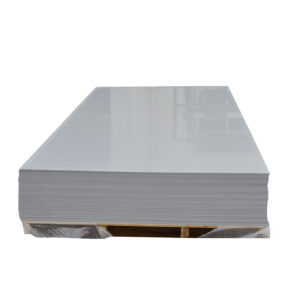
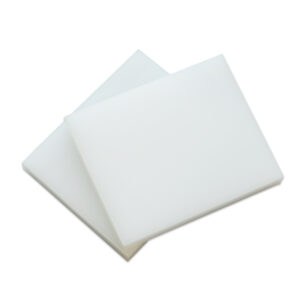
PP rigid engineering plate — a harder, glossier, more dimensionally stable variant of standard PP sheet for applications where surface finish, scratch resistance, and fabrication precision matter. Distinguishable from general-purpose PP sheet by three characteristics: tighter thickness tolerance (±0.1 mm for thin gauges vs the standard ±0.2 mm), high-gloss surface finish (Ra ≤0.2 μm), and availability in a matched beige/grey/white color palette for multi-component assemblies where color consistency across panels is required. Extruded from 100% virgin PP homopolymer in thicknesses from 2 mm to 70 mm, standard sheet sizes 1220×2440 mm and 1500×3000 mm. Specified for equipment enclosure panels, machine guards, chemical cabinet bodies, electroplating line components, and any corrosion-resistant fabrication where the plate surface is visible to operators, inspectors, or customers.
| Material | 100% virgin PP homopolymer — zero recycled, zero regrind. Lot-traceable resin |
| Thickness range | 2-70 mm. ±0.1 mm (≤10 mm), ±0.3 mm (10-20 mm), ±0.5 mm (>20 mm) |
| Sheet sizes | 1220×2440 mm / 1500×3000 mm. Custom to 2000×6000 mm |
| Surface finish | Glossy (Ra ≤0.2 μm). Non-porous, scratch-resistant, easy-clean. Matte or textured on request |
| Colors | Beige (natural PP), Grey (RAL 7032 equivalent), White (TiO₂ through-body). Custom RAL MOQ 500 kg |
| Temperature range | -40°C to 90°C. Stable at 85°C for 1,000+ hours verified |
| Density | 0.91-0.93 g/cm³ — 75% lighter than carbon steel |
| MOQ | 1 m² standard. Custom colors 500 kg |
| Lead time | 15-25 days |
Engineering Plate vs Standard Sheet — When Surface and Tolerance Matter
Standard PP sheet is specified for chemical resistance and fabricability — the surface finish and dimensional precision are secondary. Engineering PP plate is specified when the surface is a functional requirement — because it must be inspected, cleaned, or presented — and when thickness tolerance affects downstream fabrication accuracy:
- Glossy Ra ≤0.2 μm — the surface that doesn’t trap contamination. A standard PP sheet with Ra ≤0.8 μm is smooth enough for chemical tank interiors. An engineering plate with Ra ≤0.2 μm is mirror-smooth — five times flatter at the microscopic level. This matters for three applications: (1) Equipment enclosures where chemical splash, dust, and process residue must wipe off without scrubbing. A glossy surface resists particle adhesion — contaminants sit on top rather than embedding in surface texture. (2) Electroplating line components where stray chemical droplets crystallize on surfaces — glossy PP sheds these deposits more readily than matte or standard-smooth sheet. (3) Visible panels where the equipment appearance reflects on the manufacturer’s quality — a glossy, uniform surface signals precision fabrication. The OSHA Sanitation Standard 29 CFR 1910.141 requires that workplace surfaces be cleanable — glossy PP’s non-porous surface meets this standard without coatings or treatments.
- ±0.1 mm tolerance — when CNC machining demands predictable material. A fabricator CNC-machining PP plate into precision components (pump mounting plates, instrument panels, gasketed flanges) programs the tool path for a specific material thickness. If the sheet varies ±0.3 mm across its surface, the machined pocket depth varies ±0.3 mm — a gasket groove cut 0.3 mm too deep doesn’t seal. Engineering plate’s tighter tolerance (±0.1 mm for ≤10 mm) reduces this variable — the CNC operator sets the Z-axis once and trusts the thickness is consistent sheet-to-sheet, batch-to-batch. For standard-tolerance sheet suitable for general fabrication, see our PP polypropylene sheet 2-30mm.
- Matched color palette — beige/grey/white across an entire equipment line. A multi-tank electroplating line, a row of chemical storage cabinets, or a suite of laboratory fume hoods fabricated from different PP sheet batches can show visible color variation if the pigment concentration varies between production runs. Engineering plate is produced with spectrophotometer-verified color consistency — Delta-E measurement across batches ensures that panel A from an order placed in January matches panel B from an order placed in July. For applications requiring absolute color match across a project, specify single-batch production at time of order. For through-body white for GMP and cleanroom, see our white PP sheet.
Why Xicheng
16 years, 2600+ systems shipped worldwide. Engineering plate is the material we use for visible, precision-fabricated equipment components — the difference between “a PP sheet” and “a PP engineering plate” is measurable in our QC data:
- Surface gloss verified by profilometer — not eyeballed. The Ra ≤0.2 μm specification is not a marketing claim checked once per year. Every production batch of engineering-grade plate is measured with a digital surface profilometer at multiple points per sheet. Batches exceeding Ra 0.25 μm are downgraded to standard sheet and sold at the standard sheet price — we don’t ship engineering plate that doesn’t meet the engineering specification.
- CNC-ready flatness — because a warped plate crashes a CNC spindle. A PP plate with residual extrusion stress warps when the fabricator clamps it to a CNC bed — the released stress bows the plate upward, and the tool crashes into the material on entry. Our engineering plate extrusion uses controlled cooling with cross-sectional temperature monitoring to minimize residual stress. Plates are checked for flatness on a granite surface table after cooling — plates exceeding our flatness tolerance are not sold as engineering grade.
- The thickness range that bridges sheet and structure. At 2 mm, engineering plate is a precision surface material for equipment cladding and chemical cabinet bodies. At 70 mm, it is a structural material for freestanding chemical tanks and equipment bases. The same color-matched, gloss-finished PP is available across this full range — a fabricator can build an entire equipment line (thin panels for enclosures, thick plate for structural components) from the same material with consistent appearance. For heavy structural applications, see our thick PP sheet 10-25mm.
Send your plate specifications to xicheng023@outlook.com. Surface roughness and thickness tolerance data from your production batch provided with quotation. WhatsApp: +86 18927456906.
Core Advantages
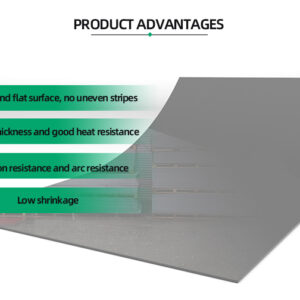
- Glossy Ra ≤0.2 μm Surface: Five times smoother than standard PP sheet. Contaminants wipe off, particles don’t embed. Profilometer-verified per batch.
- ±0.1 mm Tolerance (≤10 mm): CNC-machining-ready precision. Consistent thickness sheet-to-sheet and batch-to-batch — set the Z-axis once and trust the material.
- Spectrophotometer-Verified Color Consistency: Delta-E measurement across production batches. Beige/grey/white matched for multi-panel equipment assemblies.
- Controlled Cooling for CNC-Ready Flatness: Minimal residual stress — plates lie flat on the CNC bed. Flatness checked on granite surface table before shipping.
- 2-70 mm Range, Same Surface Quality: Thin cladding to thick structural plate — one material, one finish, one color palette across the full project.
Key Specifications
Mechanical & Physical Properties
| Material | 100% Virgin PP Homopolymer — zero recycled or regrind |
| Standard Sizes | 1220×2440 mm / 1500×3000 mm. Custom to 2000×6000 mm |
| Thickness Range | 2-70 mm. ±0.1 mm (≤10 mm), ±0.3 mm (10-20 mm), ±0.5 mm (>20 mm) |
| Colors | Beige (natural), Grey (RAL 7032 equivalent), White (TiO₂ through-body) |
| Surface Finish | Glossy (Ra ≤0.2 μm). Matte or textured on request |
| Density | 0.91-0.93 g/cm³ (ISO 1183) |
| Tensile Strength | 28-32 MPa (ISO 527) |
| Flexural Strength | 35-40 MPa (ISO 178) |
| Operating Temperature | -40°C to 90°C. Stable at 85°C for 1,000+ hours verified |
| Water Absorption | < 0.01% (ISO 62) |
| Flammability | HB (UL 94). V0 FR, glass-fiber reinforced, anti-static grades available |
Custom Grades Available
- Glass Fiber Reinforced PP (FRPP): 20-30% glass fiber for higher rigidity and HDT — for structural components requiring reduced deflection under load
- Flame Retardant PP (V0): FR additive — for occupied building equipment where fire rating is required
- Anti-Static PP: Surface resistivity modified for explosive atmosphere equipment (ATEX/IECEx zones)
Certifications and Compliance
- CE Certified — PP Engineering Plate (3 certificates)
- RoHS Compliant — PP homopolymer
- ISO 9001:2015 — Quality Management System
- ISO 14001:2015 — Environmental Management System
- SGS Tested — Mechanical properties (tensile ISO 527, impact ISO 180, flexural ISO 178), surface roughness (ISO 4287), color consistency (ISO 11664)
- ASTM D4101 — PP material classification for injection molding and extrusion grades
How to Order
- You send — Thickness, dimensions, color, quantity, surface finish (glossy/matte/textured), and whether any custom grade is required (FRPP, FR, anti-static)
- We confirm — Technical feasibility, production batch schedule, profilometer data plan, pricing, lead time
- We produce — Controlled-cooling extrusion, surface profilometer and flatness QC per batch, spectrophotometer color check
- We ship — Wood pallet with moisture barrier, surface protection film on glossy plates. Sea freight (FOB Shenzhen), air, or land
Contact xicheng023@outlook.com or WhatsApp +86 18927456906 — quotation with surface finish data within 24 hours.
Complete Your System
- PP Polypropylene Sheet 2-30mm — Standard PP sheet for general fabrication
- White PP Cleanroom Sheet — Through-body white for GMP and food-grade
- Thick PP Sheet 10-25mm — Structural-grade sheet for tank fabrication
- PVC Rigid Plastic Sheet — Lower-cost alternative for non-critical indoor use
- PP Electroplating Tank — Fabricated from Xicheng PP engineering plate
FAQ
What is the difference between PP engineering plate and standard PP sheet?
Engineering plate has three measurable differences: (1) Tighter thickness tolerance — ±0.1 mm for ≤10 mm vs ±0.2 mm for standard sheet. (2) Glossier surface — Ra ≤0.2 μm vs Ra ≤0.8 μm. (3) Verified color consistency — spectrophotometer-checked across batches. The base PP material (virgin homopolymer) and chemical resistance are identical. Choose engineering plate when surface finish, dimensional precision, or color-matched multi-panel appearance matter. Choose standard sheet for general fabrication where these factors are not critical.
Can the glossy surface be welded without damage?
Yes. Hot-gas welding with matching PP rod produces joints with parent-material strength. The weld bead will have a slightly different surface texture than the glossy plate — this is inherent to the welding process. For visible surfaces where weld appearance matters, post-weld surface finishing (scraping, sanding) can blend the weld bead with the surrounding glossy surface. The plate’s through-body color means sanded areas remain color-matched — no dark substrate is exposed.
Is the glossy surface slippery?
Glossy PP (Ra ≤0.2 μm) is smooth but not necessarily slippery when dry. For flooring, walkway, or stair tread applications, specify textured/anti-slip surface finish — this maintains the chemical resistance and cleanability of PP while providing adequate wet and dry slip resistance.
Do you offer glass fiber reinforced PP plate?
Yes. Glass fiber reinforced PP (FRPP) with 20-30% glass fiber content provides higher flexural modulus and heat deflection temperature than unreinforced PP. FRPP is recommended for structural components requiring reduced deflection under load or continuous service above 90°C (FRPP HDT can exceed 140°C depending on glass content). Available in the same thickness range and color options as unreinforced engineering plate.