
Product Overview
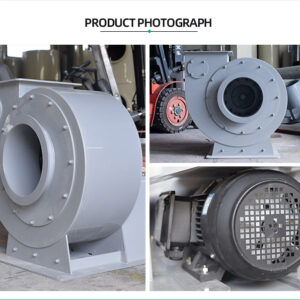
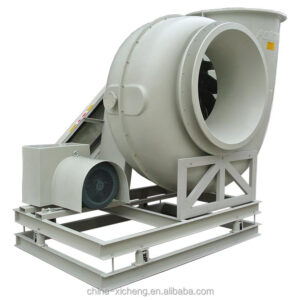
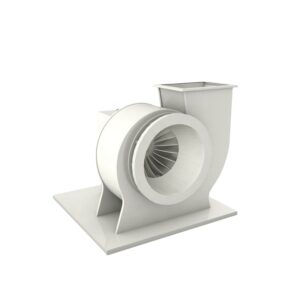
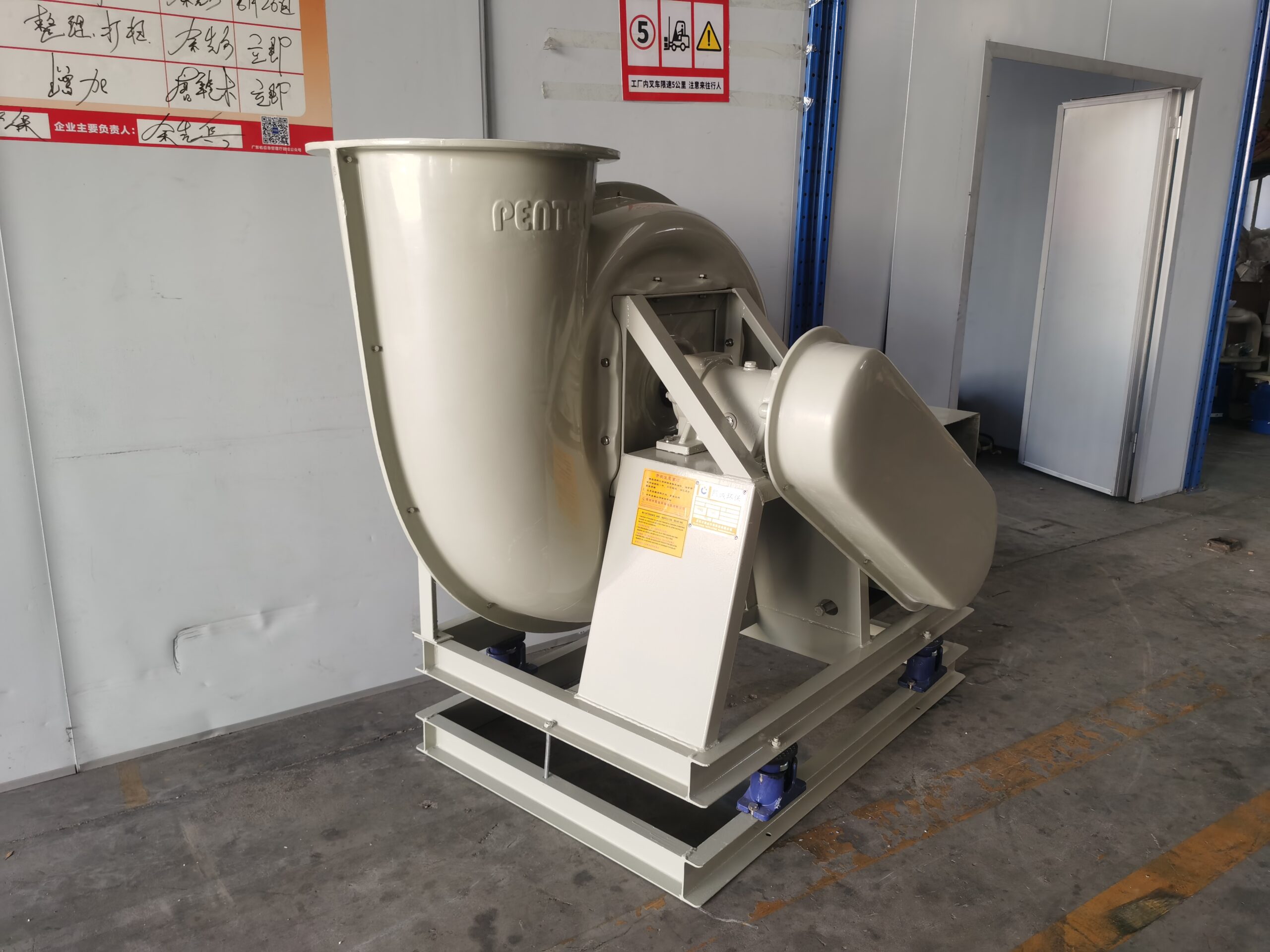
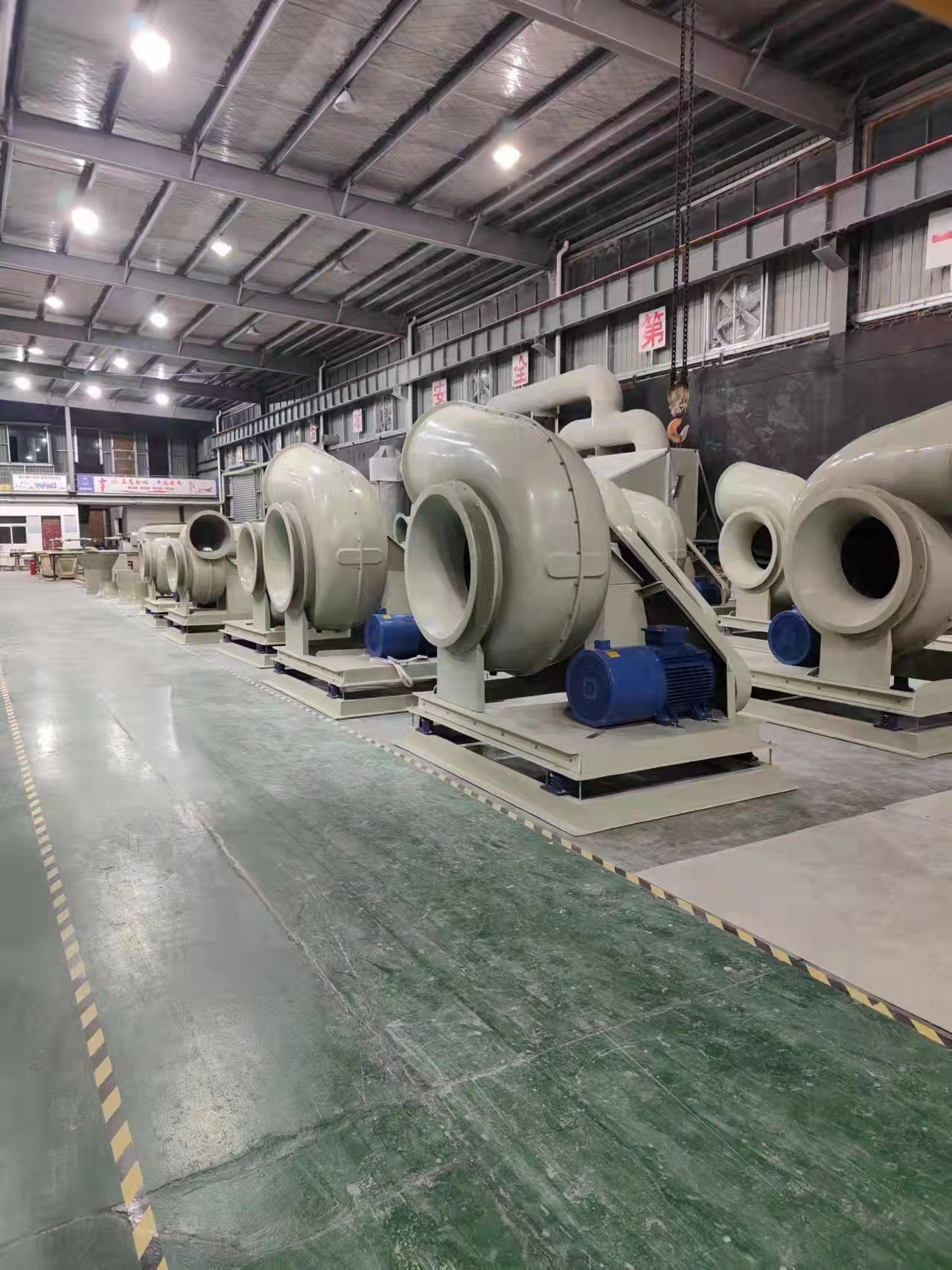
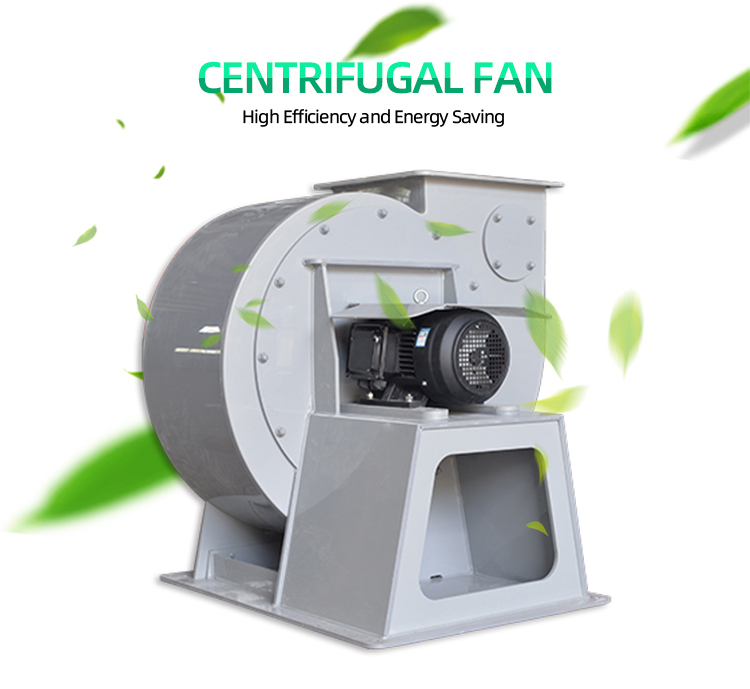
PP/FRP anti-corrosion centrifugal fan engineered specifically for chemical exhaust where the gas stream contains acids, alkalis, or corrosive salts that would destroy a standard fan within months — not years. Unlike general-purpose centrifugal fans that add corrosion-resistant materials as an option, this fan is designed from the impeller outward to operate continuously in corrosive environments: reinforced PP injection-molded impeller with bending strength ≥196 MPa, volute fabricated from PP A-grade sheet, and motor housing with chemical-resistant coating. Each impeller is static-balanced to ISO 1940 G6.3 grade. The F4-72 backward-curved blade profile delivers 80-85% static efficiency across a wide operating range with non-overloading power characteristic — the fan cannot overload the motor regardless of operating point.
| Application | Chemical plant process exhaust, electroplating line ventilation, acid mist extraction, laboratory fume hood exhaust, pharmaceutical solvent exhaust, any industrial application where the gas stream chemically attacks standard fan materials |
| Material | PP volute (A-grade sheet) + reinforced PP injection-molded impeller (standard, ≤60degC); FRP volute + FRP impeller (≤80degC, enhanced mechanical strength) |
| Model range | XC-5 series — 1.5 kW to 11 kW, 2,000-8,000 m³/h standard; custom to 80,000 m³/h |
| Impeller | One-piece injection-molded reinforced PP — blades, hub, and backplate formed in single mold cycle. Balanced to ISO 1940 G6.3 |
| Gas limits | PP: ≤60degC, ≤100 mg/m³ particulate, no aromatic/halogenated/ketone compounds. FRP: ≤80degC, ≤150 mg/m³ |
| Motor | 1,440 or 2,900 RPM direct drive; anti-corrosion coated housing; IP54 standard |
| Lead time | 15-25 days |
Anti-Corrosion Is Not Just a Material Choice — It’s a Design Philosophy
A standard steel fan with a corrosion-resistant coating is still a steel fan — the coating is a barrier, not the structure. Coatings fail at edges, welds, scratches, and pinholes. In continuous chemical exhaust service, coating failure is not a matter of if but when. An anti-corrosion fan replaces the substrate itself with inherently corrosion-resistant material — there is nothing to corrode when the coating fails because there is no coating and no corrodible substrate:
- Impeller: one-piece injection molding eliminates the failure points. Metal fan impellers have blades attached to a hub by welding, riveting, or bolting — each attachment point creates a crevice where corrosive gases concentrate and where coatings cannot fully penetrate. Our reinforced PP impeller is injection-molded as one continuous piece: the blades, hub, and backplate flow together in the mold. There are no joints to corrode because there are no joints. The bending strength of ≥196 MPa exceeds what is required for centrifugal loads at 2,900 RPM with a safety factor adequate for continuous industrial service.
- Volute: PP A-grade sheet, hot-gas welded — not coated metal. The volute collects the high-velocity air discharged from the impeller and converts velocity pressure to static pressure. In a coated steel fan, the volute interior is the hardest surface to coat uniformly — and the first to fail because the high-velocity airstream (potentially carrying entrained droplets or particulate) erodes the coating at the cut-off point where flow exits the volute. Our PP volute is solid PP sheet throughout its thickness — erosion wears the PP itself, not a coating, and PP’s abrasion resistance is adequate for the particulate loadings specified (≤100 mg/m³). For higher particulate loads or larger particle sizes, FRP volute construction provides enhanced erosion resistance.
- Motor protection: anti-corrosion coating on the housing. The motor sits outside the air stream but in the same environment — if the fan is installed in a chemical plant, the ambient air around the motor contains the same corrosive agents at lower concentration. Our standard motor housing has an anti-corrosion coating. For severe ambient conditions (outdoor coastal, indoor chemical splash zone), upgraded motor enclosure ratings (IP55, IP65) and stainless steel hardware are available.
Why Xicheng
16 years, 2600+ systems shipped worldwide. Anti-corrosion fan specification requires material compatibility verification, not just a material name on a data sheet. PP and FRP each resist different chemical families — choosing the wrong one for your gas composition leads to premature failure regardless of manufacturing quality:
- PP vs FRP: chemical compatibility, not just temperature. PP (polypropylene) provides broad resistance to mineral acids (HCl, H2SO4, HNO3 at moderate concentrations), alkalis (NaOH, KOH), and salt solutions — the most common corrosive agents in industrial exhaust. FRP (fiberglass-reinforced plastic) extends the temperature range to 80degC and provides higher mechanical strength, but its chemical resistance differs from PP: FRP’s polyester or vinyl ester resin matrix can be attacked by strong alkalis and certain solvents that PP tolerates. There is no universal “chemical-resistant” material — we verify your specific gas composition against both PP and FRP compatibility data before recommending one over the other. This material verification supports EU Industrial Emissions Directive requirements for reliable exhaust system operation.
- What PP/FRP fans CANNOT handle. This is just as important as what they can. Aromatic hydrocarbons (benzene, toluene, xylene, styrene), halogenated hydrocarbons (dichloromethane, chloroform, trichloroethylene, fluorocarbons), and ketones (acetone, MEK, MIBK) can cause swelling, softening, or environmental stress cracking of PP and unsaturated polyester FRP. If your gas stream contains these, PP and standard FRP are not suitable — and no manufacturer’s PP/FRP fan will survive long-term exposure. Contact us for alternative material recommendations (FR-PP, PVDF, or specialized FRP resin systems). We’d rather lose a sale than sell you a fan that fails.
- G6.3 balance — the difference you can hear. An unbalanced impeller at 2,900 RPM generates vibration at 48 Hz — the fan shakes, bearings wear, the volute cracks at weld seams, and mounting bolts loosen. Our injection-molded impellers are balanced to ISO 1940 G6.3 grade — the balance is designed into the mold, verified on a balancing machine, and documented for every fan. The G6.3 standard limits permissible residual unbalance to 6.3 mm/s, which at 2,900 RPM translates to the impeller’s center of mass being within approximately 20 microns of the rotational axis. This is why our fans run smoothly for 8-10 years in continuous service.
- Complete anti-corrosion system — not just the fan. The fan moves air through ductwork that must be equally corrosion-resistant. We supply the complete chain: capture hood → PP/FRP duct → dampers → fan → scrubber → stack. Every component in contact with the gas stream is corrosion-resistant, and all are sized as a matched system with a single warranty.
Send your gas composition, air volume, and system pressure drop to xicheng023@outlook.com. We’ll verify PP vs FRP compatibility, select the fan, and provide a performance curve. WhatsApp: +86 18927456906.
Core Advantages
- Inherent Corrosion Resistance — No Coating to Fail: Solid PP or FRP throughout the full material thickness. A scratch reveals the same corrosion-resistant material — no steel substrate waiting to rust.
- One-Piece Injection-Molded Impeller: No blade-to-hub joints, no welds, no crevices. Balanced to ISO 1940 G6.3 for 8-10 year bearing life.
- Material Verification Against Your Gas Composition: We check your specific chemicals against PP and FRP compatibility data — not a generic “corrosion resistant” claim.
- F4-72 Backward-Curved Efficiency: 80-85% static efficiency, non-overloading power curve — the motor cannot be overloaded at any point on the fan curve.
- Not Suitable for Aromatics, Halogenated, or Ketones: We tell you when PP/FRP won’t work. No fan sold into known-incompatible service.
Key Specifications
| Model No. | XC-5 |
| Material | PP volute + PP impeller (≤60degC); FRP volute + FRP impeller (≤80degC) |
| Impeller Type | One-piece injection-molded reinforced PP; F4-72 backward-curved blades |
| Balance Grade | ISO 1940 G6.3 — static-balanced and documented |
| Bending Strength | ≥196 MPa (PP impeller) |
| Motor Speed | 1,440 RPM or 2,900 RPM direct drive |
| Motor Power | 0.75 kW to 11 kW standard |
| Gas Temperature | PP: ≤60degC | FRP: ≤80degC |
| Particulate Limit | PP: ≤100 mg/m³ | FRP: ≤150 mg/m³ |
| Tip Clearance | 30 mm nominal; ≤10 mm deviation |
| Service Life | 8-10 Years |
| Brand / Origin | Xicheng / China |
Certifications and Compliance
- CE Certified – Anti-Corrosion Centrifugal Fan
- RoHS Compliant – PP and FRP materials
- ISO 9001 – Quality Management System
- ISO 14001 – Environmental Management System
- SGS Tested – PP bending strength (≥196 MPa), FRP mechanical properties, impeller balance certification
- Design Compliance – Fan designed to meet EU Industrial Emissions Directive (2010/75/EU) requirements; impeller balance per ISO 1940 G6.3; motor enclosure per IEC 60034
Model Selection Table
| Model | Motor (kW) | Air Volume (m³/h) | Pressure (Pa) |
|---|---|---|---|
| XC-FJ-3 | 1.5 | 2,000 | 1,145 |
| XC-FJ-3.6 | 2.2 | 4,000 | 1,150 |
| XC-FJ-5.5 | 4.0 | 6,000 | 1,000 |
| XC-FJ-6 | 5.5 | 8,000 | 1,100 |
Custom sizes: Up to 80,000 m³/h. Contact xicheng023@outlook.com for fan selection.
How to Order
- You send – Full gas composition (all chemical species and concentrations), gas temperature, air volume (m³/h), system pressure drop (Pa), particulate loading
- We verify – PP vs FRP material compatibility with your specific gas chemistry. If neither is suitable, we’ll tell you and recommend alternatives
- We select – Fan model from XC-FJ range or custom; provide performance curve and motor specification
- You approve – Material verification report, fan curve, pricing, and delivery schedule
- We build – 15-25 days. Impeller balanced, fan assembled and run-tested
Contact xicheng023@outlook.com or WhatsApp +86 18927456906 — material compatibility check and fan selection within 24 hours.
Complete Your System
- PP Centrifugal Fan – General purpose PP centrifugal exhaust fan
- PP/FRP Centrifugal Blower – Higher pressure blower for demanding applications
- Wet Scrubber System – Matched scrubber for complete exhaust treatment
- PP Round Duct – Corrosion-resistant ductwork for fan connections
FAQ
How do I know if my gas stream is compatible with PP or FRP?
Send us the complete gas composition — all chemical species, their concentrations (mg/m³ or ppm), gas temperature, and whether the gas contains liquid droplets or solid particulate. We check each chemical against established PP and FRP chemical resistance databases. Most mineral acid exhaust streams (HCl, H2SO4, HNO3 at moderate concentrations) are compatible with PP. FRP extends the envelope for higher temperature and mechanical loads but has different chemical resistance — particularly to strong alkalis. If neither PP nor FRP is suitable, we’ll tell you and suggest alternatives rather than selling a fan that will fail.
Why can’t PP/FRP fans handle aromatic or halogenated compounds?
This is a fundamental polymer chemistry limitation, not a manufacturing defect. Aromatic hydrocarbons and halogenated solvents are absorbed into the PP or FRP polymer matrix, causing it to swell and soften. Under the mechanical stress of centrifugal rotation, the softened material deforms, the impeller loses balance, and catastrophic failure can follow. Ketones (acetone, MEK) can cause environmental stress cracking — microscopic cracks that propagate under stress. Every PP/FRP fan manufacturer faces the same limitation. If your gas contains these compounds, contact us for alternative solutions.
Why is G6.3 balance grade important for a corrosion-resistant fan?
In a corrosive environment, vibration is not just a nuisance — it’s a failure accelerator. Vibration stresses welds and flanges, creating microscopic cracks where corrosive gases penetrate and attack from within. A fan balanced to G6.3 (6.3 mm/s permissible residual unbalance) runs smoothly enough that these secondary corrosion mechanisms are minimized. Conversely, a poorly balanced fan in corrosive service will develop leaks at flange joints and volute seams within 2-3 years as vibration works the joints open — even if the PP material itself is chemically unaffected.