


Product Overview
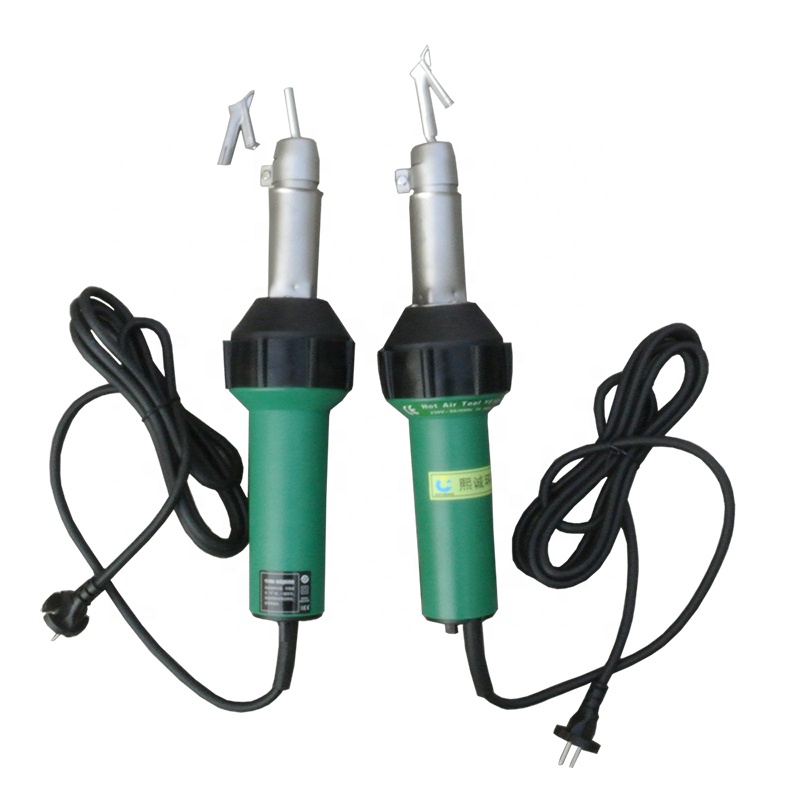
XC-17 hot air plastic welding torch — a 1,600W hand-held hot air gun for field welding of PP, PVC, PE, HDPE, PVDF, and EVA thermoplastic sheet and pipe. Electronically controlled temperature from 40-700degC with constant-temperature regulation — unlike basic heat guns that drift as the heating element cycles, the XC-17’s temperature controller maintains stable output within ±10degC of setpoint, preventing the overheating that scorches plastic or the under-temperature that produces weak welds. Integrated brushless-motor fan delivers up to 180 L/min air volume for rapid heating of the weld zone. Double-insulated construction for operator safety. 1.5 kg weight with ergonomic grip for all-day use in fabrication shops and field installation.
| Application | Thermoplastic welding — PP, PVC, PE, HDPE, PVDF, EVA sheet and pipe. Hot forming, heat shrinking, drying, and igniting. Electroplating tank fabrication, chemical storage tank construction, plastic ductwork assembly, waterproof membrane seam welding |
| Model | XC-17 — double-insulated, constant-temperature electronic control |
| Power | 1,600 W | 230 V | Euro / US / adapter plug options |
| Temperature | 40-700degC continuously adjustable | ±10degC stability at setpoint |
| Air volume | Max 180 L/min — integrated brushless motor fan |
| Air pressure | 1,600 Pa |
| Weight | 1.5 kg |
| Safety | Double-insulated; heating tube protective housing; electronic heating element protection; cool-down before shutdown recommended |
| Lead time | 5-10 days |
How Hot Air Welding Works — And Why Temperature Control Matters
Hot air welding fuses two thermoplastic surfaces by melting them simultaneously with a stream of precisely heated air while feeding a welding rod of the same material into the molten joint. The hot air stream heats both the parent material and the welding rod to their melting point — for PP, approximately 220-280degC, consistent with the parameters established in DVS 2207 — Welding of Thermoplastics, the recognized European technical standard for hot-gas welding of PP, PE, PVC, and PVDF in industrial fabrication. The operator guides the molten rod into the joint while the hot air maintains the melt temperature. When the joint cools, the parent material and rod are fused into a single continuous piece with mechanical properties approaching the original sheet or pipe:
- Temperature control is the difference between a good weld and a bad one. Too cold (under 60 °C for PP): the parent material doesn’t melt adequately, the rod doesn’t fuse, and the weld is cosmetic — it looks like a bead on the surface but has zero structural strength. Too hot (over 300degC for PP): the plastic oxidizes, discolors, and embrittles — the weld bead is visibly burned and the heat-affected zone is weakened. The XC-17’s electronic temperature control holds the setpoint within ±10degC — the operator selects the right temperature for the material and the torch maintains it regardless of air volume changes or line voltage fluctuations. For PP welding rod specification, see our PP PVC Welding Rod page.
- Air volume controls heating rate, not just temperature. The hot air does two things: it transfers heat to the plastic (higher volume = faster heating), and it shields the molten weld zone from oxidation (the air stream displaces ambient oxygen). The XC-17’s 180 L/min maximum air volume provides adequate heating rate for production welding of sheet and pipe up to 10-15 mm thickness. For thicker sections, preheating the joint with a separate heat source or multiple passes may be required.
- Material-specific temperature ranges. Each thermoplastic has a different welding temperature window: PP 220-280degC, PVC 200-250degC, PE 220-280degC (low-density PE lower, HDPE higher), PVDF 240-280degC. The XC-17’s 40-700degC range covers all common industrial thermoplastics with margin. The operator adjusts temperature based on the material, ambient conditions (cold weather welding requires slightly higher setpoint to compensate for faster cooling), and welding speed.
Why Xicheng
16 years, 2600+ systems shipped worldwide. We manufacture the plastic equipment that our welding torches are used to build — tanks, ductwork, scrubbers, and pipe systems. We know what a good weld looks like because we make thousands of them every day in our own fabrication shop. The welding torch we sell is the same model our own technicians use:
- Built for production, not occasional DIY. The XC-17 is designed for daily industrial use — continuous operation at welding temperature for hours, not intermittent hobby use. The brushless motor eliminates the primary wear component in cheaper heat guns (brushed motors burn out after 500-1,000 hours of use). The heating element is protected against overheating by an electronic cutoff that prevents element burnout if air intake is accidentally blocked.
- Heating tube protective housing — not just a bare tube. The heating tube on a hot air gun operates at up to 700degC at the element — hot enough to cause severe burns on contact. The XC-17’s protective housing shields the hot tube from accidental operator contact while allowing adequate airflow for cooling the housing exterior. This is a production safety feature, not a cosmetic cover.
- What the torch is used to build. Our customers use the XC-17 for: electroplating tank fabrication (welding PP tank walls and fitting flanges), chemical storage tank assembly (welding tank panels and nozzle connections), PP ductwork installation (field-welding duct sections at flange joints), scrubber fabrication (welding PP tower bodies and internals), waterproof membrane seam welding (landfill liners, pond liners, roofing membrane), and general plastic fabrication (custom tanks, hoods, enclosures). The same torch, the same rod, the same technique — whether in our factory or on your site.
Send your welding application to xicheng023@outlook.com. We’ll confirm material compatibility and recommend rod type. WhatsApp: +86 18927456906.
Core Advantages
- Electronic Constant-Temperature Control: ±10degC at setpoint — no temperature drift, no scorched plastic, no weak cold welds. Set it and weld consistently.
- 1,600W with 180 L/min Air Volume: Adequate heating rate for production welding of PP, PVC, PE, PVDF sheet and pipe to 10-15 mm thickness.
- Brushless Motor — No Brush Wear: Eliminates the primary failure mode of brushed-motor heat guns. Rated for continuous industrial duty.
- Double-Insulated, Protective Heating Tube Housing: Operator safety for all-day production use — no exposed hot surfaces.
- 40-700degC Range Covers All Thermoplastics: PP, PVC, PE, HDPE, PVDF, EVA — all within the XC-17’s temperature envelope with margin.
Key Specifications
| Model No. | XC-17 |
| Type | Hot air plastic welding torch — hand-held, electronically controlled |
| Power | 1,600 W | 230 V | 50/60 Hz |
| Temperature Range | 40-700degC continuously adjustable | ±10degC stability |
| Air Volume | Max 180 L/min — brushless motor fan |
| Air Pressure | 1,600 Pa |
| Weight | 1.5 kg |
| Insulation | Double-insulated |
| Welding Materials | PP, PVC, PE, HDPE, PVDF, EVA, TPO |
| Also Suitable For | Hot forming, heat shrinking, drying, igniting |
| Plug Options | Euro / US / adapter plug |
| Brand / Origin | Xicheng / China |
Certifications and Compliance
- CE Certified – Hot Air Welding Torch
- RoHS Compliant
- ISO 9001 – Quality Management System
- Double-Insulated — per IEC 60335-1 safety requirements for hand-held electric tools
How to Order
- You send – Plug type (Euro/US/adapter), quantity, primary welding material (PP/PVC/PE/PVDF)
- We confirm – Stock availability, lead time, pricing
- We ship – 5-10 days
Contact xicheng023@outlook.com or WhatsApp +86 18927456906 — quotation within 24 hours.
Complete Your System
- PP PVC Welding Rod – Color-matched welding rod in PP and PVC
- Plastic Butt Welding Machine – Automated butt welding for sheet and pipe
- PP Electroplating Tank – Tank fabrication using XC-17 welding
- PP Round Duct – Duct fabrication using hot air welding
FAQ
What temperature should I set for welding PP?
PP welding temperature is 220-280degC depending on material thickness and ambient conditions. Start at 250degC and adjust: if the rod doesn’t melt smoothly and feels “gummy” when pressed into the joint, increase by 10-20degC. If the plastic discolors (turns brown) or smokes, decrease temperature immediately — the material is oxidizing. Thicker material (above 8 mm) may require a higher setpoint because the parent material conducts heat away from the weld zone faster than thin sheet. In cold weather (below 10degC ambient), increase setpoint by 20-30degC to compensate for faster cooling of the weld zone.
How is this different from a general-purpose heat gun from a hardware store?
A general-purpose heat gun is designed for paint stripping, shrink-wrapping, and occasional use — the temperature control is typically a simple bimetallic thermostat with ±50degC accuracy, the motor is brushed (500-1,000 hour life), and the air volume is not optimized for plastic welding. The XC-17 is designed specifically for plastic welding: ±10degC electronic temperature control, brushless motor for continuous industrial duty, and 180 L/min air volume matched to the heating requirements of thermoplastic welding. Using a paint-stripping heat gun for plastic welding produces inconsistent welds — the temperature swings are too large.
Can I weld different plastics together?
Generally no — different thermoplastics have different melt temperatures and chemical compositions that prevent proper fusion. PP welds to PP. PVC welds to PVC. PE welds to PE. Attempting to weld PP to PVC produces a joint that looks like a weld but has essentially zero strength because the two materials do not molecularly bond. The welding rod must match the parent material. For multi-material assemblies (PP tank with PVC fittings), use flanged connections with gaskets — not welding.