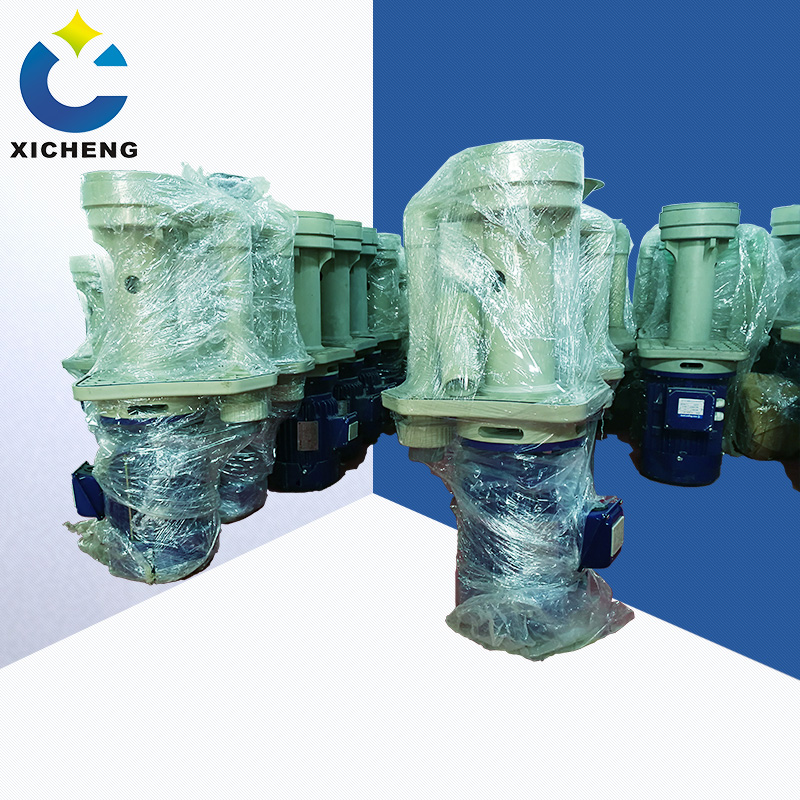
Product Overview
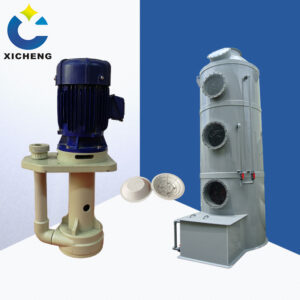
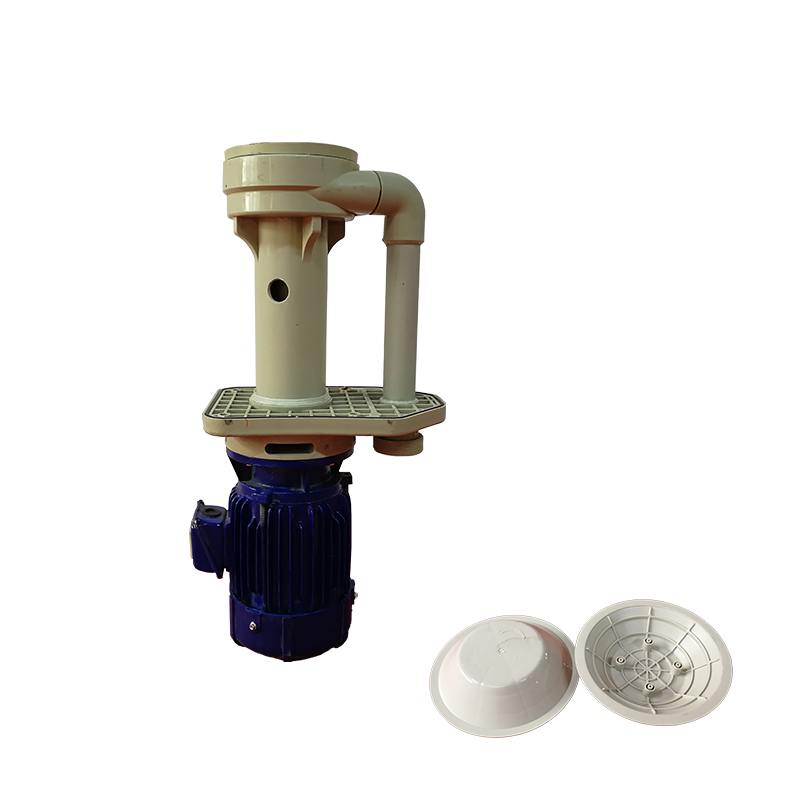
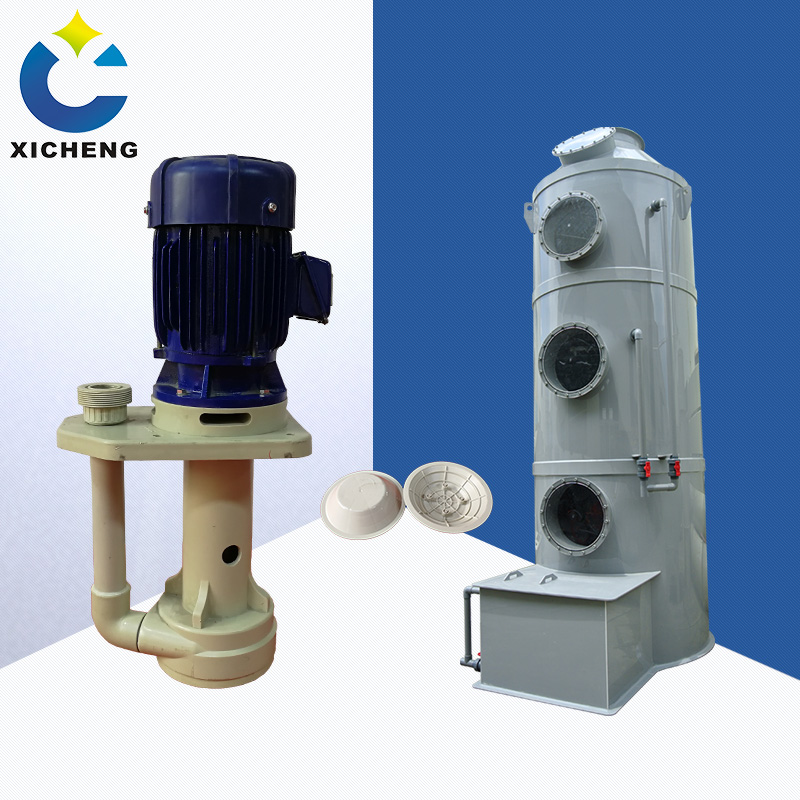
PP centrifugal chemical pump for corrosive liquid transfer — designed with PP (polypropylene) volute, impeller, and motor connection base for full chemical resistance across the entire pump assembly. Unlike metal pumps with PP linings that fail at the lining-to-metal interface, or pumps with PP wet ends bolted to metal motor brackets that corrode at the bracket, our pump uses PP throughout the liquid-contact and vapor-exposure zones: the volute that contains the pressurized liquid, the impeller that accelerates it, and the motor connection base that separates the motor from the chemical environment. Dry liquid sealing (1-10 HP) prevents chemical vapors from migrating along the shaft into the motor bearings — the primary failure mode of chemical pumps in corrosive service.
| Application | Corrosive liquid transfer — acids, alkalis, chemical solutions, electroplating bath circulation, chemical dosing, scrubber recirculation, wastewater chemical feed, pickling line transfer |
| Material | PP volute + PP impeller + PP motor connection base. Titanium screws available for high-corrosion service. Epoxy-coated motor optional |
| Power range | 0.75-7.5 KW (1-10 HP) |
| Flow range | 12-35 m3/h at rated head |
| Head range | 12-30 m |
| Dry running | Short-term anhydrous idle capability — mechanical seal tolerates brief dry operation |
| Lead time | 10-20 days |
Performance Table
| Motor Power (KW) | Flow Rate (m3/h) | Head (m) |
|---|---|---|
| 0.75 | 12 | 12 |
| 1.5 | 18 | 12 |
| 2.2 | 20 | 15 |
| 3.75 | 25 | 20 |
| 5.5 | 30 | 25 |
| 7.5 | 35 | 30 |
Why PP Throughout — Not Just the Wet End
Most “PP chemical pumps” are actually metal pumps with PP volutes and impellers — the motor bracket, fasteners, and shaft are metal. In a chemical plant environment, the liquid in the pump is corrosive. The air around the pump is also corrosive — chemical vapors escape from tank vents, flange gaskets weep, and spills evaporate. The metal parts of a “PP pump” corrode from the outside. A fully PP pump design addresses both the liquid and the environment:
- PP motor connection base — the part that isn’t PP on most pumps. The motor sits above the volute, connected by a bracket. On a conventional chemical pump, this bracket is cast iron or stainless steel — exposed to chemical vapors rising from the pump seal area and ambient air in the pump room. The bracket corrodes, the motor-pump alignment shifts, the shaft seal fails, and chemical liquid enters the motor. Our PP motor connection base eliminates this failure chain — the bracket is PP, immune to the same chemical vapors that the volute handles, and substantially lighter than a metal bracket (easier to lift, install, and service).
- Dry liquid sealing protects the shaft and bearings. The shaft seal is the boundary between the chemical liquid in the pump and the motor bearings above. A failed seal means chemical liquid travels up the shaft into the motor — destroying bearings and windings. Our dry liquid sealing design (1-10 HP models) maintains seal integrity even with brief dry-running — the pump can operate anhydrous for short periods without immediate seal damage. This handles the common operational scenario where a tank runs empty, the pump loses prime momentarily, and re-establishes flow when the tank refills — without destroying the seal each time. Chemical resistance and reliability are enhanced for applications meeting EU Industrial Emissions Directive standards where pump reliability directly affects emission control system availability.
- Titanium screws for the most aggressive service. Standard PP pump screws are stainless steel — adequate for most chemical environments but vulnerable in high-chloride, high-acid, or oxidizing conditions. Titanium screws provide corrosion resistance beyond stainless steel — recommended for hydrochloric acid, chlorinated brines, seawater, and oxidizing acid service. Epoxy-coated motor housing provides additional protection for the motor exterior in severe ambient environments.
Why Xicheng
16 years, 2600+ systems shipped worldwide. A chemical pump failure stops production — the plating line drains, the scrubber loses recirculation, the chemical dosing stops. A pump that costs a few thousand dollars can cause tens of thousands in downtime:
- PP pump expertise from chemical system experience. We design and fabricate entire chemical handling systems — tanks, ductwork, scrubbers, AND the pumps that move liquid between them. When we specify a pump for a scrubber recirculation system, we know the complete duty: the liquid chemistry (acid type and concentration), the suction conditions (flooded suction from the scrubber sump or lift from a tank), the discharge head (spray nozzle pressure requirement plus pipe friction), and the duty cycle (continuous or intermittent). The pump is sized as part of the system, not selected from a catalog curve at a single design point.
- Titanium screw option — we tell you when you need it. Stainless steel screws in a PP pump are adequate for most chemical services — until they’re not. When the chemical environment exceeds stainless steel’s corrosion resistance (high chlorides, oxidizing acids, elevated temperature), the screws fail first — small diameter, high surface area to volume ratio, rapid corrosion. We check your chemical composition against stainless steel and titanium compatibility data and recommend the appropriate fastener material. If your process has been using stainless screws without problems, we won’t upsell titanium. If your chemistry demands it, we’ll tell you why.
- Short-term dry running — the real-world feature. In theory, centrifugal pumps are never supposed to run dry. In practice, they do — a tank runs empty on night shift, a suction strainer clogs, a valve is closed inadvertently, the pump loses prime during startup. A pump that destroys its seal every time this happens is a maintenance burden. Our dry liquid sealing design tolerates brief dry operation without immediate seal failure — it’s not rated for continuous dry running (no centrifugal pump is), but it handles the accidental events that happen in real chemical plants without requiring a seal replacement every time.
Send your liquid chemistry, flow rate, and head requirements to xicheng023@outlook.com. We’ll select the pump and verify material compatibility. WhatsApp: +86 18927456906.
Core Advantages
- PP Throughout — Volute, Impeller, AND Motor Base: The motor connection bracket is PP — not cast iron, not stainless steel. No metal parts exposed to chemical vapors rising from the seal area.
- Dry Liquid Sealing (1-10 HP): Tolerates brief dry operation without immediate seal failure — handles the real-world events that destroy conventional pump seals.
- Titanium Screws for Aggressive Chemistry: Optional titanium fasteners for high-chloride, high-acid, and oxidizing environments where stainless steel corrodes.
- Epoxy-Coated Motor Optional: Additional motor protection for severe ambient chemical environments.
- 0.75-7.5 KW Covers Common Chemical Transfer Duties: Six standard sizes from 12 m3/h@12m to 35 m3/h@30m.
Key Specifications
| Type | Centrifugal chemical pump — horizontal, single-stage |
| Material | PP volute + PP impeller + PP motor base. Titanium screws optional. Epoxy motor optional |
| Power | 0.75 / 1.5 / 2.2 / 3.75 / 5.5 / 7.5 KW |
| Flow Range | 12-35 m3/h |
| Head Range | 12-30 m |
| Dry Running | Short-term anhydrous — tolerated without immediate seal damage |
| Seal Type | Dry liquid sealing (1-10 HP) |
| Liquid Temperature | PP: ≤60degC continuous |
| Service Life | 8-10 Years (chemically compatible service) |
| Brand / Origin | Xicheng / China |
Certifications and Compliance
- CE Certified – Chemical Centrifugal Pump
- RoHS Compliant – PP materials
- ISO 9001 – Quality Management System
- ISO 14001 – Environmental Management System
- SGS Tested – PP chemical resistance, hydraulic performance testing
How to Order
- You send – Liquid chemistry (all components, concentrations, temperature), required flow rate (m3/h), discharge head (m), suction conditions (flooded/lift), duty cycle (continuous/intermittent)
- We verify – PP compatibility with your chemistry. Screw material recommendation (stainless or titanium). Epoxy motor recommendation based on ambient environment
- We select – Pump model from performance table, confirm operating point, provide pump curve
- We ship – 10-20 days
Contact xicheng023@outlook.com or WhatsApp +86 18927456906 — pump selection within 24 hours.
Complete Your System
- PP Chemical & Acid Storage Tank – Chemical storage for pump suction
- PP Acid Pickling Tank – Pickling bath circulation pump application
- Wet Scrubber System – Scrubber recirculation pump application
- PP Industrial Pipe – Chemical-rated pipe for pump connections
FAQ
Can this pump run dry?
Our dry liquid sealing design tolerates brief dry-running (a few minutes) without immediate seal damage — unlike standard mechanical seals that fail within seconds of running dry. This is not a dry-run-rated pump (no centrifugal pump is designed for continuous dry operation) — but it handles the accidental dry-running events that happen in real chemical plants. If your application requires extended dry-running capability, a different pump type (air-operated diaphragm, peristaltic, or vertical cantilever) may be more suitable.
Do I need titanium screws?
Titanium screws are recommended when: the pumped liquid contains high chlorides (above 500 ppm at elevated temperature), the liquid is an oxidizing acid (HNO3 above 30%, H2SO4 above 90%), the ambient environment is coastal/high-humidity with salt exposure, or the pump operates at elevated temperature (above 50degC) where stainless steel corrosion rates accelerate. If your liquid is a standard mineral acid at moderate concentration and ambient temperature, stainless steel screws are generally adequate. Send us your chemistry and we’ll recommend.
What is the maximum liquid temperature?
PP is rated for continuous liquid contact at ≤60degC. Above 60degC, PP’s mechanical strength decreases. For liquids above 60degC, FRP or PVDF pump construction is required — contact us for alternative pump material recommendations.