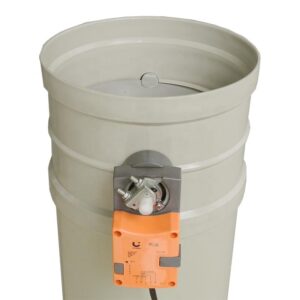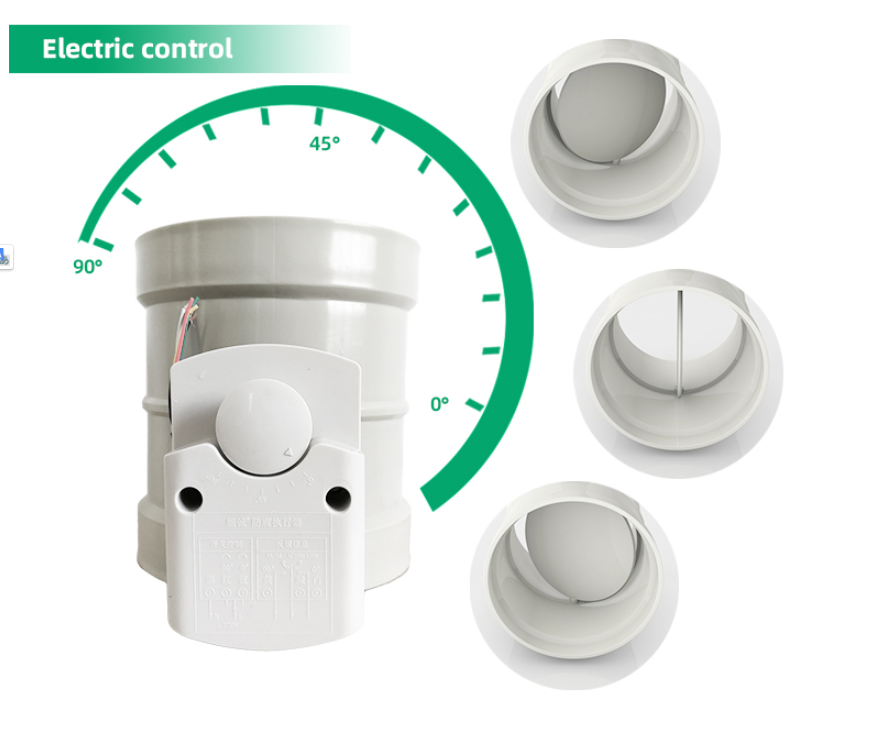
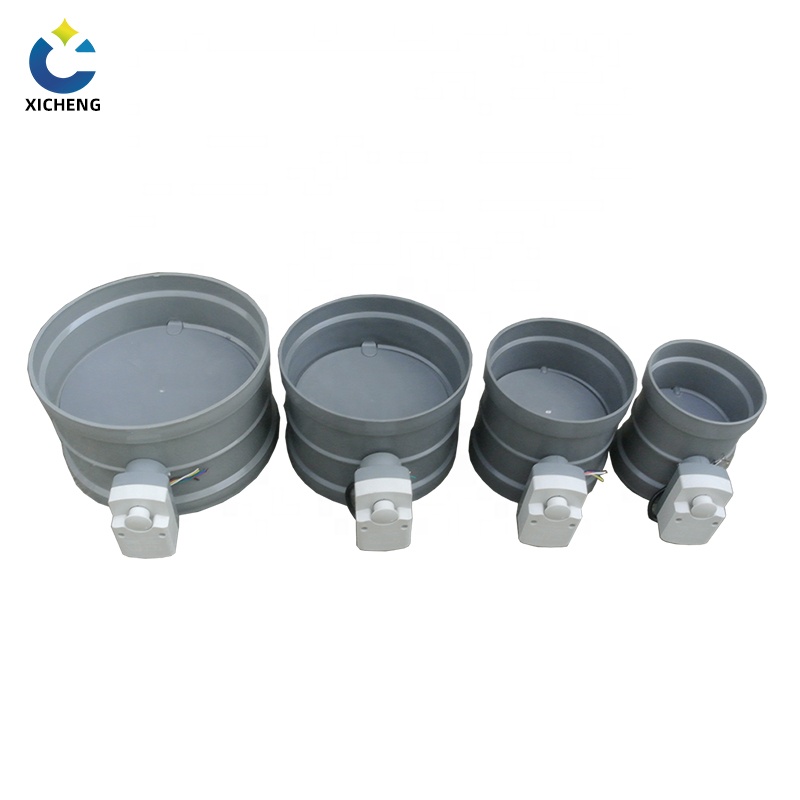
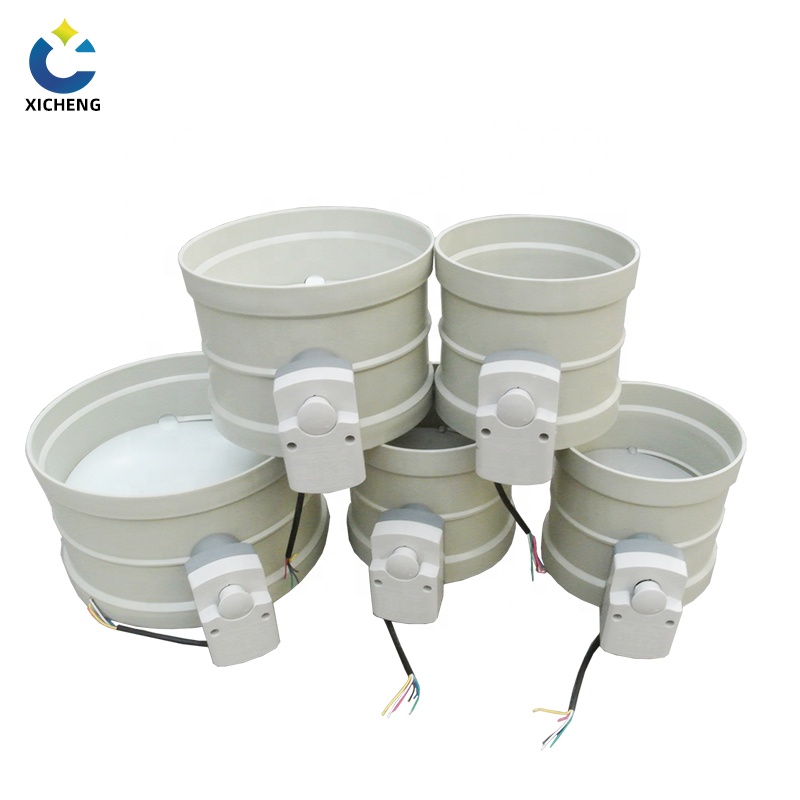

Product Overview
PP solenoid valve for fast-acting on/off air control in pneumatic lines, instrument air systems, and small-diameter process gas piping — opening or closing in under 1 second on electrical signal. Unlike motorized dampers and actuator valves that use an electric motor driving a gearbox to rotate a disc or plug (stroke time 30-90 seconds), a solenoid valve uses an electromagnetic coil directly moving a plunger — no motor, no gearbox, no rotation. This direct-acting mechanism provides the fastest possible valve response for two-position air control and is the correct choice for safety interlocks, pressure relief actuation, and automated pneumatic sequencing where speed matters more than modulation capability.
| Application | Fast on/off air control — safety interlocks, pneumatic system sequencing, instrument air shutoff, pressure relief actuation, automated valve manifold control |
| Material | PP (standard), PVC (rigid), FR-PP (high-temp) — injection molded valve body with encapsulated solenoid coil |
| Voltage | 24V DC (standard), 24V AC, 220V AC — coil voltage matched to your control system |
| Operation | Direct-acting solenoid — normally closed (NC) or normally open (NO); energize to change state |
| Response time | <1 second open-to-close or close-to-open |
| Diameter range | DN15 to DN110 standard; DN110-DN315 pressure-reducing solenoid available |
| Connection | Threaded (DN15-DN50), flanged (DN63-DN315), or socket |
| Color | Beige / Dark Grey |
| Lead time | 5-15 days |
Solenoid vs Motorized: Speed vs Modulation
A solenoid valve and a motorized damper both control airflow electrically — but the similarity ends there. Understanding which technology fits your application prevents specifying the wrong product:
| Characteristic | Solenoid Valve | Motorized Damper/Actuator |
|---|---|---|
| Actuation mechanism | Electromagnetic coil moves plunger directly — no motor | Electric motor drives gearbox rotating spindle |
| Stroke time | <1 second | 30-90 seconds |
| Modulation capability | None — two-position only (open/closed) | Yes — intermediate positions via 0-10V / 4-20mA |
| Power consumption | Continuous while energized (coil holds plunger) | During movement only; holds position without power (except spring-return) |
| Best for | Safety interlocks, pneumatic sequencing, fast shutoff, instrument air | Flow modulation, VAV control, BMS-integrated positioning |
| Diameter limit | Typically DN15-DN110 (direct-acting); DN110+ requires pilot-operated or pressure-reducing | DN50-DN315+ — no upper limit within fabrication capability |
For modulating flow control, see our Electric Motorized Damper or Electric Actuator Valve pages. Solenoid valves are for fast two-position service where speed is the priority and modulation is not required.
Why Xicheng
16 years, 2600+ systems shipped worldwide. Solenoid valves in industrial air service face two challenges that HVAC solenoid valves in clean, dry environments do not: corrosive or humid air attacking the coil and plunger, and particulate causing plunger sticking in the guide tube:
- Encapsulated coil — the solenoid’s weak point protected. The electromagnetic coil is the most vulnerable component — exposure to corrosive or humid air causes winding insulation breakdown and coil failure. Our solenoid coil is fully encapsulated in epoxy resin within a PP housing — no exposed windings, no moisture ingress path, and chemical-resistant external surfaces. The coil is thermally protected against overheating if the valve is energized continuously for extended periods.
- PP plunger and guide tube — no metal corrosion. Standard industrial solenoid valves use a stainless steel plunger moving in a brass or stainless guide tube — fine for clean compressed air, problematic for corrosive or humid process air. Our PP-bodied solenoid uses a PP plunger with EPDM or FKM sealing elements — the entire wetted flow path is corrosion-resistant plastic. No metal components contact the air stream.
- Pressure-reducing solenoid for larger diameters. Direct-acting solenoids are limited to approximately DN110 — above this, the magnetic force required to lift the plunger against line pressure exceeds practical coil size. For DN110-DN315, we offer a pressure-reducing solenoid configuration where a small pilot solenoid controls a larger main valve — the pilot solenoid opens first, equalizing pressure across the main valve, allowing the main valve to open with minimal force. This extends solenoid valve diameters into the range normally requiring motorized actuation.
Send your air control requirements to xicheng023@outlook.com. We’ll specify solenoid type, voltage, and connection configuration. WhatsApp: +86 18927456906.
Core Advantages
- Sub-1-Second Response: Direct-acting solenoid mechanism — no motor, no gearbox, no ramp time. Fastest possible two-position air control.
- Encapsulated Coil in PP Housing: Epoxy-encapsulated windings — no moisture ingress, no corrosive attack, no coil failure from humid or chemical-laden air.
- All-Plastic Wetted Path: PP plunger, PP guide tube, EPDM/FKM seals — zero metal in contact with the air stream. No corrosion, no rust, no metal ion contamination.
- NC or NO Configuration: Normally closed (energize to open — fail-safe closed on power loss) or normally open (energize to close). Matched to your safety philosophy.
- Pressure-Reducing Option for Larger Diameters: Pilot-operated configuration extends solenoid control to DN315 — diameters normally requiring motorized actuation.
Key Specifications
| Model No. | XC-11S |
| Material | PP / PVC / FR-PP — injection molded valve body with encapsulated coil |
| Type | Direct-acting solenoid (DN15-DN110); pilot-operated (DN110-DN315) |
| Configuration | Normally closed (NC) or normally open (NO) |
| Coil Voltage | 24V DC / 24V AC / 220V AC |
| Response Time | <1 second |
| Diameter Range | DN15-DN110 (direct-acting); DN110-DN315 (pilot-operated) |
| Connection | Threaded, flanged, or socket |
| Operating Temperature | PP: -10 to 80degC | PVC: 0 to 60degC | FR-PP: up to 60 °C |
| Service Life | 8-10 Years (valve body); coil replacement per duty cycle |
| Brand / Origin | Xicheng / China |
Certifications and Compliance
- CE Certified – Solenoid Valve Assembly
- RoHS Compliant – All valve and coil materials
- ISO 9001 – Quality Management System
- ISO 14001 – Environmental Management System
- SGS Tested – PP materials, coil insulation resistance, response time verification
- Design Compliance – Valves designed to meet EU Industrial Emissions Directive (2010/75/EU) automated exhaust system requirements
How to Order
- You send – Pipe diameter, material, coil voltage, NC or NO configuration, operating pressure, connection type
- We confirm – Direct-acting or pilot-operated type, lead time, pricing
- We produce – 5-15 days. Coil tested, valve stroked, response time verified
Contact xicheng023@outlook.com or WhatsApp +86 18927456906 — quotation within 24 hours.
Complete Your System
- Electric Motorized Damper – Modulating damper for duct-mount airflow control
- Electric Actuator Valve – Modulating actuator valve for inline pipe control
- Manual Air Control Valve – Manual pressure-independent flow regulation
- PP Check Valve – One-way flow prevention for backflow protection
FAQ
NC or NO — which configuration should I choose?
Normally closed (NC): valve is closed when de-energized, opens when energized. Choose NC when the safe failure mode is to stop airflow — equipment isolation, process gas shutoff, safety interlock where flow must be positively stopped on power loss. This is the default choice for most industrial applications. Normally open (NO): valve is open when de-energized, closes when energized. Choose NO when the safe failure mode is to maintain airflow — critical exhaust that must continue on power loss, cooling air that must not be interrupted. Power consumption is continuous only on NC valves that must remain open for long periods (coil energized continuously).
Can a solenoid valve modulate flow like a motorized damper?
No. A solenoid valve is inherently two-position — the plunger is either fully seated (closed) or fully retracted (open). Intermediate positions are not possible with a standard solenoid. For modulating control, use an electric motorized damper or actuator valve. Some specialized proportional solenoids exist for very small flows, but they are not practical for ventilation-scale air volumes.
What is the maximum cycle frequency for a solenoid valve?
Our standard solenoid valves are rated for intermittent duty — rated for up to 30 cycles per minute with a maximum energized duration of 60 minutes continuous. For applications requiring continuous energization (NC valve held open for hours), specify continuous-duty coil. For high-cycle applications (above 30 cycles per minute), contact us for an application review — excessive cycling causes coil overheating and accelerated plunger seal wear.