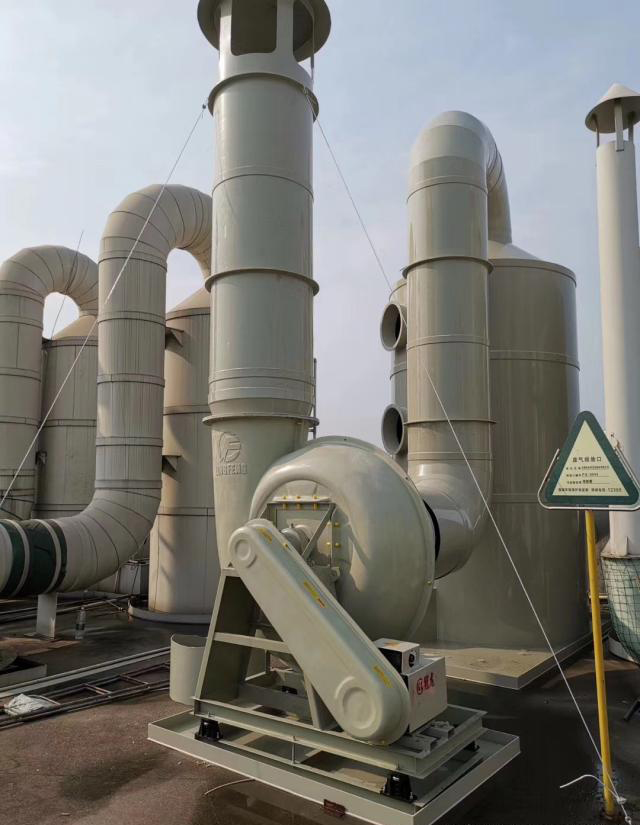
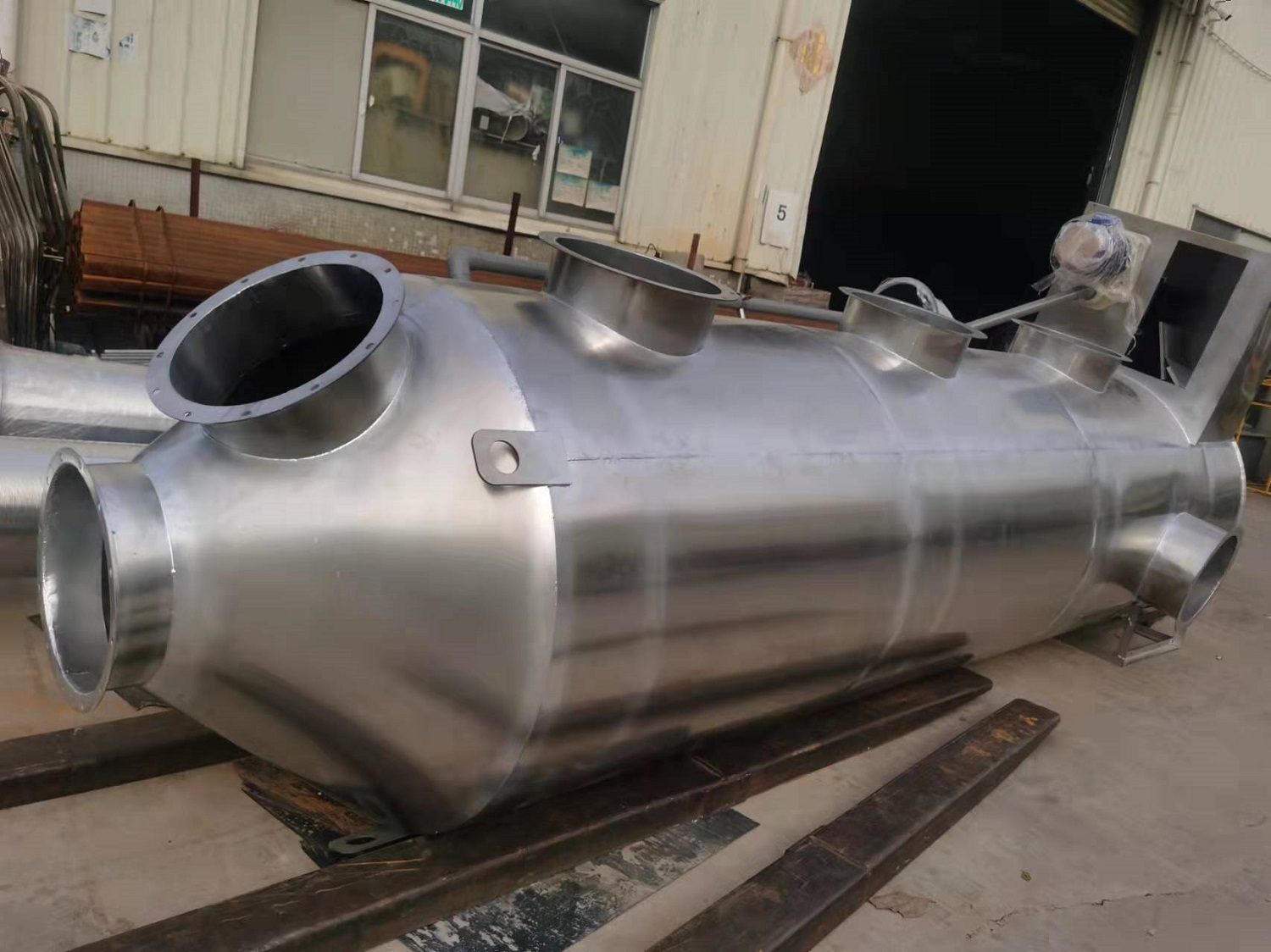
Product Overview
PP electric actuator valve for automated inline airflow control — combining a corrosion-resistant PP/PVC/PPS valve body with a modular electric actuator providing precise remote flow modulation. Unlike a motorized damper assembly where the damper and actuator are permanently matched, the actuator valve uses a standardized actuator mounting interface that accepts multiple actuator types — allowing the same valve body to be configured for modulating (0-10V / 4-20mA), two-position (open/close), or spring-return (fail-safe) operation by changing only the actuator. This modularity reduces spare parts inventory for facilities with mixed control requirements and allows actuator upgrades without valve replacement.
| Application | Automated inline airflow regulation — BMS-controlled branch flow, process-interlocked valve operation, remote flow adjustment in inaccessible pipe runs, proportional flow control with position feedback |
| Material | PP (standard corrosion), PVC (rigid/UV-stable), PPS (flame retardant / 200degC) — injection molded valve body with standardized ISO actuator mounting flange |
| Actuator options | Modulating (0-10V / 4-20mA), two-position (open/close), spring-return (fail-safe); 220V AC or 24V AC/DC |
| Standard diameters | DN50 to DN315 (injection molded); DN355+ custom fabricated; rectangular custom to order |
| Position feedback | 0-10V or 4-20mA output confirming actual valve position; limit switches for open/closed confirmation on two-position models |
| Connection type | Flanged (standard), butt-weld, or socket — matched to pipe specification |
| Color | Beige / Dark Grey |
| Lead time | 10-20 days assembled and calibrated |
Electric Damper vs Actuator Valve: The Installation Difference
An electric motorized damper (E4) is a complete assembly where the damper body and actuator are factory-matched — the actuator shaft is directly coupled to the damper spindle. This is the correct choice for duct-mounted installations where the damper is the primary flow control element. An electric actuator valve (E5) uses a modular actuator mounted on a standardized interface flange — the actuator can be removed, replaced, or upgraded without removing the valve body from the pipe. This modularity matters in three scenarios:
- Mixed control requirements across a facility. A chemical plant may have 20 actuated valves: 12 require simple open/close (two-position actuators), 6 require modulating control (0-10V actuators), and 2 require fail-safe spring-return (for safety-interlocked exhaust). With modular actuator valves, all 20 valve bodies are identical — only the actuator differs. Spare parts inventory: one valve body type, three actuator types. With integrated damper-actuator assemblies, each of the three configurations would be a different product requiring different spare parts.
- Actuator upgrade without pipe modification. If a branch currently operating as two-position (open/close) needs upgrading to modulating control for a new process, the actuator is unbolted from the valve body and replaced with a modulating actuator — no pipe cutting, no flange re-welding, no system shutdown beyond the branch isolation. The valve body stays in place. The standardized ISO mounting flange ensures the new actuator aligns correctly.
- Field-replaceable actuator for minimum downtime. If an actuator fails (motor burnout, control board fault, water ingress), the actuator is replaced in under 30 minutes by two bolts and an electrical connector — the valve body remains in the pipe, the system is back online quickly, and the failed actuator is repaired or replaced on the bench. This supports ASHRAE guideline recommendations for maintainable HVAC control components.
Why Xicheng
16 years, 2600+ systems shipped worldwide. An electric actuator valve operates at the intersection of mechanical sealing and electronic control — the valve body must seal reliably in a corrosive environment, while the actuator electronics must survive heat, humidity, and vibration in the installed location:
- Standardized ISO actuator mounting — not proprietary. Our valve bodies use the ISO 5211 actuator mounting flange standard — the same interface used by every major actuator manufacturer (Belimo, Siemens, Honeywell, Rotork). This means you are not locked into our actuator supply. If your facility standardizes on a specific actuator brand, specify it and we’ll mount and calibrate it on our valve body. If an actuator fails years later and our exact model is no longer available, any ISO 5211-compatible actuator of the correct torque rating fits.
- Thermal isolation between valve body and actuator. For high-temperature applications (PPS valve body, exhaust at 150-200degC), the actuator mounting bracket includes a thermal isolation spacer that prevents heat conduction from the valve body through the spindle to the actuator. Without this isolation, the actuator operates above its rated ambient temperature — the electronics degrade, the gearbox lubricant thins, and the actuator fails prematurely. This is a common failure mode in high-temperature exhaust applications where the actuator was specified for the ambient temperature but not for conducted heat from the valve body.
- Actuator enclosure rated for the installed environment. IP54 enclosure is standard — protected against dust ingress and water spray from any direction. IP65 available for outdoor installations or wash-down areas. NEMA 4X available for corrosive atmospheres. The enclosure rating must match the installation location, not just the process condition — an actuator in a weather-exposed rooftop location needs weather protection regardless of what’s inside the pipe.
- Valve body and actuator tested as an assembly. Before shipment, every actuator valve assembly undergoes: actuator stroke calibration (full open to full close, verified), position feedback signal verification (0% = 0V, 100% = 10V), torque test (actuator overcomes valve seating torque at closed position), and manual override function test. The test report ships with the valve.
Send your control requirements and pipe specifications to xicheng023@outlook.com. We’ll specify valve body, actuator, and mounting configuration. WhatsApp: +86 18927456906.
Core Advantages
- Modular Actuator — Not Permanently Married: Standardized ISO 5211 mounting accepts multiple actuator brands and types — change the actuator without removing the valve body from the pipe.
- ISO Standard Interface, Not Proprietary: Compatible with Belimo, Siemens, Honeywell, Rotork actuators — no vendor lock-in for future actuator replacements or facility standardization.
- Thermal Isolation for Hot Service: PPS valve bodies include thermal isolation spacer — prevents conducted heat from destroying actuator electronics in high-temperature exhaust applications.
- Factory-Tested Assembly with Test Report: Stroke calibration, feedback verification, torque test, and manual override check documented before shipment.
- Field-Replaceable Actuator in Under 30 Minutes: Two bolts, one electrical connector — actuator swap without draining the pipe or removing the valve body.
Key Specifications
| Model No. | XC-11A |
| Material | PP / PVC / PPS — injection molded valve body |
| Actuator Mounting | ISO 5211 standard flange — multi-brand compatible |
| Actuator Voltage | 220V AC or 24V AC/DC |
| Control Signal | Modulating: 0-10V / 4-20mA; Two-position: dry contact / voltage |
| Position Feedback | 0-10V or 4-20mA (modulating); limit switches (two-position) |
| Standard Diameters | DN50 to DN315 (round); rectangular custom to order |
| Enclosure Rating | IP54 standard; IP65 / NEMA 4X optional |
| Stroke Time | 30-90 seconds (modulating); 60-150 seconds (spring-return) |
| Operating Temperature | PP: -10 to 80degC | PVC: 0 to 60degC | PPS: up to 200degC (with thermal isolation) |
| Service Life | 8-10 Years (valve body); actuator per manufacturer rating |
| Brand / Origin | Xicheng / China |
Certifications and Compliance
- CE Certified – Actuator Valve Assembly
- RoHS Compliant – Valve body and actuator materials
- ISO 9001 – Quality Management System
- ISO 14001 – Environmental Management System
- SGS Tested – PP valve body, actuator torque calibration, position feedback accuracy, enclosure ingress protection
- Design Compliance – Valves designed to meet ASHRAE automated HVAC control standards, NFPA 90A where applicable, and EU Industrial Emissions Directive (2010/75/EU) automated exhaust system requirements
How to Order
- You send – Pipe diameter, material, actuator voltage, control signal type, fail-safe requirement, enclosure rating, preferred actuator brand (if any)
- We specify – Valve body, actuator model, mounting configuration, wiring diagram, and pricing
- We assemble and test – 10-20 days. Actuator mounted, stroke calibrated, feedback verified, test report included
Contact xicheng023@outlook.com or WhatsApp +86 18927456906 — quotation within 24 hours.
Complete Your System
- Electric Motorized Damper – Factory-matched damper + actuator for duct-mount applications
- Manual Air Control Valve – Manual version with pressure-independent control
- Manual Butterfly Damper – Manual damper for non-automated ducts
- Solenoid Valve – Fast-acting solenoid for on/off control
FAQ
Actuator valve or motorized damper — which is right for my application?
Motorized damper (E4): the damper body and actuator are factory-matched as a permanent assembly — simpler to specify, lower cost per unit. Best for duct-mounted applications where the damper will not need actuator changes during its service life. Actuator valve (E5): modular actuator on ISO standard mounting — higher initial cost but field-replaceable actuator and multi-brand compatibility. Best for inline pipe installations, facilities with mixed control requirements, and applications where future actuator upgrades are anticipated.
Can I use my existing actuator brand on your valve body?
If the actuator uses ISO 5211 mounting flange standard and matches the valve’s required torque rating — yes. Send us the actuator model and we’ll confirm compatibility and supply the valve body with the correct mounting bracket and spindle coupling. If you supply the actuator, we’ll mount and calibrate it on our valve body before shipment.
What maintenance does an electric actuator valve require?
The PP/PVC/PPS valve body requires essentially no maintenance — the corrosion-resistant materials do not degrade in normal service. The actuator requires: annual visual inspection (enclosure integrity, wiring connections, manual override function), and functional testing every 2-3 years (stroke full open/close, verify position feedback accuracy). Actuator gearbox lubricant is sealed for life in most models. For spring-return actuators, the spring mechanism should be functionally tested annually — spring fatigue is rare but critical for fail-safe applications.