Description
Product Overview
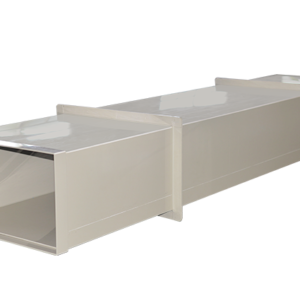
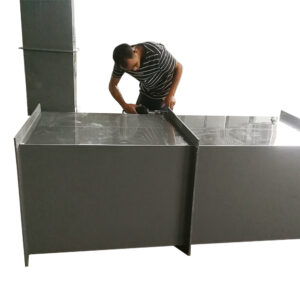
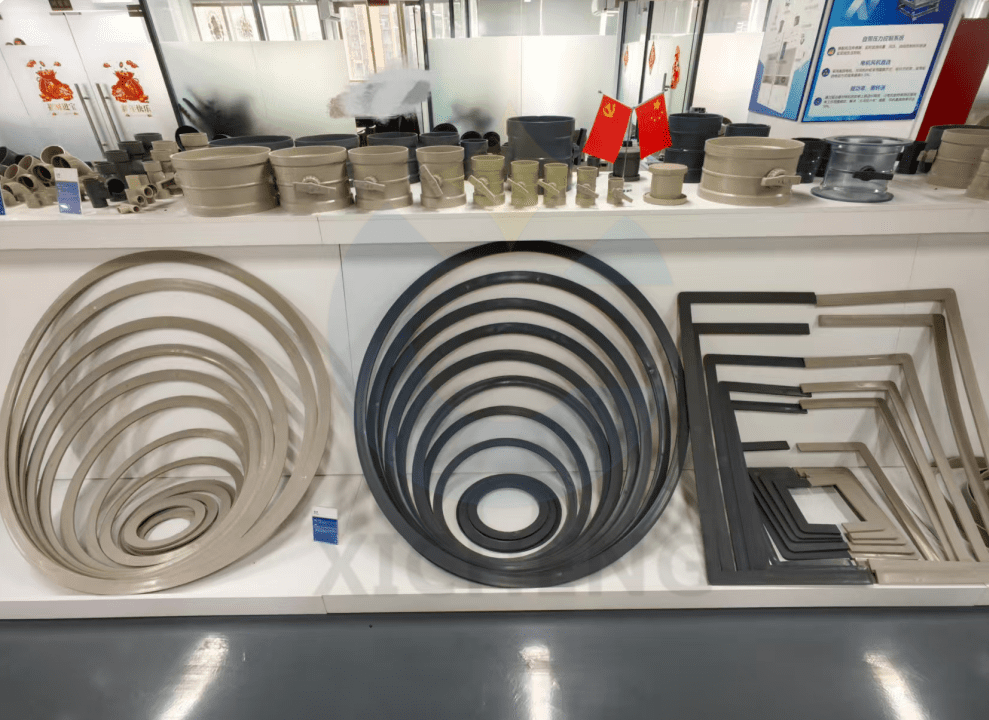
PP air duct connections and flanges for joining duct sections, connecting duct to equipment, and creating serviceable joints in industrial ventilation and exhaust systems. Includes flange kits (matching flanges + gaskets + fasteners), socket couplings, and end caps — all in PP, PVC, and PPS to match your duct material. Flanged connections allow sections to be disassembled for cleaning, inspection, and equipment change-out without cutting ductwork. Socket couplings provide quick slip-fit assembly for small-diameter lines.
| Application | Duct section joining, equipment connections, serviceable joint creation, duct end termination, inspection access points |
| Material | PP (standard), PVC (rigid/UV), PPS (flame retardant / 200degC) |
| Connection types | Flange kits (bolted + gasketed), socket couplings (slip-fit), end caps (blind termination), butt-weld adapters |
| Diameter range | 15 mm to 1,500 mm depending on connection type |
| Gasket material | EPDM (standard), FKM/Viton (chemical service), PTFE (aggressive chemicals) |
| Color | Beige / Dark Grey / White |
| Lead time | 5-15 days standard; 15-20 days custom |
Why Flanged Connections Matter
Welded connections are permanent and leak-tight — ideal for long straight runs. But every system needs disassembly points for equipment access, cleaning, and future modification. Flanged connections provide the balance of sealing integrity and serviceability:
- Serviceable without cutting. A flange pair allows disconnection and reconnection without damaging the duct. For equipment connections (fan inlets/outlets, scrubber flanges, damper installation), flanged joints are essential — you will need to remove that equipment eventually for repair or replacement.
- Gasket selection for your chemical environment. EPDM gaskets are suitable for general ventilation and mild chemical service. FKM/Viton gaskets handle aggressive solvents and elevated temperatures. PTFE gaskets provide near-universal chemical resistance for the most demanding applications. We match gasket material to your chemical profile — not a one-size-fits-all approach. Proper gasket selection is critical for meeting EU Industrial Emissions Directive fugitive emission requirements at flanged joints.
- End caps for future expansion. Terminating a duct run with a flanged connection and blind flange (end cap) creates a future tie-in point — when the system expands, remove the blind flange, bolt on the extension duct, and continue operation. Much more cost-effective than cutting into a welded system later.
Why Xicheng
16 years, 2600+ systems shipped worldwide. Flanges and connections seem minor — until one leaks. A poorly fabricated flange with uneven face flatness or incorrect bolt spacing creates a leak path that compromises the entire exhaust system’s containment:
- CNC-machined flange faces. Flange sealing faces are machined flat after welding to the duct section — ensuring uniform gasket compression and consistent bolt tension around the full circumference. Hand-fabricated flanges with uneven faces create high and low spots where gasket compression varies — the low spots leak first.
- Complete flange kits — flanges + gaskets + fasteners. One part number covers everything needed to make the joint. Matching PP flanges (welded to each duct end), chemically compatible gasket, and PP or SS316 fasteners. No field sourcing of gaskets and bolts from different suppliers with unknown compatibility.
- Socket couplings for quick assembly. For small-diameter duct (under 200 mm) at low pressure, socket couplings with integral sealing rings provide fast slip-fit assembly without welding or bolting. Ideal for laboratory bench exhaust connections, instrument air lines, and temporary setups.
Send your duct layout showing connection points to xicheng023@outlook.com. We’ll specify flange types, gasket materials, and provide a complete connection schedule.
Core Advantages
- Flanged Joints for Service Access: Disconnect and reconnect without cutting duct — essential for equipment connections and future system modifications.
- Gasket Material Matched to Chemistry: EPDM, FKM/Viton, or PTFE gaskets specified to your chemical environment — not a generic one-size gasket.
- CNC-Flat Flange Faces: Machined flat after welding for uniform gasket compression — no uneven hand-fabricated sealing surfaces.
- Complete Connection Kits: Flanges + gaskets + fasteners in one part number — no field sourcing of incompatible components.
- Three Materials: PP, PVC, and PPS flanges and fittings to match your duct material — consistent chemical resistance throughout the system.
Key Specifications
| Material | PP / PVC / PPS — matching duct material |
| Connection Types | Flange kits, socket couplings, end caps, butt-weld adapters |
| Diameter Range | 15 mm – 1,500 mm (flange type dependent) |
| Gasket Materials | EPDM (standard), FKM/Viton (chemical), PTFE (aggressive) |
| Fastener Material | PP (standard corrosion), SS316 (high-temperature / high-load) |
| Operating Temperature | Gasket-dependent; PP: -10 to 80degC | PVC: 0 to 60degC | PPS: up to 200degC |
| Service Life | 10-15 Years (flange body); gasket replaced per maintenance interval |
| Brand / Origin | Xicheng / China |
Certifications and Compliance
- CE Certified – PP Flanges, Fittings, Duct
- RoHS Compliant – All materials
- ISO 9001 – Quality Management System
- ISO 14001 – Environmental Management System
- SGS Tested – PP material properties, flange face flatness, gasket compression set
- Design Compliance – Flanged connections designed to meet EU Industrial Emissions Directive (2010/75/EU) fugitive emission requirements for flanged joints in industrial exhaust systems
How to Order
- You send – Duct diameter, connection type (flange/socket/end cap), material, chemical exposure, required gasket material
- We specify – Flange dimensions, bolt pattern, gasket material, fastener material, and pricing
- We produce – 5-15 days. Flanges machined, gaskets cut, fasteners included, dimensional inspection before shipment
Contact xicheng023@outlook.com or WhatsApp +86 18927456906 — quotation within 24 hours.
Complete Your System
- PP Industrial Pipe – Straight pipe sections
- PP Round Duct – Round ventilation duct
- PP Duct Elbow – 45deg and 90deg elbows
- PP Duct Tee – Tee fittings for branching
FAQ
Flanged or welded — which connection method should I use?
Welded connections are permanent, leak-tight, and lower cost — use for long straight duct runs that won’t need future access. Flanged connections are serviceable — use at equipment connections (fan, scrubber, damper), at regular intervals in long runs (every 20-30 meters for clean-out access), at duct size transitions (reducer connections), and at any point where future system expansion is planned. A typical industrial exhaust system uses 80-90% welded joints and 10-20% flanged joints at strategic locations.
How do I choose the right gasket material?
EPDM is the standard for general ventilation and mild chemical service — good temperature range (-30 to 120degC), good chemical resistance to acids and alkalis, lowest cost. FKM/Viton for aggressive solvents, chlorinated compounds, and elevated temperatures (up to 200degC). PTFE for near-universal chemical resistance — use when the exhaust contains mixed aggressive chemicals or when gasket replacement access is difficult and maximum service life is needed.
Do you provide end caps for duct termination?
Yes — two types. Blind flanges: bolt to a flanged duct end for a sealed, removable termination — removable for future system extension. Weld-on end caps: permanently welded to the duct end for final termination — simpler and lower cost when future extension is not planned. Both types available in PP, PVC, and PPS.