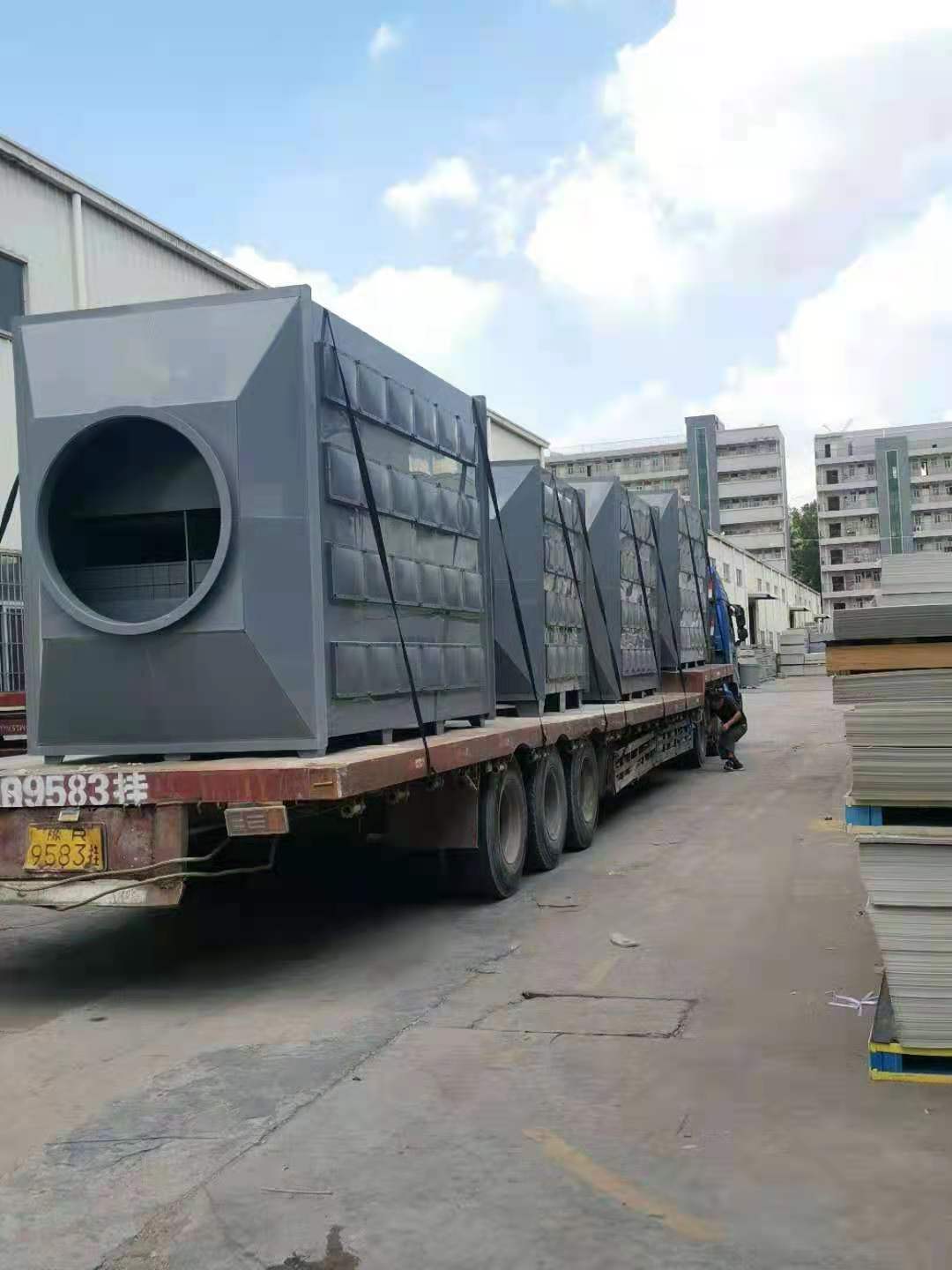
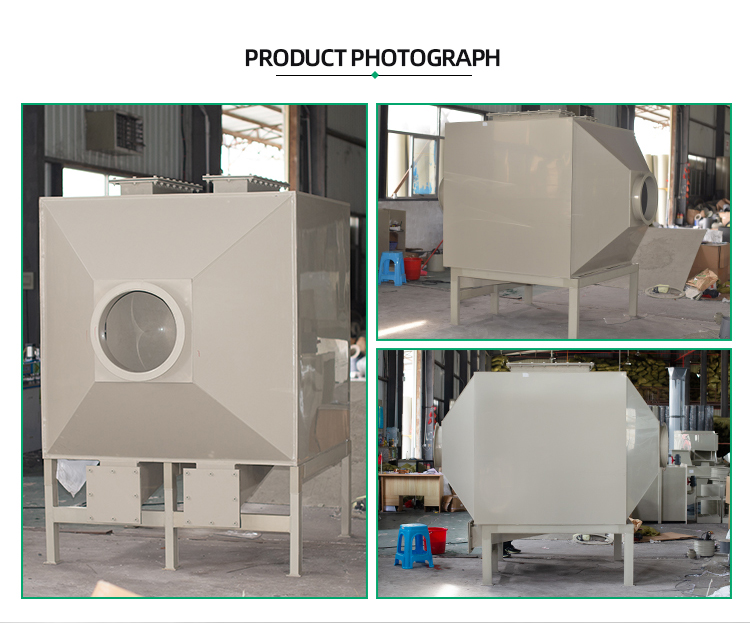
Product Overview
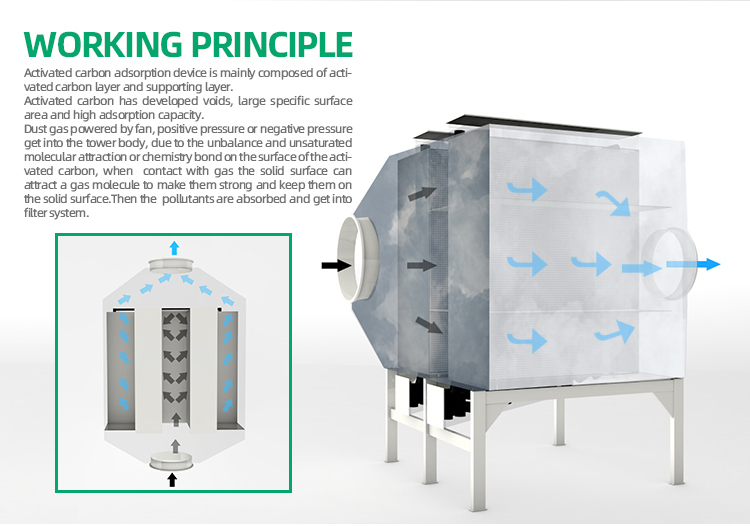
Industrial activated carbon filter for VOC abatement, odor control, and exhaust air purification. Uses microporous activated carbon media to physically adsorb organic compounds, solvent vapors, and odorous gases from industrial air streams — no chemical reagents, no liquid waste. Designed for paint booths, chemical storage vents, pharmaceutical cleanrooms, electronics manufacturing, and general industrial exhaust where volatile organic compounds (VOCs) must be captured before atmospheric release.
| Application | VOC abatement, odor control, solvent vapor capture, exhaust air polishing |
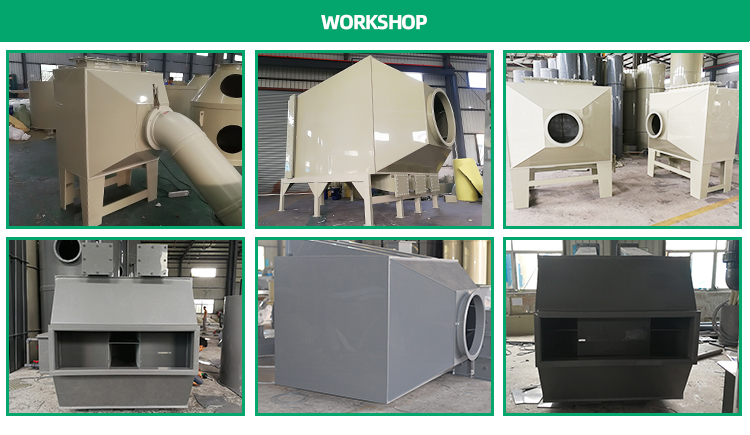
| Material | Virgin PP housing (standard); SS304/316L (high-temp or solvent-heavy exhaust); FRP (corrosive environments) |
| Carbon media | Cylindrical activated carbon, diameter 4 mm; granular, pellet, and honeycomb types available |
| Efficiency | 90%-95% for most VOCs and odorous compounds |
| Air volume | 1,500 – 60,000 m3/h single unit; multi-unit parallel for higher flow |
| Lead time | 15-25 days |
| Warranty | 12 months structure; carbon media replacement interval depends on pollutant loading |
When to Use Activated Carbon Filtration
Activated carbon filtration and wet scrubbing address different pollutant types and are often deployed together in a multi-stage treatment train. Understanding which technology handles which pollutant helps you design a complete system that meets all emission limits:
- VOCs and solvent vapors. Toluene, xylene, MEK, acetone, ethyl acetate resist dissolution in water and pass through a scrubber largely untreated. Carbon’s microporous structure (pores under 2 nm, surface area 900-1200 m2/g) physically adsorbs these organic molecules, delivering over 90% removal — helping facilities meet US EPA VOC emission standards for hazardous air pollutants.
- Odor control. H2S, mercaptans, and amines — even at trace concentrations — create nuisance odors and exceed OSHA exposure limits. Carbon’s enormous internal surface area captures these compounds when water scrubbing alone leaves residual smell. This is why carbon is the go-to polishing stage downstream of wet scrubbers.
- Standalone dry process. Where water supply, wastewater discharge, or chemical handling is impractical, carbon filtration operates as a fully dry system — no pumps, no reagents, no liquid blowdown. Spent carbon is removed and thermally reactivated or replaced on a scheduled cycle.
- Multi-stage treatment. In a typical exhaust system, the wet scrubber handles the bulk acid gas load (HCl, NH3, SO2), then the carbon filter polishes residual VOCs and odors — both technologies doing what each does best in a single integrated system.
Why Xicheng
16 years, 2600+ systems shipped worldwide. Our carbon filters are operating across a wide range of industries and demanding conditions: electronics manufacturing (solvent vapor from PCB cleaning and wafer fabrication), chemical and petrochemical plants (BTEX, styrene, and process off-gas), pharmaceutical cleanrooms (trace API emissions), paint and coating lines (toluene, xylene, MEK, and paint booth exhaust), laboratories and R&D facilities (mixed organic vapors from fume hoods), and wastewater treatment plants (H2S and mercaptan odor control at lift stations and headworks). Each application presents a different VOC profile, concentration range, and operating temperature — we size the carbon bed for your specific conditions, not a generic catalog spec.
Carbon filter performance depends on three things: carbon quality, residence time, and flow distribution. Get any of these wrong and you’re replacing media every 2 months instead of every 12 — or worse, emitting VOCs you thought were captured:
- Carbon selection matters. Not all activated carbon is the same. Coconut-shell carbon has high microporosity for small-molecule VOCs. Coal-based carbon handles larger molecules and higher temperatures. Impregnated carbon (KI, NaOH, H2SO4) chemically reacts with specific gases like H2S and Hg. We specify the right carbon for your pollutant profile — not just whatever is cheapest.
- Residence time engineering. A carbon filter that’s too small will saturate in weeks. We engineer for 0.1-0.5 seconds empty-bed contact time depending on inlet concentration and target removal efficiency. The spec table below shows our standard models sized for common industrial applications.
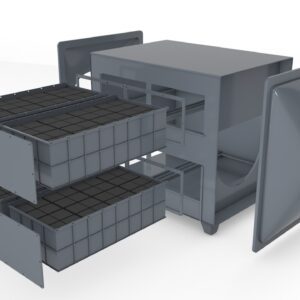
- Flow distribution, not channeling. Poor inlet plenum design creates high-velocity channels through the carbon bed — most of the carbon sits unused while a small fraction saturates immediately. Our drawer-type design with perforated distribution plates ensures even flow through the entire carbon charge.
Send your exhaust composition and air volume to xicheng023@outlook.com. We’ll calculate carbon bed sizing, estimate media life, and provide a full proposal.
Core Advantages
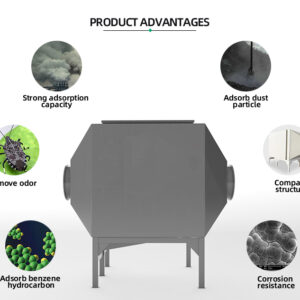
- High Purification Efficiency: Delivers 90%-95% VOC and odor removal. Effectively treats various industrial organic waste gases.
- Durable and Premium Material: New PP material offering excellent anti-corrosion and chemical-resistant properties.
- Compact Design and Low Consumption: Simple drawer structure, minimal footprint, no chemical reagent consumption.
- Easy Installation and Operation: Modular drawer design for easy carbon replacement, simple to operate and maintain.
- Flexible Customization and After-Sales: Custom sizing to air volume, 1-year warranty, overseas support.
Key Specifications
| Model No. | XC-2 |
| Material | New PP (Polypropylene) |
| Function | Air Purification and Odor Removal |
| Purifying Technology | Activated Carbon Adsorption |
| Purify Efficiency | 90%-95% |
| Activated Carbon Type | Cylindrical, diameter 4 mm (granular/pellet/honeycomb available) |
| Service Life | 8-10 Years (housing); carbon media replacement per usage |
| Color | Beige / Dark Grey |
| Brand / Origin | Xicheng / China |
Certifications and Compliance
- CE Certified – Activated Carbon Filter, Exhaust Fan, Air Valve
- RoHS Compliant – Adsorption Tower materials
- ISO 9001 – Quality Management System
- ISO 14001 – Environmental Management System
- SGS Tested – PP Sheet, FR-PP, PP Pipe, PVC Sheet
- Design Compliance – Systems designed to meet EU Industrial Emissions Directive (2010/75/EU) and US EPA NESHAP for VOC and HAP emission control
Model Selection Table
Standard activated carbon filter range — all dimensions in millimeters.
| Air Volume (m3/h) | Type | Specification (mm) | Activated Carbon (kg) | Thickness (mm) | Through Area (m2) |
|---|---|---|---|---|---|
| 1,500-2,500 | 2 Layers 1 Side | 1050 x 870 x 1000 | 100 | 10 | 0.64 |
| 2,500-3,500 | 3 Layers 1 Side | 1150 x 870 x 1700 | 125 | 10 | 0.96 |
| 3,500-5,000 | 2 Layers 1 Side | 1550 x 870 x 1000 | 175 | 10 | 1.28 |
| 5,000-7,000 | 3 Layers 1 Side | 1600 x 870 x 1700 | 275 | 10 | 1.92 |
| 7,000-10,000 | 3 Layers 1 Side | 2150 x 870 x 1700 | 400 | 10 | 2.88 |
| 10,000-14,000 | 3 Layers 2 Sides | 1600 x 1730 x 1700 | 525 | 10 | 3.84 |
| 14,000-18,000 | 4 Layers 2 Sides | 1800 x 1730 x 2000 | 700 | 10 | 5.12 |
| 18,000-22,000 | 3 Layers 2 Sides | 2150 x 1730 x 1700 | 775 | 10 | 5.76 |
| 22,000-28,000 | 3 Layers 2 Sides | 2650 x 1730 x 1700 | 1,050 | 10 | 7.68 |
| 28,000-35,000 | 4 Layers 2 Sides | 2900 x 1730 x 2000 | 1,400 | 12 | 10.24 |
| 35,000-45,000 | 4 Layers 2 Sides | 3500 x 1730 x 2400 | 1,725 | 12 | 12.80 |
| 45,000-55,000 | 4 Layers 2 Sides | 4000 x 1730 x 2400 | 2,075 | 12 | 15.36 |
| 55,000-60,000 | 5 Layers 2 Sides | 4000 x 1730 x 2900 | 2,600 | 12 | 19.20 |
Custom sizes: Up to 120,000 m3/h via multi-unit parallel configuration. Contact xicheng023@outlook.com.
How to Order
- You send – Exhaust gas composition, VOC concentrations, air volume, temperature, humidity
- We analyze – Pollutant profile to select optimal carbon type (granular, pellet, honeycomb, or impregnated)
- We design – Carbon bed sizing based on residence time, expected media life, and target removal efficiency
- You approve – Technical proposal with carbon consumption estimate, replacement schedule, and pricing
- We build – 15-25 days. Housing fabricated, carbon media charged, flow tested before shipment
- We ship – Installation drawings, carbon handling guidelines, and replacement procedure included.
Contact xicheng023@outlook.com or WhatsApp +86 18927456906 — proposal within 24 hours.
Complete Your System
- Wet Scrubber Overview – Combine with scrubber for multi-stage treatment
- Carbon Adsorption Equipment – Heavy-duty industrial carbon systems
- PP Exhaust Duct – Corrosion-resistant ductwork
- PP/FRP Centrifugal Fan – Matched to system pressure drop
Global Shipping
We ship worldwide across Southeast Asia, South Asia, Middle East, Africa, Europe, Americas, and Oceania. Sea freight standard; air freight for small units. Export documentation included.
FAQ
How often does the activated carbon need to be replaced?
Carbon media life depends on inlet VOC concentration, operating hours, temperature, and humidity. Typical replacement intervals range from 3-12 months for moderate VOC loading. We provide a media life estimate based on your pollutant data. Read: Carbon Filter Replacement and Maintenance Guide.
What type of activated carbon should I use?
It depends on your target pollutants. Coconut-shell carbon (high microporosity) excels at small-molecule VOCs. Coal-based carbon handles larger organics and higher temperatures. Impregnated carbon (KI, NaOH, H2SO4) chemically reacts with H2S, mercury, and ammonia. Honeycomb carbon offers lower pressure drop for high-flow applications. We specify based on your gas composition. Read: Carbon Media Types: Granular, Pellet, Honeycomb.
Should I use a carbon filter together with a wet scrubber?
For many exhaust streams, the most effective approach is both: the wet scrubber removes bulk acid gases (HCl, NH3, HF, SO2) through absorption, then the carbon filter polishes residual VOCs and odors through adsorption. This multi-stage combination delivers higher overall removal than either technology alone, especially for mixed-pollutant exhaust from chemical processing, pharmaceutical manufacturing, and paint booth operations. Read: Carbon Filter vs Wet Scrubber Comparison.