
If you’ve read our gas scrubber market analysis, you already know that Asia‑Pacific is driving the fastest scrubber adoption growth globally. But market sizing charts answer the question “how big is the opportunity?”—they don’t answer the question your finance team will ask: what does it cost to operate this scrubber every single year for the next decade?
We’ve compiled operating cost data from over 500 installations across 30 countries, and one pattern repeats consistently: facilities that budget only for the purchase price discover within two to three years that they’ve underestimated their total spend by a factor of three. The difference between a scrubber that earns its place on the balance sheet and one that becomes a recurring drain isn’t the technology concept—it’s the material choice, the pressure drop design, and the maintenance accessibility engineered into the system from day one. If you’re building your cost justification for an acid‑gas scrubber, our PP Packed Bed Scrubber provides the baseline engineering data—pressure drop, removal efficiency, and operational parameters—that makes TCO projections accurate rather than aspirational.
The 5 Cost Buckets Every Scrubber Operator Should Track
Bucket 1: Electricity—The 24/7/365 Expense Nobody Calculates Accurately
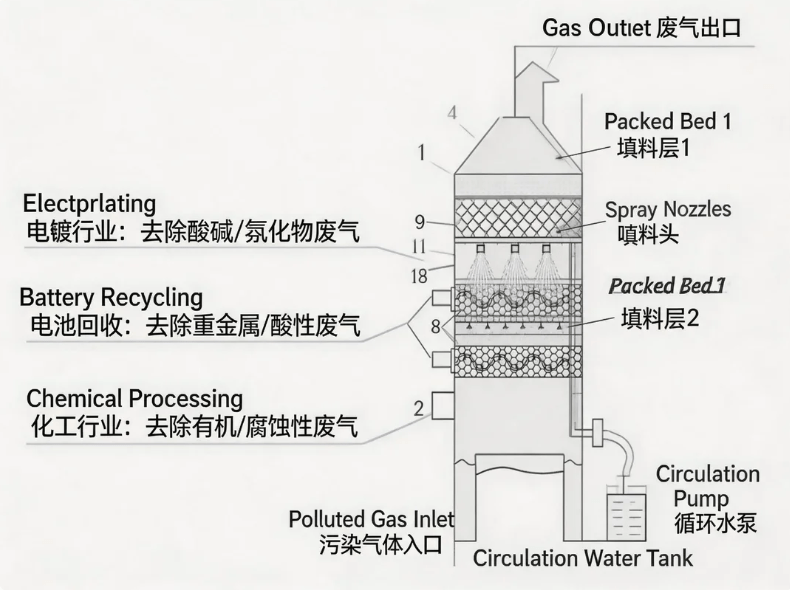
Electricity is the largest single operating cost in a wet scrubber system, and it’s driven almost entirely by one design parameter: pressure drop across the packed bed. Every millimeter of water column resistance that the exhaust fan must overcome translates into kilowatt‑hours that appear on your electricity bill every hour the system runs. A scrubber designed with a pressure drop of 800 Pa consumes roughly 60% more fan energy than one engineered to 500 Pa at the same volumetric flow rate. When you multiply that differential across 8,760 hours of annual operation, the resulting electricity cost difference can exceed the entire annual maintenance budget for the system.
Our PP packed bed systems are engineered to a baseline pressure drop of 500–600 Pa at design flow. We achieve this not by under‑packing the tower—which would sacrifice removal efficiency—but by optimizing the packing depth, liquid distribution nozzle pattern, and mist eliminator geometry through computational fluid dynamics validated against on‑site measurements. The smooth hydrophobic PP surface also keeps that pressure drop stable between maintenance intervals, because there’s no corrosion product or scale accumulation adding parasitic resistance over time.
Bucket 2: Water and Wastewater—The Hidden Utility Cost
Wet scrubbers consume water through evaporation into the gas stream and through blowdown—the controlled discharge of a portion of the recirculating liquor to prevent the buildup of dissolved salts. In regions with high industrial water tariffs, the combined cost of makeup water and wastewater treatment can approach the electricity cost over a full operating year. A scrubber with a well‑designed mist eliminator reduces water carryover into the exhaust stack, directly lowering makeup water demand. PP’s corrosion‑free internal surface also means there’s no iron oxide or dissolved metal contamination being introduced into the scrubbing liquor—something that complicates wastewater treatment for metallic scrubber systems.
Bucket 3: Chemical Reagents—The Metered Expense That Drifts With Efficiency
For acid‑gas scrubbing, the primary reagent is sodium hydroxide, consumed in direct proportion to the mass of acid gas removed. When a scrubber is operating at peak mass‑transfer efficiency—with no packing channeling, no liquid distributor clogging, and the sump pH maintained in its design range—the NaOH consumption tracks predictably with inlet acid‑gas loading. When efficiency drops, operators compensate by over‑dosing reagent, which drives up the chemical cost without improving outlet emissions. Our packed bed systems include an integrated PP pH sensor holder that eliminates the metallic corrosion point that plagues conventional pH probes, ensuring uninterrupted chemical dosing control.
Bucket 4: Maintenance Labor—Where Material Choice Becomes a Cost Multiplier
Maintenance labor cost is the most under‑estimated line item in scrubber operating budgets, because it’s directly tied to material choice in ways that purchase‑price comparisons ignore. An SS304 scrubber in HCl service requires periodic weld inspection, passivation, and eventually repair—each event pulling a certified stainless welder and a helper away from other maintenance tasks for days. An FRP scrubber needs internal inspection for blistering, and when blistering is found, the repair involves grinding out the damaged laminate, relaminating, and curing—a multi‑day process. A PP scrubber requires none of this. There’s no corrosion to inspect, no passive layer to restore, no coating to recoat. The maintenance tasks are limited to packing inspection and pH probe calibration—both of which can be completed in hours rather than days.
Across our installation base, a PP packed bed scrubber typically requires approximately 40% less maintenance labor over a 10‑year lifecycle compared to an equivalent metallic system. For a deeper analysis of how maintenance profiles differ across materials, read our breakdown of the Hidden Costs of Industrial Wet Scrubbers.
Bucket 5: Unplanned Downtime—The Cost That Can Exceed the Purchase Price
Unplanned downtime is the cost bucket that can make or break a scrubber’s financial case. When a scrubber goes down unexpectedly, the production line it serves also stops—or risks operating without emission control, which is not an option in CPCB‑ or NEA‑regulated facilities. The cost of lost production typically dwarfs the direct repair cost. At a Philippine nickel processing plant, an SS304 packed tower that developed pitting corrosion penetrating 60% of the shell thickness within 24 months required an emergency shutdown lasting five days. Direct repair cost: approximately $18,000 in labor and consumables. Lost production value during those five days: approximately $47,000. Together, they exceeded the original procurement cost of an equivalent PP scrubber. PP eliminates the corrosion failure mode that causes these events, because there is no metallic surface to pit, no grain boundary to sensitize, and no oxide film to break down.
Material Economics: The 10‑Year TCO Comparison No One Shows You
When you aggregate the five cost buckets over a 10‑year period, the purchase price difference between material options shrinks into irrelevance. An SS304 scrubber in HCl service can incur two or three emergency repair events per decade, each costing $12,000–$25,000 in direct repair costs plus $40,000–$60,000 in lost production. An FRP scrubber exposed to HF or polar solvents can require complete shell replacement within 2.5–3 years when permeation‑driven delamination compromises the structural layer. A PP scrubber, by eliminating the corrosion failure mode and the permeation degradation pathway, avoids these costs entirely. The purchase price difference—if any exists—is typically recovered within the first avoided emergency repair event.
The economic case becomes even stronger when you factor in the factory‑direct supply model. By working with a manufacturer that extrudes its own PP sheets, welds its own vessels, and commissions its own systems—like the Industrial Wet Scrubber platform we build specifically for chemical and pharmaceutical applications—you remove the 20–35% distributor markup from your capital outlay while also gaining the operational savings that PP’s material properties deliver.
Regional Cost Variables: Why Your Location Determines Your TCO
High Industrial Electricity Rates: Singapore and the Philippines
In markets where industrial electricity exceeds $0.12–0.15 per kWh, the pressure drop advantage of a 500–600 Pa PP packed bed system translates into significant annual savings. Every 100 Pa of excess pressure drop costs a facility approximately $800–1,200 per year in additional fan electricity for a typical 20,000 m³/h exhaust stream operating 24/7. Over a decade, that single design parameter can represent a $12,000–18,000 cost difference between a well‑engineered and a poorly‑engineered scrubber—before accounting for any other cost bucket.
Regulatory Penalty Risk: India and Southeast Asia
In regions where emission non‑compliance carries the risk of consent revocation—India under the CPCB, Singapore under the NEA—the cost of a failed stack test goes far beyond any monetary penalty. A facility that loses its consent‑to‑operate for even a week faces production shutdown costs that can exceed the full procurement cost of its scrubber system. A PP scrubber that maintains its emission performance for 15 years without material‑degradation‑driven leak points provides a compliance stability that metallic and FRP systems cannot match over the same operating horizon.
How to Build Your Own Operating Cost Model
The five‑bucket framework above gives you the structure. To populate it with numbers specific to your facility, you need five data points: your exhaust volumetric flow rate and inlet pollutant concentration (which determines fan power and chemical consumption), your local industrial electricity rate per kWh, your water and wastewater discharge tariffs, and your hourly maintenance labor cost. With those inputs, you can compare the projected 10‑year TCO of a PP system against an SS304 or FRP alternative. The model will consistently show that material‑driven cost differences—not purchase price—determine long‑term economics. For electroplating or chemical operations handling mixed acid streams, a system like our PP Air Pollution Control Scrubber provides a pre‑engineered platform with the operating parameters and material stability data needed to make those projections accurate.
Frequently Asked Questions About Gas Scrubber Operating Costs
What is the single largest operating cost in a wet scrubber?
Electricity to power the exhaust fan is typically the single largest operating cost, accounting for 40–60% of the annual operating budget depending on local electricity rates. The fan power consumption is directly proportional to the scrubber’s pressure drop—a system designed to 500–600 Pa will consume roughly 60% less fan energy than one operating at 800 Pa at the same flow rate. Over a 10‑year lifecycle in a high‑tariff region like Singapore, the electricity cost difference alone can represent over $15,000 per 20,000 m³/h of exhaust capacity.
How much does maintenance cost for a PP scrubber compared to SS304?
PP scrubbers require approximately 40% less maintenance labor over a 10‑year lifecycle compared to SS304 systems in acid‑gas service. This is because PP eliminates the corrosion inspection, weld repair, and passivation tasks that metallic scrubbers demand. Additionally, an SS304 system in HCl service can incur $12,000–$25,000 per emergency repair event, with two or three such events possible over a decade. PP systems avoid these costs entirely.
Does a PP scrubber’s operating cost advantage apply in all industries?
The advantage is most pronounced in industries handling acid gases—electroplating, chemical processing, semiconductor fabrication, and pharmaceutical API production—where HCl, HF, H₂SO₄, or polar solvents are present in the exhaust stream. In neutral‑pH applications with no corrosive gases, the material‑driven cost difference narrows. However, even in mild service, PP’s smooth hydrophobic surface resists scale adhesion and keeps pressure drop stable, providing a maintenance and energy advantage over the full lifecycle.
How do I calculate the electricity cost of my scrubber?
The formula is: Fan Power (kW) = (Volumetric Flow Rate in m³/s × Pressure Drop in Pa) ÷ (Fan Efficiency × 1,000). Multiply the result by your annual operating hours and your local electricity rate per kWh. For a 20,000 m³/h exhaust stream at 500 Pa pressure drop with 70% fan efficiency, the fan power is approximately 4 kW, translating to roughly 35,000 kWh per year in continuous operation. At $0.12/kWh, that’s approximately $4,200 per year.
What is the payback period for choosing PP over SS304?
The payback typically occurs within the first avoided emergency repair event. An SS304 scrubber in HCl service can develop pitting corrosion within 18–24 months. The cost of a single repair—$12,000–$25,000 in direct costs plus $40,000–$60,000 in lost production—often exceeds the entire procurement cost of an equivalent PP system. Even if a major repair is not required in the first three years, the cumulative savings from lower maintenance labor, lower pressure drop (and therefore electricity), and zero corrosion‑related inspection bring the payback period to approximately 3–4 years in most acid‑gas applications.
Are there any hidden operating costs unique to PP scrubbers?
No. PP scrubbers have no unique operating cost categories—they eliminate cost categories that exist for SS304 (corrosion inspection, weld repair, passivation) and for FRP (blister inspection, laminate repair, shell replacement). The one operating consideration specific to PP is ensuring that any replacement packing media is chemically compatible with PP—a consideration that is standard in any material‑specific specification process and does not introduce additional operating expense.


Related Posts
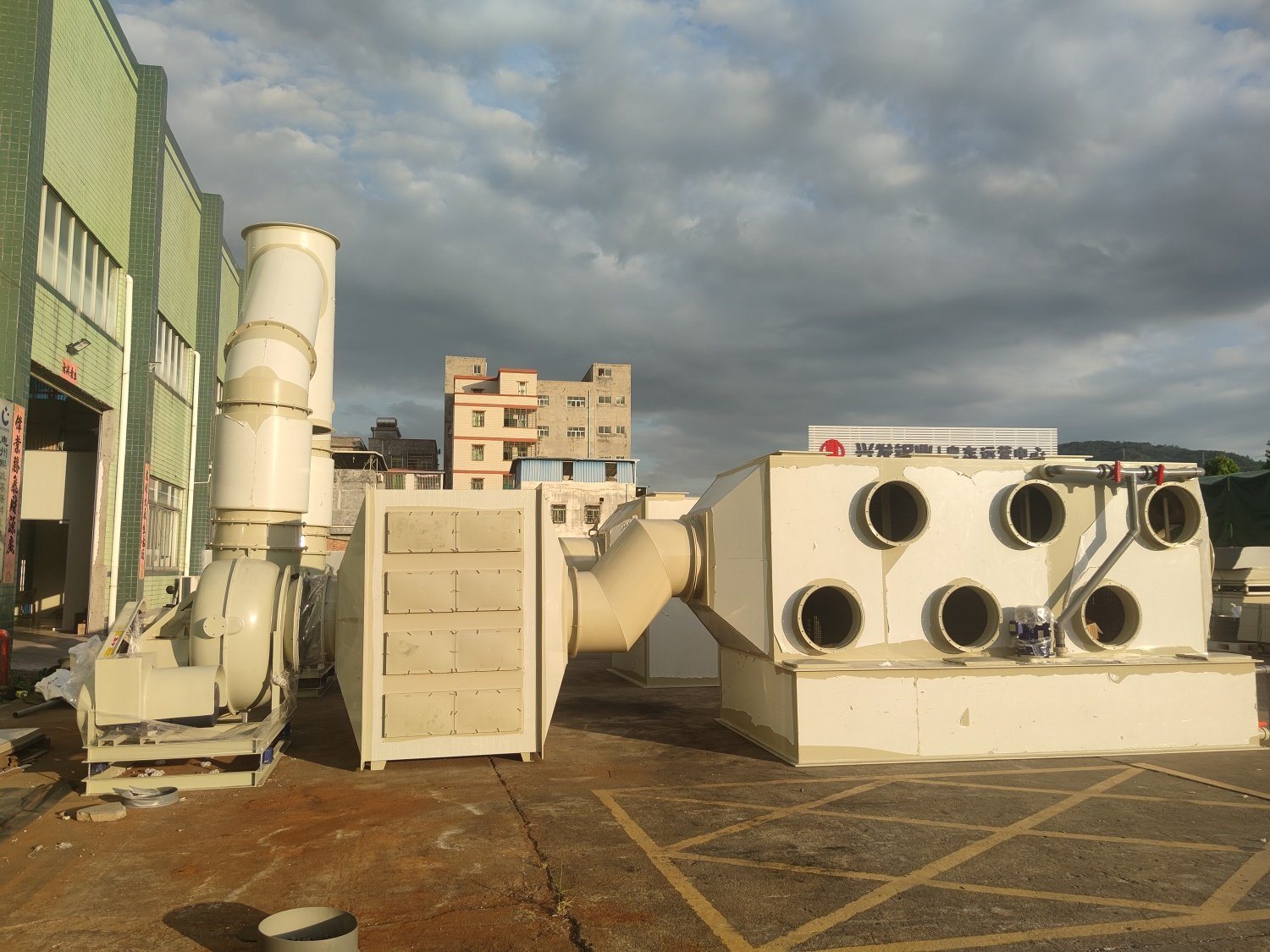
5 Industries Where Wet Air Scrubber Delivers the Best Performance in 2026
Introduction PP wet air scrubbers deliver unmatched performance in industries…
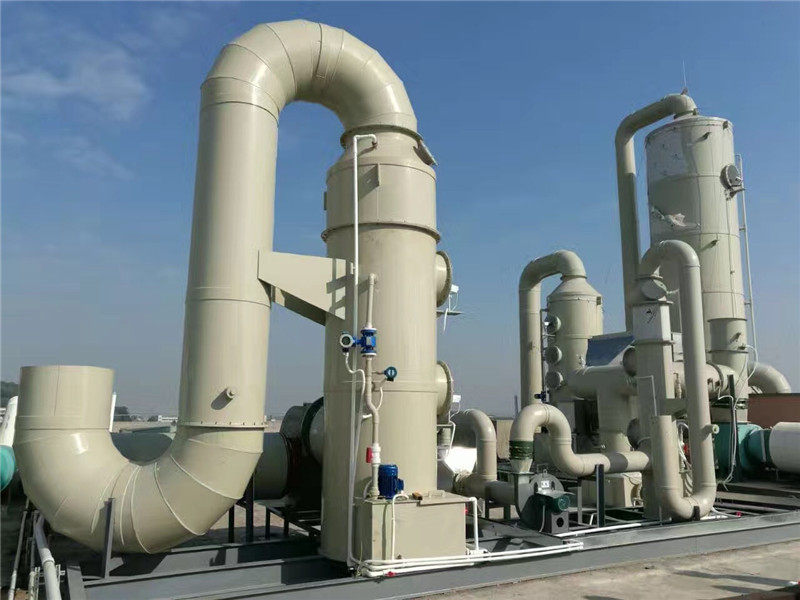
Gas Scrubber Types: H2S, Acid & Fuel Gas Scrubbing 2026
Gas Scrubber Types: H2S, Acid & Fuel Gas Scrubbing 2026…
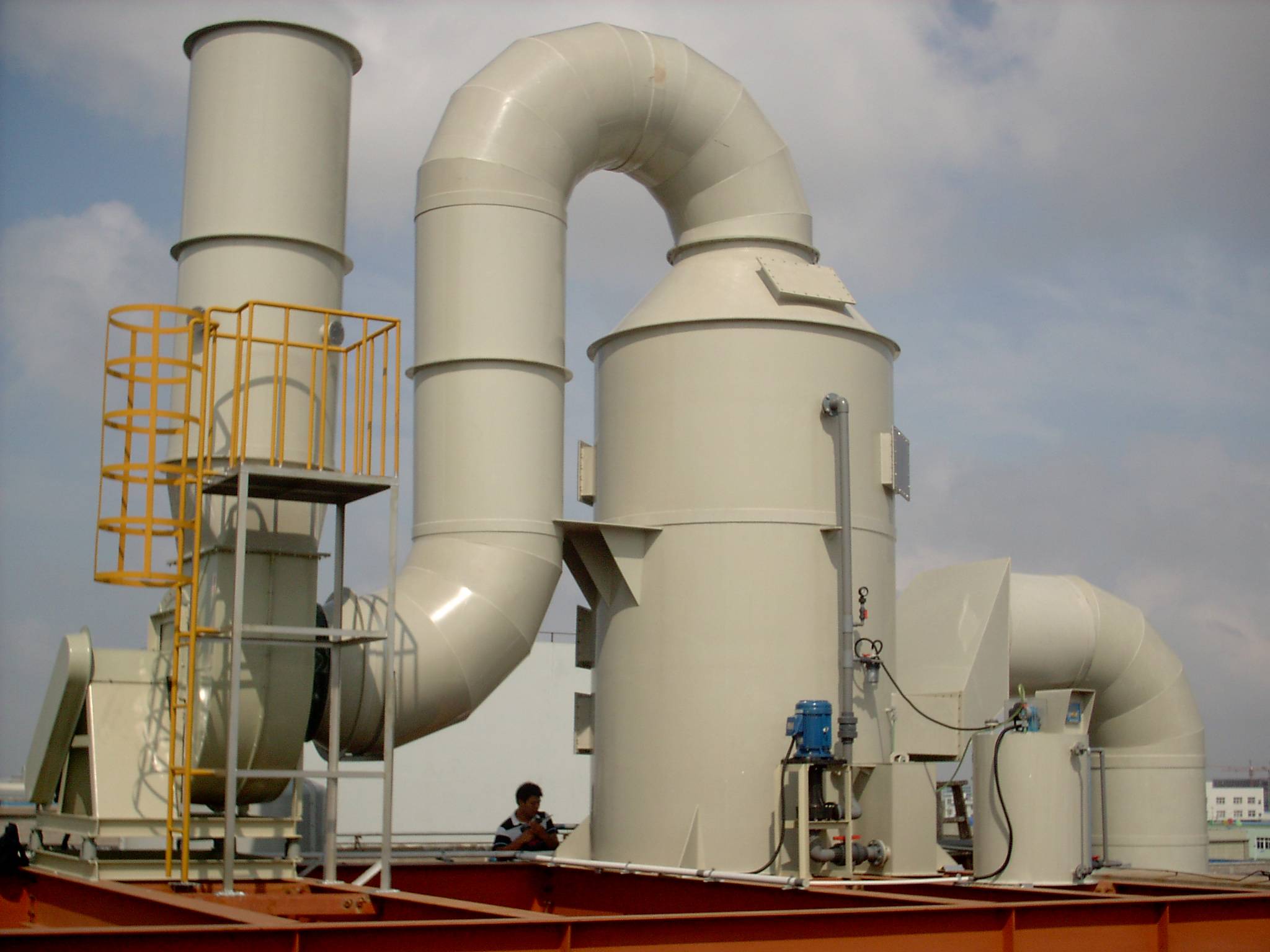
What Are Scrubbers? Types, Uses & Wet Scrubber Guide 2026
What Are Scrubbers? Types, Uses & Wet Scrubber Guide 2026…