
Description
Who Needs This Waste Gas Purification Tower Spray Scrubber?
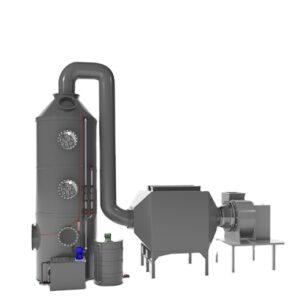
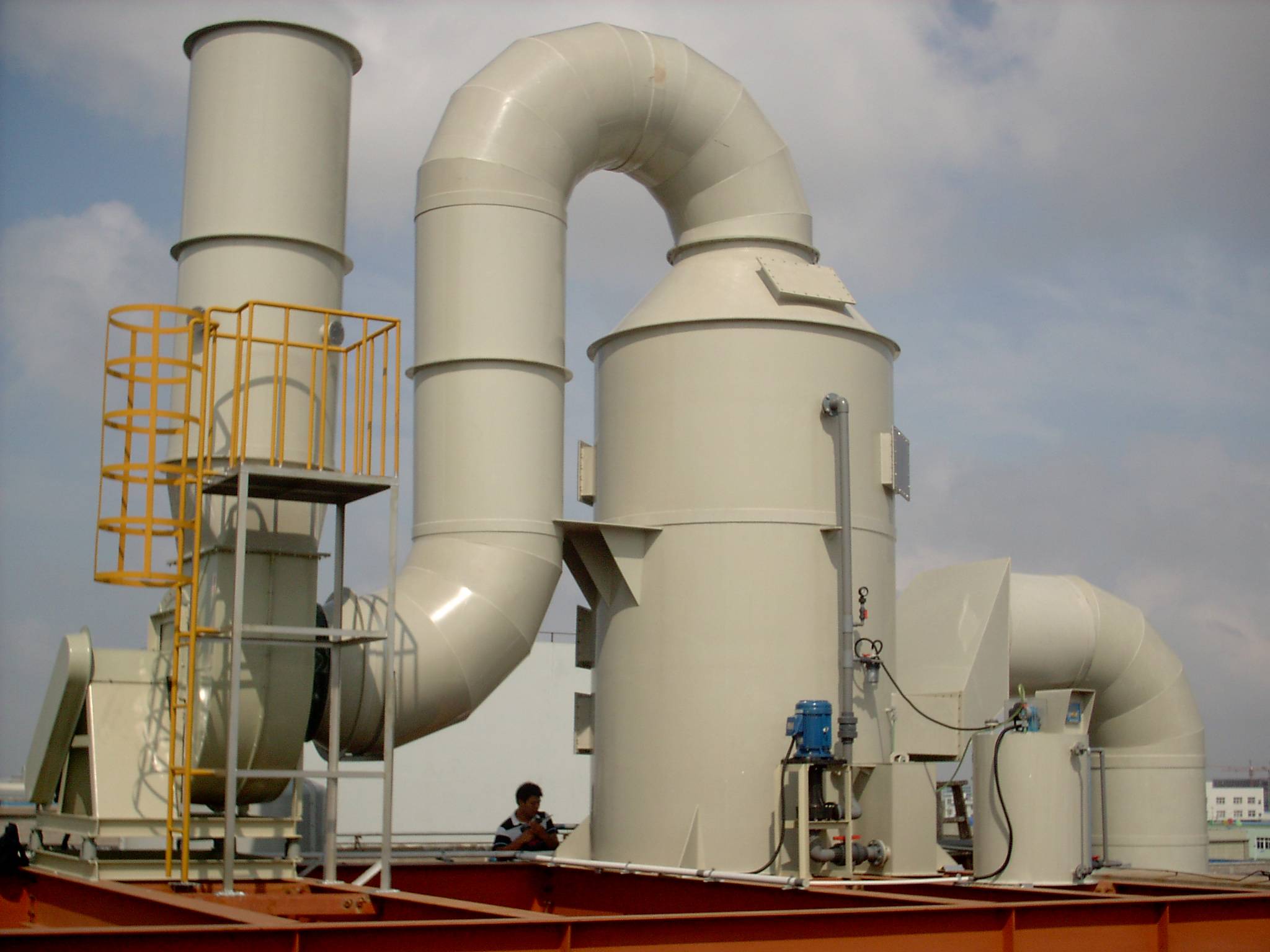
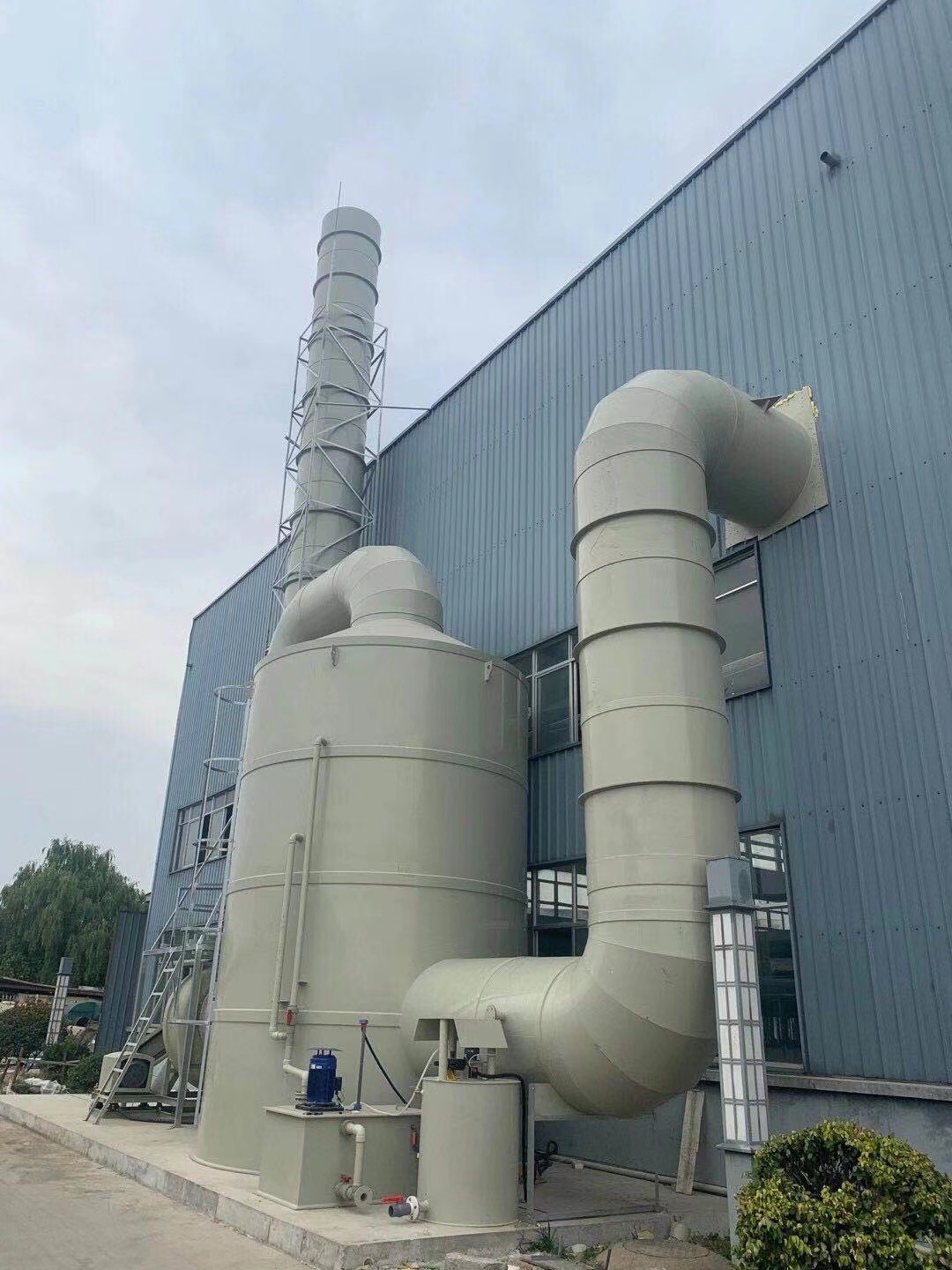
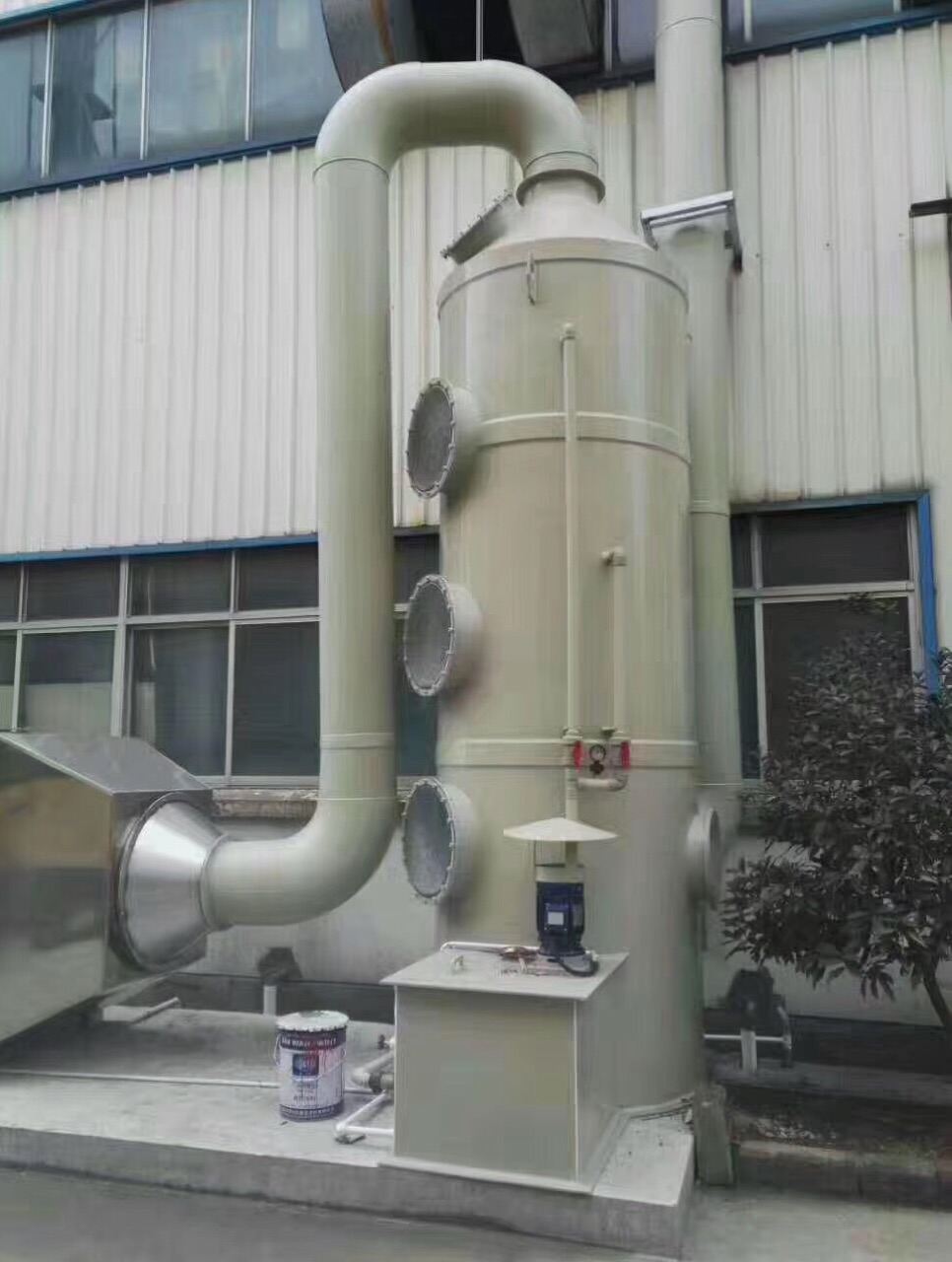
According to the EPA gaseous emission control guidelines, wet scrubbers are the primary technology for controlling acid mist and gaseous pollutants from industrial sources. Our PP spray scrubber is specifically engineered for facilities generating corrosive acid or alkaline waste gases.
Metal Surface Treatment Facilities: Ideal for hardware pickling lines, anodizing plants, and electroplating workshops producing HCl, H₂SO₄, and HNO₃ mist. The system pairs seamlessly with our PP air duct system for complete corrosion protection.
Electronics & Semiconductor Manufacturing: Effectively treats HF and SiF₄ emissions from glass panel etching and wafer processing lines, ensuring compliance with strict cleanroom environmental standards.
Pharmaceutical & Chemical Plants: Controls acid and solvent vapors from reactor vents, distillation columns, and mixing tanks, protecting workers and meeting local environmental regulations.
Laboratory & Research Facilities: Suitable for fume hood exhaust treatment in university labs and R&D centers, handling low to medium volumes of corrosive gases.
Not Recommended For: High-temperature exhaust (>82°C/180°F), strong oxidizing gases (concentrated nitric acid above 50%), and particulate-heavy streams without pre-filtration.
Why Engineers Choose Our PP Spray Scrubber
1. 95%+ Acid Mist Removal Efficiency
Our countercurrent design with multi-faceted hollow ball packing provides a large specific surface area for gas-liquid contact. This achieves a minimum 95% removal rate for HCl, H₂SO₄, and HNO₃, with outlet concentrations below 10 PPM.
Field data from 500+ installations confirms consistent compliance with global emission standards, eliminating the risk of regulatory fines and shutdowns.
2. 15+ Year Corrosion-Resistant Service Life
Constructed entirely from homogeneous polypropylene (PP), our scrubbers eliminate the delamination and wicking issues common with FRP systems. PP is inherently resistant to most acids, alkalis, and organic solvents.
Unlike layered materials, PP maintains structural integrity even if scratched or damaged, reducing long-term repair costs and downtime.
3. 500-600 Pa Low System Resistance
Optimized packing design and fluid dynamics result in a pressure drop of only 500-600 Pa across the entire tower. This allows the use of a smaller anti-corrosion centrifugal fan, reducing energy consumption by 20% compared to competing designs.
Lower power requirements translate to significant annual operating cost savings for facilities running 24/7.
4. Modular Design for Fast Installation
Our scrubbers are pre-fabricated in sections and shipped ready for assembly. This modular approach reduces on-site installation time by 30% compared to custom-built systems.
Standardized components also simplify future upgrades and expansions, allowing you to scale your treatment capacity as your facility grows.
5. Integrated Automatic Dosing System
The system includes a pH online detector, metering pump, and mixing barrel that automatically adjusts chemical dosage based on inlet gas concentration. This ensures optimal neutralization while minimizing chemical waste.
Automatic operation reduces manual labor requirements and eliminates the risk of human error in chemical handling.
Technical Specifications
| Air Volume (m³/h) | Tower Diameter (mm) | Wall Thickness (mm) | Drain Outlet | Water Tank Size (mm) | Inlet/Outlet Size (mm) | Pump Power (kW) | Wind Resistance (Pa) |
|---|---|---|---|---|---|---|---|
| 50-4,000 | 800 | 8 | DN63 | 700×550×600 | 315 | 0.75 | 500 |
| 4,000-5,500 | 1,000 | 8 | DN63 | 750×600×600 | 400 | 1.5 | 500 |
| 5,500-8,000 | 1,200 | 8 | DN63 | 750×600×600 | 500 | 1.5 | 500 |
| 8,000-12,000 | 1,500 | 8 | DN63 | 750×600×600 | 600 | 2.2 | 500 |
| 12,000-17,000 | 1,800 | 10 | DN63 | 850×600×700 | 650 | 3 | 500 |
| 17,000-21,000 | 2,000 | 10 | DN63 | 850×600×700 | 700 | 4 | 500 |
| 21,000-25,000 | 2,200 | 10 | DN63 | 950×600×700 | 750 | 4 | 600 |
| 25,000-32,000 | 2,500 | 12 | DN63 | 950×600×700 | 800 | 5.5 | 600 |
| 32,000-40,000 | 2,800 | 12 | DN63 | 1,000×700×700 | 900 | 7.5 | 600 |
| 40,000+ | 3,000+ | 12+ | DN63 | Custom | Custom | Custom | 600 |
Note: All specifications are based on a typical design gas velocity of 1.5-2.5 m/s. Custom sizes available for air volumes exceeding 215,000 m³/h.
Frequently Asked Questions
Q1: How does a spray scrubber compare to a packed bed scrubber?
Spray scrubbers use high-pressure nozzles to create fine droplets for gas-liquid contact, while packed bed scrubbers use a bed of packing material. Our spray scrubber offers lower pressure drop (500-600 Pa vs 800-1200 Pa for packed beds) and is less prone to clogging from particulate matter.
For applications with high particulate content, a spray scrubber is generally the better choice. For very high removal efficiency requirements (>99%), a combination system may be necessary.
Q2: How do I calculate the correct size scrubber for my facility?
Scrubber sizing depends on three key factors: total exhaust air volume, gas composition and concentration, and required removal efficiency. As a general rule, you should select a model with an air volume capacity 10-15% higher than your maximum expected flow rate.
Our engineers can provide a detailed sizing calculation based on your specific operating conditions. You can also refer to our scrubber sizing calculation guide for more information.
Q3: What is the typical installation time for a spray scrubber?
Standard models can be installed in 3-5 days by a qualified team, including ductwork connection, electrical wiring, and initial testing. Larger custom systems may require 7-10 days for complete installation and commissioning.
Our modular design minimizes on-site fabrication, significantly reducing installation time compared to traditional built-on-site systems.
Q4: How often does a spray scrubber require maintenance?
With proper operation, our spray scrubbers require minimal maintenance. We recommend weekly visual inspections, monthly nozzle cleaning, and quarterly packing inspection and replacement as needed.
A complete annual service, including pump inspection and electrical system testing, is also recommended. Download our preventive maintenance checklist for a detailed schedule.
Q5: What are the most common spray scrubber problems?
The most common issues are nozzle clogging, packing fouling, and pH control problems. Nozzle clogging is usually caused by particulate matter in the exhaust gas, while packing fouling results from chemical precipitation.
Regular maintenance and proper pre-filtration can prevent most of these issues. For troubleshooting guidance, see this comprehensive guide on common wet scrubber troubleshooting.
Q6: What is the expected service life of a PP spray scrubber?
With proper maintenance, our PP spray scrubbers have an expected service life of 15-20 years. This is significantly longer than FRP scrubbers, which typically last 8-12 years due to delamination and chemical attack issues.
PP’s homogeneous construction ensures consistent corrosion resistance throughout the entire lifespan of the equipment.
Q7: Are your scrubbers compliant with OSHA and EPA regulations?
Yes, our scrubbers are designed to meet or exceed all relevant OSHA and EPA regulations for industrial air pollution control. The 95%+ removal efficiency ensures that outlet concentrations are well below the OSHA HCl permissible exposure limit of 5 PPM.
For more information on regulatory requirements, see our article on HCl emission compliance standards.
Q8: How do I handle the wastewater from the scrubber?
The wastewater from the scrubber contains neutralized salts and should be treated before discharge. Most facilities either send the wastewater to their existing industrial wastewater treatment plant or use a dedicated neutralization system.
Our engineers can help you design a wastewater management solution that integrates with your existing systems and meets local discharge regulations.
Q9: Can I upgrade my scrubber for higher removal efficiency?
Yes, several upgrade options are available to improve removal efficiency, including adding a second spray stage, upgrading to high-efficiency nozzles, or installing a activated carbon polishing filter for final treatment.
Our team can assess your current system and recommend the most cost-effective upgrade path to meet your new emission requirements.
Q10: What is your lead time for standard scrubber models?
We maintain a large inventory of standard components, allowing us to ship most standard models within 7-15 days of order confirmation. Custom sizes and configurations may require 20-30 days for production and delivery.
Expedited shipping options are available for urgent orders. Contact our sales team for current lead times and availability.
About the Author & Our Expertise
Written by Corbin Deng, Process Engineer
12 years of experience in industrial air pollution control systems design
XICHENG EP LTD is a leading manufacturer of industrial environmental protection equipment based in Shenzhen, China. With 16 years of specialized experience in wet scrubber technology, we have delivered over 500 systems to customers in more than 30 countries worldwide.
Our team of experienced engineers provides complete turnkey solutions, from initial system design and manufacturing to installation, commissioning, and after-sales support. We are committed to delivering high-quality, reliable equipment that helps our customers meet their environmental compliance goals.
Recent Installation References
- Singapore Electronics Manufacturing Plant: 12,000 m³/h HF scrubber for glass panel etching line
- Malaysia Pharmaceutical Company: 8,000 m³/h acid mist scrubber for API production
- Thailand Metal Finishing Facility: 25,000 m³/h multi-stage scrubber for electroplating lines
Certifications
- ISO 9001:2015 Quality Management System
- CE Marking for European Union
- China Environmental Protection Product Certification