

Description
Who Needs This Vertical Counter‑Current Wet Scrubber?
If your facility has sufficient ceiling height and you need maximum gas absorption efficiency in a compact footprint — this vertical counter‑current packed bed scrubber is engineered for you. According to the U.S. EPA, wet scrubbers are one of the most effective control techniques for removing gaseous pollutants from industrial exhaust streams, using a scrubbing liquid to absorb and neutralize contaminants before release.
Typical operating scenarios:
- Chemical processing plants emitting HCl, H₂SO₄, or HF at medium‑to‑high concentrations requiring >95% removal
- Power plants and boiler houses treating flue gases (SO₂, NOₓ) where vertical counter‑current design maximizes residence time
- Metal finishing and electroplating lines with chromic acid (CrO₃) and HCN mists
- Pharmaceutical and semiconductor cleanrooms with corrosive exhaust streams
- Waste incinerators requiring multi‑stage scrubbing for complex pollutant mixtures
This scrubber is optimized for medium‑to‑high‑volume exhaust treatment (3,000 – 45,000 m³/h) where the vertical counter‑current flow pattern provides the highest mass transfer efficiency per unit packing depth. In this configuration, gas flows upward through the packed bed while scrubbing liquid cascades downward — maximizing liquid‑gas contact and absorption efficiency. For installations with ceiling height restrictions (<2.8 m), our horizontal crossflow scrubber offers a space‑saving alternative with comparable removal performance. It is not designed for exhaust temperatures >70°C or streams with heavy particulate loading without pre‑filtration. We present these boundaries transparently so you can make an informed equipment selection.
Why Engineers Choose Our Vertical Counter‑Current Scrubber
1. Counter‑Current Flow = Maximum Absorption Efficiency per Unit Height
In a vertical packed bed scrubber, contaminated gas flows upward against descending scrubbing liquid, creating continuous concentration gradients that drive pollutant transfer into the liquid phase. CECO Environmental’s PT Series vertical counter‑current scrubbers demonstrate the same design principle, with capacities exceeding 65,000 CFM. Industry studies show that achieving 95% removal requires approximately 24 inches (0.6 m) of packing depth, while 99% removal needs 48 inches (1.2 m). XICHENG vertical scrubbers achieve single‑stage removal exceeding 95% for highly soluble gases (HCl, NH₃), and multi‑stage configurations can approach 99.9% efficiency — comparable to the highest levels achieved by industrial packed bed scrubbers like those from Monroe Environmental, which deliver 95-99%+ removal for acid gases, particulates, and odorous emissions.
2. Small Footprint, Vertical Orientation = Saves Valuable Floor Space
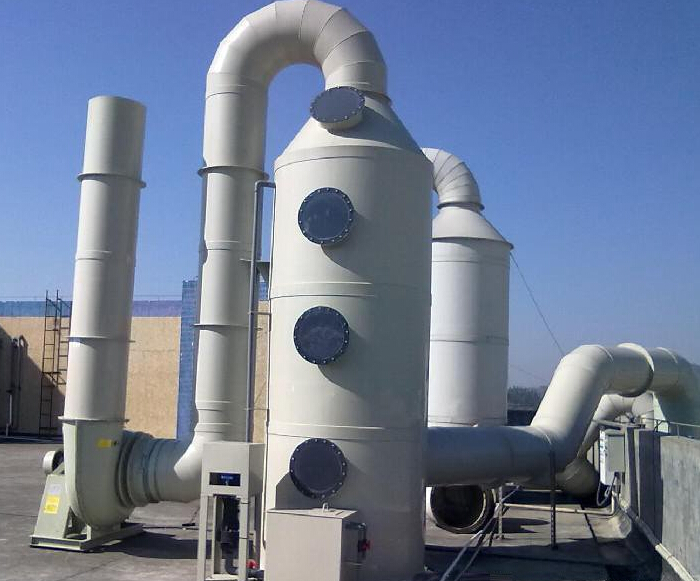
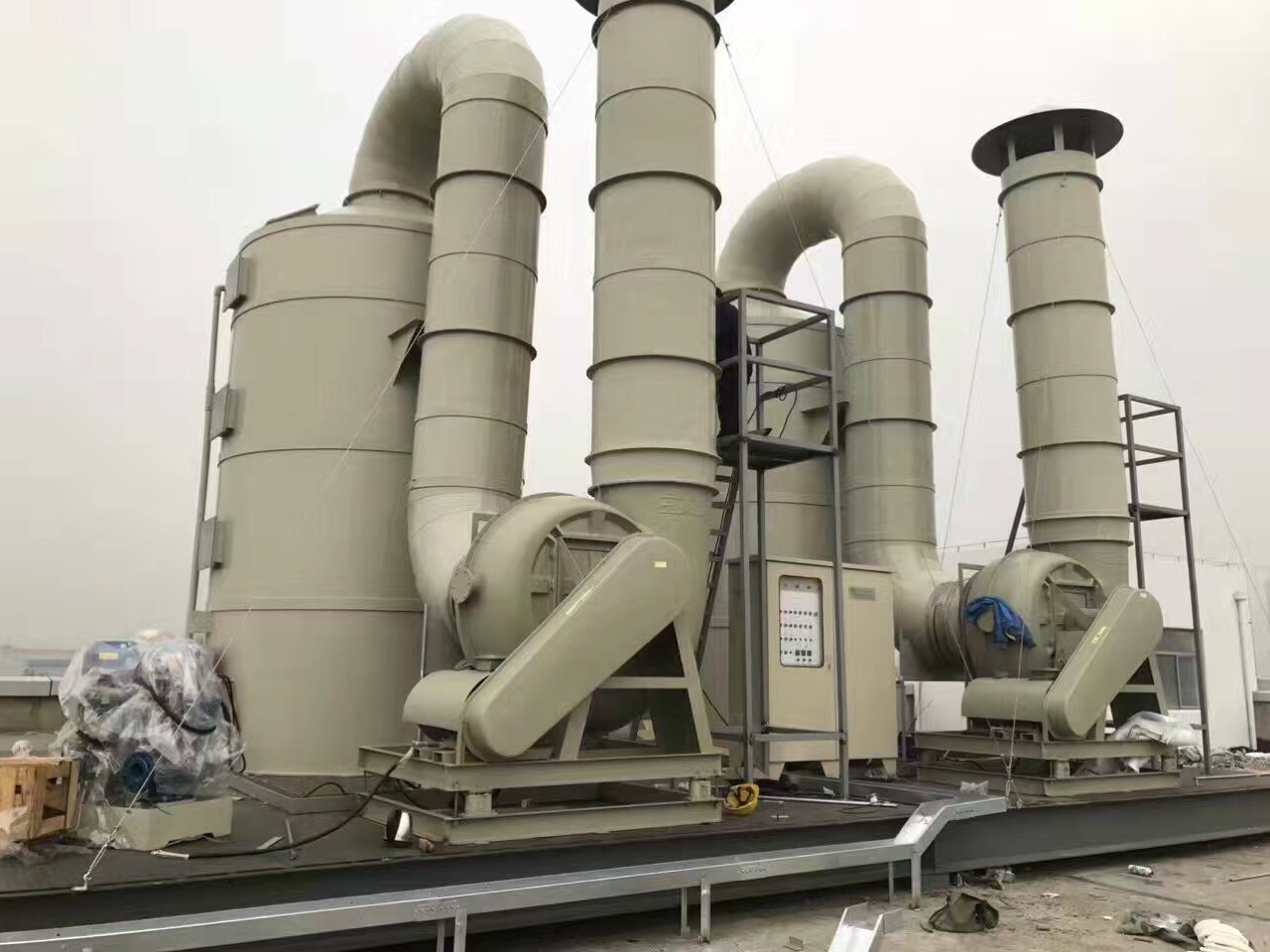
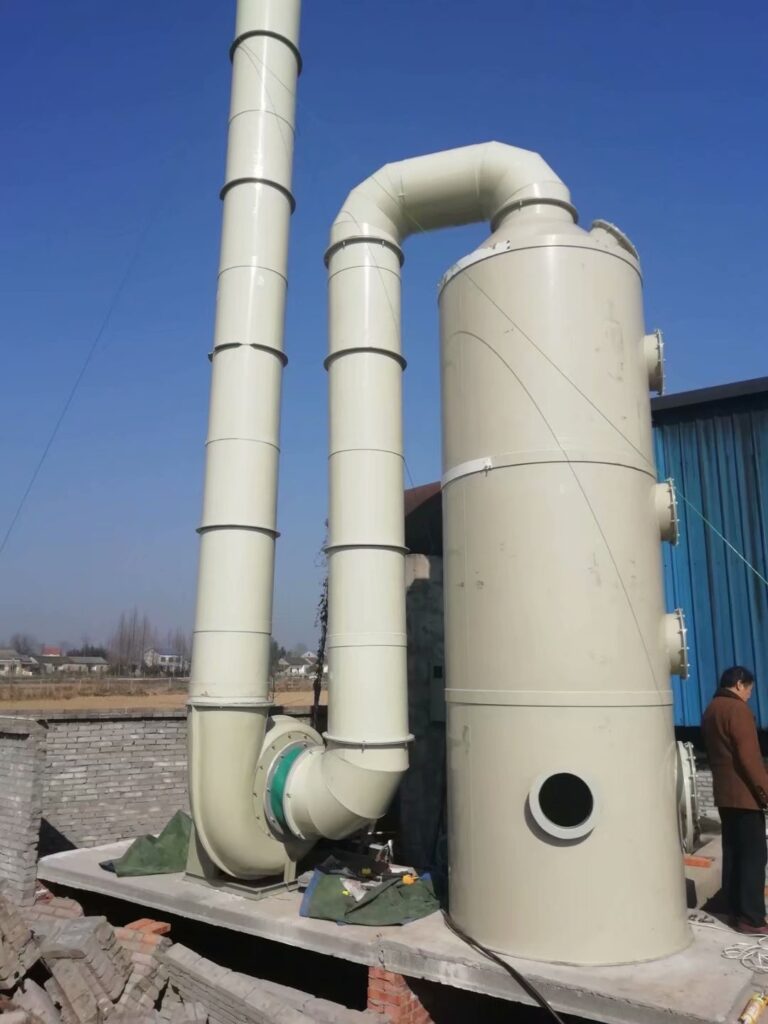
The vertical cylindrical tower occupies minimal floor area while maximizing packing depth vertically. Compared to horizontal crossflow designs of equivalent capacity, our vertical scrubbers reduce footprint by approximately 30–40% — critical in crowded chemical plants and retrofits where every square meter counts. The round vessel design also simplifies structural support and wind load calculations for outdoor installations.
3. PP Polypropylene Construction = 8+ Year Service Life in Corrosive Environments
The entire tower shell, packing support tray, and liquid distribution system are fabricated from virgin PP sheet (not recycled or mixed‑grade material). Monroe Environmental notes that scrubber material selection is a critical design parameter — PP offers superior resistance to HCl, H₂SO₄, and HF compared to metallic alternatives that corrode within 2–4 years. In field installations across Southeast Asian chemical plants, our PP scrubbers have maintained structural integrity with zero shell replacement for over 8 years of continuous operation.
4. Modular Multi‑Stage Design With Integrated Sump
Standard configuration includes packing layer → spray layer → mist eliminator stages in a single vertical housing with integrated bottom sump. Need additional stages for higher removal efficiency? Add a second spray + packing stage within the same tower. This modular approach eliminates the complexity and cost of separate tankage and interconnecting piping — simply connect inlet/outlet ducting, fill the sump, and power on.
5. Low 500 Pa Wind Resistance = Smaller Fan, Lower Electricity Bills
All standard models maintain a wind resistance of just 500 – 600 Pa, keeping exhaust fan power requirements minimal and reducing annual electricity consumption. Combined with PP’s corrosion‑free surface that maintains smooth airflow, enhanced by our PP polyhedral hollow ball packing that maximizes gas‑liquid contact area per unit volume, this translates to lower total cost of ownership across a 10‑year operating life.
Field case snapshot (Malaysia chemical plant): 15,000 m³/h vertical scrubber treating HCl/H₂SO₄ exhaust. Single‑stage counter‑current configuration. Result: 97% removal efficiency, operational since 2019 with zero unplanned downtime.
Technical Specifications
| Air Volume (m³/h) | Tower Diameter (mm) | Shell THK (mm) | Inlet/Outlet Dia. (mm) | Packing Depth (mm) | Pump Power (kW) | Wind Resist. (Pa) | Recommended Application |
|---|---|---|---|---|---|---|---|
| 3,000 | 800 | 8 | 315 | 600 | 0.75 | 500 | Small lab / pilot line |
| 5,000 | 1,000 | 8 | 400 | 600 | 1.5 | 500 | Small workshop |
| 8,000 | 1,200 | 8 | 500 | 800 | 2.2 | 500 | Medium production line |
| 10,000 | 1,500 | 10 | 550 | 800 | 2.2 | 500 | Medium production line |
| 12,000 | 1,600 | 10 | 600 | 800 | 3.75 | 500 | Large workshop |
| 15,000 | 1,800 | 10 | 650 | 1,000 | 3.75 | 500 | Large workshop |
| 20,000 | 2,000 | 10 | 750 | 1,000 | 5.5 | 500 | Factory-wide system |
| 25,000 | 2,200 | 10 | 950 | 1,200 | 5.5 | 600 | Factory-wide system |
| 30,000 | 2,500 | 12 | 1,000 | 1,200 | 5.5 | 600 | Industrial park |
| 35,000 | 2,700 | 12 | 1,100 | 1,200 | 7.5 | 600 | Industrial park |
| 40,000 | 2,900 | 12 | 1,200 | 1,500 | 7.5 | 600 | Large industrial facility |
| 45,000 | 3,000 | 12 | 1,250 | 1,500 | 7.5 | 600 | Large industrial facility |
Standard configuration includes: vertical tower body, PP polyhedral hollow ball packing, liquid distribution spray system, mist eliminator, integrated recirculation sump. Custom sizes, multi‑stage configurations, and material upgrades available upon request. Removing pollutants from exhaust gases in counter‑current packed bed scrubbers depends on absorption and chemical reaction kinetics; our engineering team optimizes packing depth and liquid-to-gas ratio for each application.
Frequently Asked Questions
Q1: What is the difference between a vertical and horizontal wet scrubber?
Vertical scrubbers use counter‑current flow — gas travels upward against descending scrubbing liquid, maximizing concentration gradients for higher absorption per unit packing depth. They minimize floor footprint but require more headroom. Horizontal scrubbers use crossflow — gas travels laterally while liquid descends — minimizing height but requiring more floor space. Choose vertical when maximum efficiency and compact footprint are priorities; choose horizontal when ceiling height is limited. For a complete engineering comparison with removal chemistry and life‑cycle economics, read our detailed guide: Vertical vs Horizontal Wet Scrubber Selection (2026).
Q2: What gases can this vertical scrubber treat?
Engineered for water‑soluble acid gases (HCl, HF, H₂SO₄, CrO₃, HCN, H₂S, SO₂), alkali gases (NH₃, NaOH fumes), and select organic vapors (HCHO, low‑concentration water‑soluble VOCs). Scrubbing liquid chemistry must be matched to each target gas — we provide recommendations during quotation.
Q3: What removal efficiency can I expect?
Under standard design conditions (1.8 m/s counter‑current velocity, matched scrubbing liquid), single‑stage removal exceeds 95% for highly soluble gases (HCl, NH₃). Multi‑stage configurations achieve >99%. According to the U.S. EPA, wet scrubber performance for gaseous control depends on pressure differential, liquid flow rate, and scrubber liquid outlet concentration — all parameters our system is engineered to optimize. Industrial scrubbers routinely deliver 95–99% removal for acid gas applications, making them reliable compliance solutions for environmental regulations.
Q4: How much packing depth is required for 95% removal?
Industry guidelines indicate approximately 24 inches (600 mm) for 95% removal of water‑soluble gases, and 48 inches (1,200 mm) for >99% removal. Our standard models include packing depths of 600–1,500 mm depending on the target removal efficiency. We specify exact depth during quotation based on your inlet concentration and emission targets.
Q5: Does the vertical counter‑current design offer performance advantages over horizontal designs?
For highly water‑soluble gases like HCl and NH₃, vertical counter‑current scrubbers provide slightly higher mass transfer efficiency due to continuous concentration gradients throughout the packed bed. For less soluble gases, the performance difference is minimal — and both configurations can be engineered to meet emission targets. The primary trade‑off: vertical = higher efficiency with smaller footprint; horizontal = lower headroom with slightly larger footprint.
Q6: How do I select the right model size?
Match your exhaust volume (m³/h) to the nearest standard model in the specification table above. If your exhaust contains multiple pollutants or requires >99% removal, a multi‑stage configuration may be specified. For a step‑by‑step sizing methodology with real‑world engineering examples, see our guide: Scrubber Sizing Calculation & Design. Provide process data (gas composition, temperature, concentration) to our engineering team for a detailed sizing verification.
Q7: What are the installation requirements?
Install on a level, corrosion‑resistant foundation pad. Required ceiling clearance = tower height plus 1 m for mist eliminator access and maintenance. The recirculation pump should be placed on a separate anti‑corrosion base next to the tower. Inlet and outlet ducting must match flange dimensions in the specification table. Outdoor installations require weather protection for pump and fan motors.
Q8: What regular maintenance is needed?
A well‑designed maintenance schedule prevents corrosion, scaling, and unexpected downtime:
Weekly: Check spray nozzle patterns and packing condition for clogging
Monthly: Test scrubbing liquid pH and concentration, replenish as needed
Quarterly: Inspect mist eliminator for scaling or damage
Annually: Full packing inspection; replace damaged or degraded media
For a complete tiered inspection schedule with chemical management strategies, refer to our Acid Scrubber Maintenance Guide: Prevent Corrosion, Scaling & Downtime.
Q9: What are the most common operating issues — and how do I prevent them?
The most common problems encountered in the field:
Packing clogging → caused by debris‑laden gas or contaminated scrubbing liquid; clean or replace affected media
Low removal efficiency → often due to insufficient scrubbing liquid concentration or blocked spray nozzles
High pressure drop → indicates solids accumulation in packing
Liquid carryover → damaged or saturated mist eliminator; inspect and replace
PP construction inherently prevents shell corrosion and pinhole leaks that create bypass paths in metallic scrubbers. Our deep‑dive analysis explains why scrubber work fails and how PP material prevents premature failure.
Q10: What is the expected service life?
PP housing: 8–12 years under normal corrosive conditions. Packing media replacement: every 3–5 years depending on gas composition and temperature. Pump mechanical seals: inspect annually. This service life significantly exceeds metallic scrubbers, which typically require replacement within 2–4 years in HCl service due to shell corrosion.
Q11: What scrubbing liquid should I use?
HCl / H₂SO₄ → NaOH solution (10–15%) or lime slurry. H₂S → NaOH + NaOCl oxidizing solution. NH₃ → H₂SO₄ (5–10%). HCHO / VOCs → Water with surfactant or oxidizing additive. Exact concentration recommendations are provided during quotation based on inlet gas composition.
Q12: What is the standard lead time?
Standard models ship within 15–25 working days; custom multi‑stage configurations may require additional time. We deliver FOB/CIF from our factory in China to major ports worldwide.
About the Author & Our Expertise
Product specifications reviewed by: Corbin Deng, Process Engineer, XICHENG EP LTD — 12+ years in industrial waste gas treatment and vertical packed bed scrubber system design.
About XICHENG EP LTD
XICHENG EP LTD specializes in PP polypropylene waste gas treatment equipment, serving chemical, electroplating, pharmaceutical, and power generation industries across 30+ countries. With over 500 vertical scrubber installations worldwide and an annual production capacity exceeding 2,000 units, our engineering team brings real‑world commissioning data to every specification.
Installation References
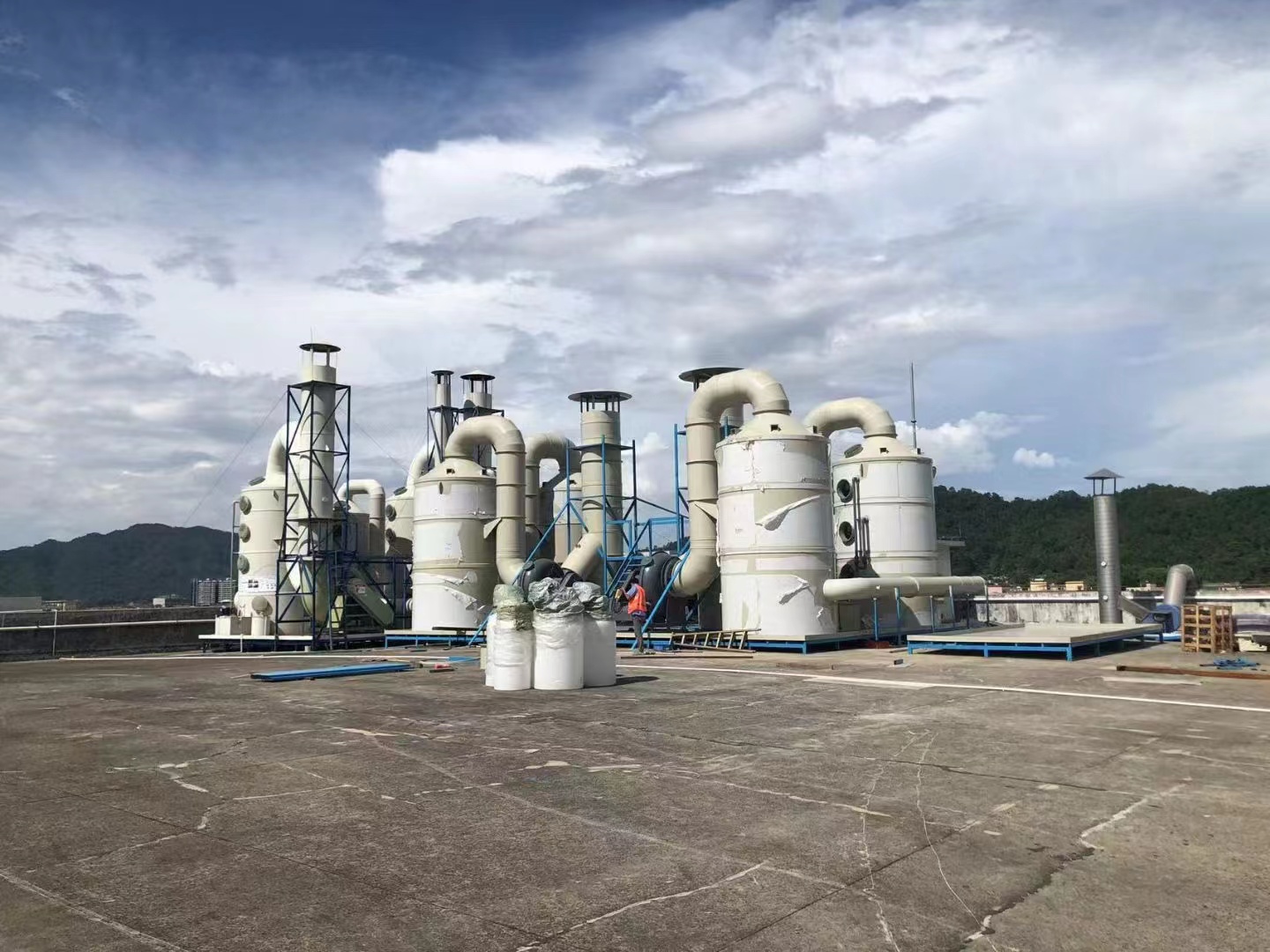
- Chemical processing plant, Malaysia — 15,000 m³/h vertical scrubber treating HCl/H₂SO₄ exhaust, 97% removal, operational since 2019
- Electroplating facility, Vietnam — 8,000 m³/h vertical unit for CrO₃ & HCN removal, zero unplanned downtime since 2020
- Waste incineration plant, Thailand — Dual‑stage vertical scrubber for SO₂ + particulate, validated by third‑party stack test
Certifications: ISO 9001:2015 (Quality Management) | ISO 14001 (Environmental Management). Material certificates and inspection reports available upon request.
All photos on this page are of actual XICHENG manufacturing, packing, and installation sites, taken in 2024–2026.


