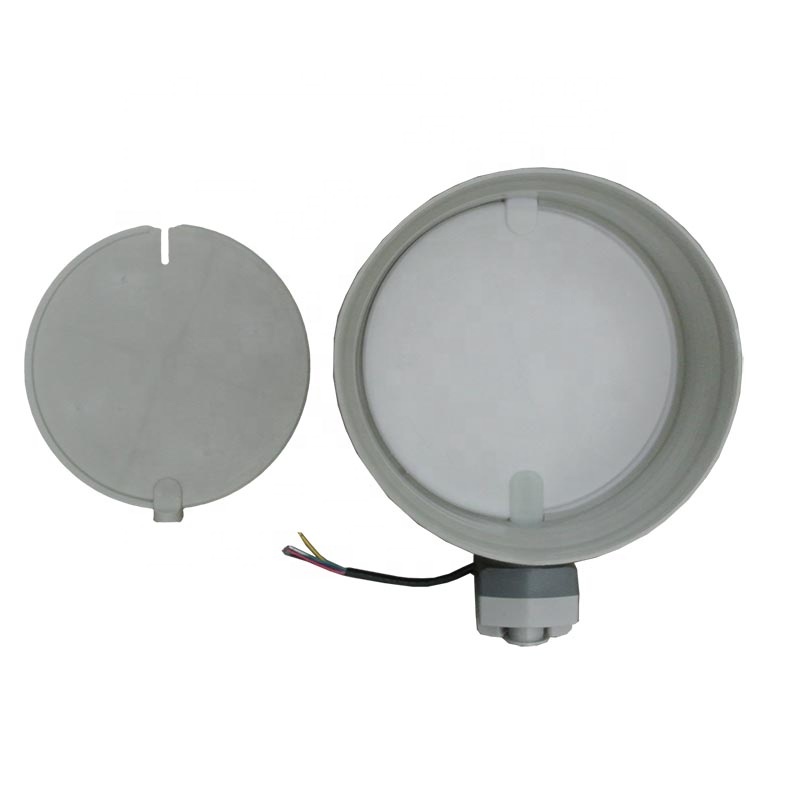
Product Overview
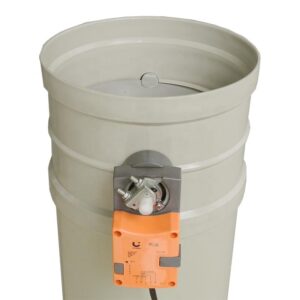
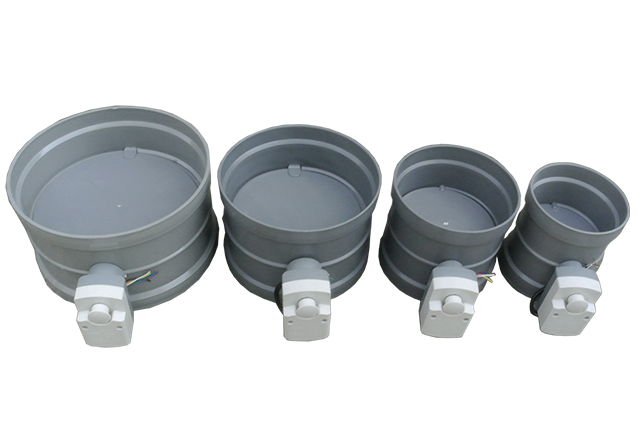
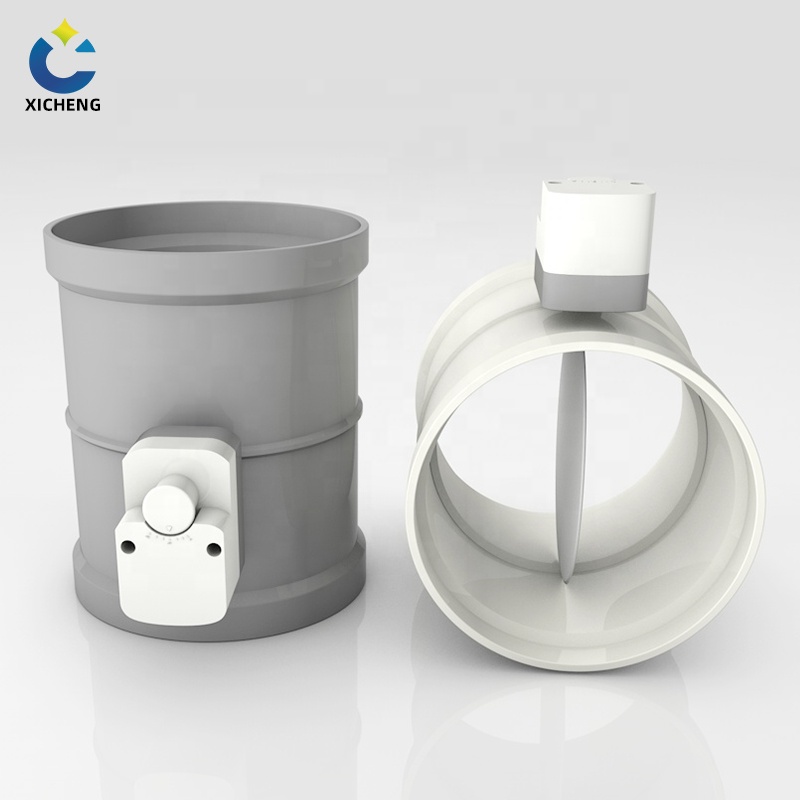
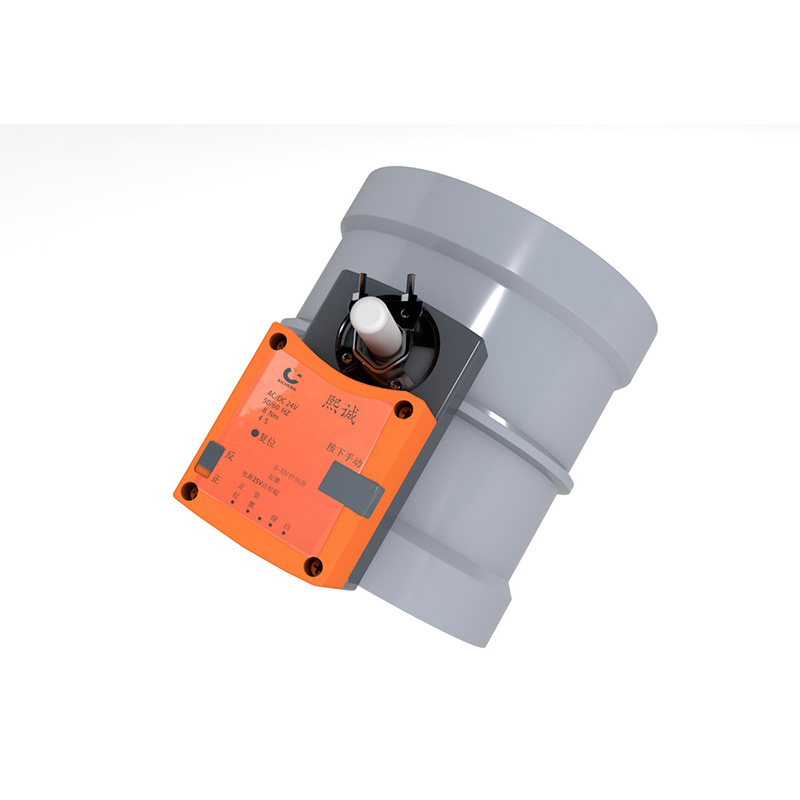
PP electric motorized damper for automated airflow control in industrial ventilation and exhaust systems — combining corrosion-resistant injection-molded PP/PVC/PPS damper bodies with 220V or 24V electric actuators for remote or automatic flow modulation. Available in round (butterfly) and rectangular (opposed-blade) configurations, with actuator options from simple open/close two-position control to 0-10V or 4-20mA modulating control for variable air volume (VAV) applications. The damper body and actuator are supplied as a matched, factory-calibrated assembly — eliminating field mounting alignment errors and the most common cause of motorized damper failure: actuator-to-spindle misalignment.
| Application | Automated airflow control — VAV zone modulation, BMS-integrated exhaust balancing, process-interlocked isolation, remote damper operation in inaccessible locations |
| Material | PP (standard corrosion), PVC (rigid/UV-stable), PPS (flame retardant / 200degC) — injection molded damper body and disc |
| Actuator voltage | 220V AC or 24V AC/DC — modulating (0-10V / 4-20mA) or two-position (open/close) |
| Standard diameters | DN63 to DN315 (round injection molded); rectangular custom-fabricated to duct dimensions |
| Control accuracy | ±5% air volume with modulating actuator; position feedback signal standard |
| Response time | Motor-driven: 30-90 seconds full stroke (speed-dependent on actuator model) |
| Color | Beige / Dark Grey |
| Lead time | 10-20 days standard; 15-25 days custom rectangular |
Manual vs Motorized: When Automation Pays
The decision to motorize a damper is not about convenience — it’s about control architecture. A manual damper adjusted once during commissioning and left alone for years doesn’t need a motor. A damper that must respond to changing conditions — varying production rates, time-of-day ventilation schedules, interlock signals from process equipment, or BMS-commanded zone pressurization — justifies the additional cost of motorization:
- Two-position (open/close) motorization. The simplest and most reliable motorized configuration. The actuator drives the damper fully open or fully closed on a dry contact or voltage signal. Used for: zone isolation interlocked with process equipment (hood on = damper open, hood off = damper closed), night setback ventilation (all zones closed except minimum fresh air), and fire-smoke damper applications (spring-return actuator closes damper on power loss).
- Modulating motorization (0-10V or 4-20mA). The actuator positions the damper proportionally to an analog control signal — 2V = 20% open, 5V = 50% open, 10V = 100% open. Used for: VAV zone flow control (BMS commands damper position based on airflow feedback), face velocity control at fume hoods (damper modulates to maintain constant face velocity as sash position changes), and pressure-controlled exhaust (damper modulates to maintain duct static pressure setpoint). The modulating actuator includes a position feedback signal (0-10V output) confirming actual damper position to the BMS — the controller can verify that the damper moved as commanded.
- Spring-return (fail-safe) actuation. On loss of power or control signal, a spring-return actuator drives the damper to a predetermined safe position — typically closed for fire-smoke dampers (contain smoke), or open for critical exhaust (maintain ventilation). The spring provides the closing force without electrical power. Spring-return actuators cost more and have longer stroke times (60-150 seconds) due to the spring mechanism, but are mandatory for safety-critical applications. This supports NFPA 90A requirements for fire and smoke damper actuation.
Why Xicheng
16 years, 2600+ systems shipped worldwide. A motorized damper is two products in one — a corrosion-resistant damper body plus an electronic actuator. Both must work together reliably in an industrial environment where neither component was originally designed to operate alone:
- Factory-calibrated assembly, not field-mounted. The most common motorized damper failure mode is actuator-to-spindle misalignment — the actuator shaft is not perfectly coaxial with the damper spindle, creating a side load that wears the spindle bearing within months. We mount and calibrate the actuator on the damper body at our factory — spindle alignment is verified, stroke limits are set, and the position feedback signal is calibrated before shipment. The assembly arrives ready to install and wire — no field alignment, no stroke limit adjustment, no feedback calibration.
- Actuator protected from the airstream. The actuator mounts externally to the damper body via a sealed spindle penetration — the actuator electronics never contact the exhaust stream. This is standard for all motorized dampers, but the quality of the spindle seal determines how long it stays that way. Our injection-molded spindle bore provides a tighter, more consistent seal than a drilled-and-gasketed penetration — reducing the gradual leakage of corrosive or humid air that eventually damages actuator internals.
- Installed where automation is essential, not optional. Pharmaceutical cleanroom pressurization (VAV boxes modulating to maintain cascade pressure between zones of different cleanliness classification), semiconductor fab process exhaust (tool on/off interlocked damper open/close to conserve exhaust capacity), laboratory building demand-controlled ventilation (fume hood sash position feedback modulates zone damper to reduce exhaust when hoods are closed), chemical plant reactor exhaust (process temperature interlock opens emergency vent damper on high-temperature alarm).
- Manual override on every actuator. Every motorized damper includes a manual override — a hand-wheel or hex key socket that allows an operator to position the damper without power or control signal. This is essential for commissioning, maintenance, and emergency operation when the BMS is offline. The manual override disengages automatically when the actuator is powered and commanded — no clutch to forget to re-engage.
Send your control sequence and damper requirements to xicheng023@outlook.com. We’ll specify the right actuator, damper configuration, and provide a complete quotation. WhatsApp: +86 18927456906.
Core Advantages
- Factory-Matched Damper + Actuator: Spindle alignment verified, stroke limits calibrated, position feedback tested before shipment — eliminating the most common field-installation failure mode.
- Modulating or Two-Position Control: 0-10V / 4-20mA modulating with position feedback, or simple open/close on dry contact — actuator matched to your control architecture.
- Manual Override on Every Unit: Hand-wheel or hex key operation without power — essential for commissioning, maintenance, and BMS-offline emergency operation.
- Spring-Return Option for Safety: Fail-safe to open or closed on power loss — NFPA 90A compliant for fire-smoke applications where damper position upon power failure is safety-critical.
- Sealed Spindle, Protected Actuator: Injection-molded spindle bore provides tighter seal than drilled penetration — preventing gradual corrosive air leakage into actuator housing.
Key Specifications
| Model No. | XC-11E |
| Material | PP / PVC / PPS — injection molded damper body and disc |
| Actuator Voltage | 220V AC or 24V AC/DC |
| Control Signal | Modulating: 0-10V or 4-20mA; Two-position: dry contact or voltage |
| Position Feedback | 0-10V output (modulating models) — confirms actual damper position |
| Standard Diameters | DN50 to DN315 (round); rectangular custom-fabricated |
| Stroke Time | 30-90 seconds (modulating); 60-150 seconds (spring-return) |
| Air Volume Range | 50-1,100 m3/h per damper |
| Operating Temperature | PP: -10 to 80degC | PVC: 0 to 60degC | PPS: up to 200degC |
| Service Life | 8-10 Years (damper body); actuator per manufacturer rating |
| Brand / Origin | Xicheng / China |
Certifications and Compliance
- CE Certified – Motorized Damper Assembly
- RoHS Compliant – Damper and actuator materials
- ISO 9001 – Quality Management System
- ISO 14001 – Environmental Management System
- SGS Tested – PP materials, actuator torque calibration, position feedback accuracy
- Design Compliance – Dampers designed to meet ASHRAE VAV system standards, NFPA 90A fire-smoke damper actuation requirements, and EU Industrial Emissions Directive (2010/75/EU) automated exhaust control
How to Order
- You send – Duct diameter or rectangular dimensions, material, actuator voltage (220V/24V), control type (modulating/two-position), fail-safe requirement (spring-return or not), control signal type
- We specify – Damper configuration, actuator model, control wiring diagram, and pricing
- We build and calibrate – 10-20 days. Actuator mounted, stroke calibrated, position feedback verified
Contact xicheng023@outlook.com or WhatsApp +86 18927456906 — quotation within 24 hours.
Complete Your System
- Manual Butterfly Damper – Manual version for non-automated applications
- Manual Air Control Valve – Pressure-independent manual flow control
- Electric Actuator Valve – Standalone actuator for retrofit or custom mounting
- Solenoid Valve – Fast-acting on/off solenoid control for small lines
FAQ
Modulating or two-position — which actuator do I need?
Two-position (open/close): when the damper only needs to be fully open or fully closed — equipment interlock, zone isolation, night setback. Lower cost, simpler wiring (two wires + ground). Modulating: when the damper must hold intermediate positions for flow control — VAV zone modulation, face velocity control, duct pressure control. Higher cost, requires analog control signal wiring (0-10V or 4-20mA). If you’re unsure, specify modulating — a modulating actuator can be wired for two-position operation (0V = closed, 10V = open), but a two-position actuator cannot modulate.
Do I need spring-return?
Spring-return is required when: the damper serves a fire-smoke function (NFPA 90A), the exhaust system must fail to a known safe state on power loss (typically open for critical exhaust, closed for isolation), or local code mandates fail-safe actuation. Spring-return adds cost and stroke time — if your application has no safety-critical failure mode, standard (non-spring-return) actuation is sufficient.
Can I retrofit an electric actuator to an existing manual damper?
Yes, if the manual damper spindle and mounting flange are compatible with our actuator interface. Send us the existing damper’s make, model, spindle diameter, and mounting flange dimensions. We’ll confirm compatibility and supply the actuator with mounting bracket and coupling. The retrofit actuator should be calibrated after installation — spindle alignment and stroke limits must be set with the damper in the duct.