Product Overview
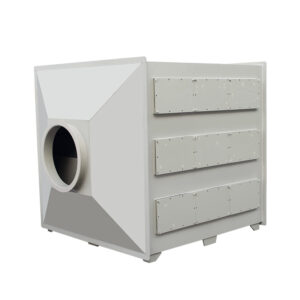
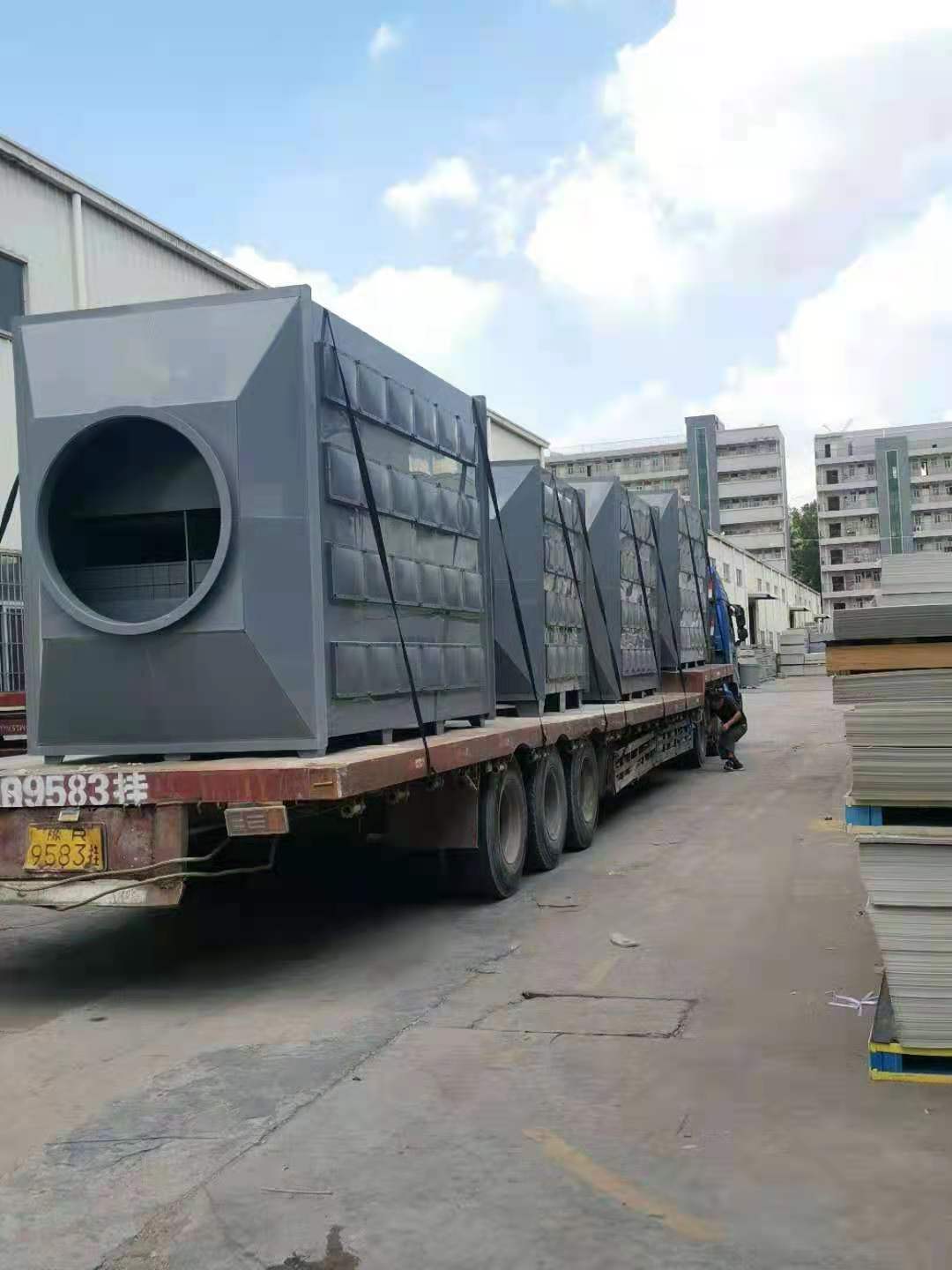
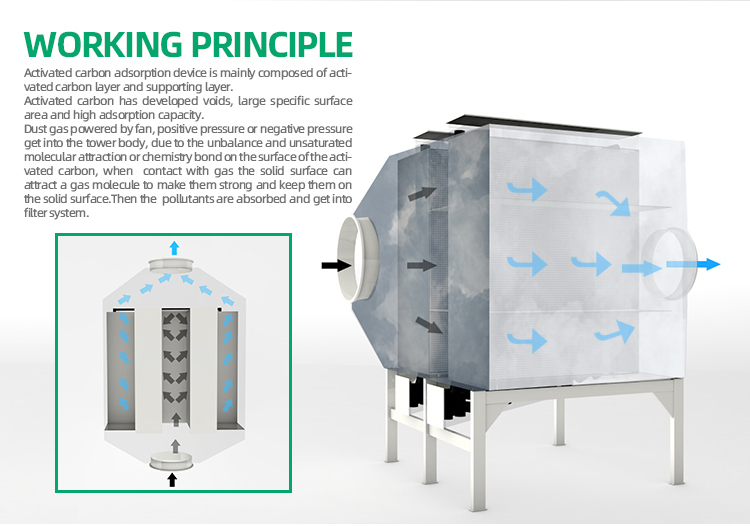
Industrial carbon adsorption equipment for waste gas treatment in chemical processing, petrochemical refining, pharmaceutical manufacturing, and general industrial operations. Uses activated carbon adsorption as the core separation mechanism — organic pollutants, solvent vapors, and odorous compounds are physically captured within the carbon’s microporous structure and removed from the exhaust stream. Designed as a complete equipment package: carbon vessel housing, structural support frame, inlet/outlet flanges, carbon media charge, and optional instrumentation for differential pressure monitoring and breakthrough detection.
| Application | Industrial waste gas treatment: VOC abatement, solvent recovery, odor control, flue gas polishing |
| Material | Virgin PP housing (standard); SS304/316L (high-temperature exhaust or solvent-laden streams); FRP (corrosive chemical environments) |
| Carbon media | Cylindrical activated carbon, diameter 4 mm; also available in granular, pellet, and honeycomb configurations |
| Efficiency | 90%-95% removal for most VOCs, odorous compounds, and organic solvents |
| Air volume | 1,500 – 60,000 m3/h single unit; multi-unit parallel configuration for larger flows |
| Lead time | 15-25 days |
| Warranty | 12 months equipment structure; carbon media replacement cycle based on site-specific pollutant loading |
Why Carbon Adsorption for Waste Gas Treatment
Industrial exhaust streams often contain a mixture of inorganic gases, organic vapors, and particulate matter. Carbon adsorption equipment targets a specific fraction that other treatment technologies struggle with — non-polar organic compounds that resist dissolution in water and pass through wet scrubbers. Understanding where carbon adsorption fits in your treatment train helps you achieve emission compliance without overspending on equipment you don’t need:
- Captures what scrubbers miss. Wet scrubbers remove water-soluble gases (HCl, NH3, HF) efficiently but achieve only 30-40% on VOCs like toluene, xylene, benzene, and MEK. Carbon adsorption equipment installed downstream pushes total VOC removal past 90% — critical for US EPA VOC emission standards compliance.
- Dry operation, no liquid waste stream. Unlike wet scrubbers that produce a continuous liquid blowdown requiring treatment, carbon adsorption is a dry process. No pumps, no chemical dosing, no pH control, no wastewater discharge permit. Spent carbon is removed as a solid and either thermally reactivated off-site or disposed of per local regulations.
- Solvent recovery potential. In applications with high solvent loading (printing, coating, pharmaceutical synthesis), the adsorbed organics can sometimes be recovered through thermal desorption — turning a waste treatment cost into a solvent recovery value stream. Our engineering team evaluates recovery feasibility based on your solvent composition and concentration.
- Scalable from pilot to production. Standard models cover 1,500-60,000 m3/h in a single unit. Multi-unit parallel configurations handle larger flows while maintaining the same residence time and removal efficiency — no re-engineering required as your production scales.
Why Xicheng
16 years, 2600+ systems shipped worldwide. Carbon adsorption equipment is not a commodity item — design choices in vessel geometry, carbon selection, and flow distribution directly determine whether your system meets emission targets or becomes a recurring compliance headache:
- Application-matched engineering. We’ve supplied carbon adsorption equipment for electronics fabs (solvent vapors from wafer cleaning), chemical plants (BTEX and process off-gas), pharmaceutical manufacturers (trace API and solvent emissions), paint and coating facilities (toluene, xylene, MEK), wastewater treatment plants (H2S and odor control at headworks and lift stations), and petrochemical operations (VOC and hydrocarbon vapor capture). Each industry has different pollutant profiles and emission limits — we size accordingly.
- The right carbon, not the cheapest carbon. Coconut-shell activated carbon provides the highest microporosity for small-molecule VOCs. Coal-based carbon handles larger organic molecules and performs better at elevated temperatures. Impregnated carbon (KI, NaOH, H2SO4, or KOH-treated) provides chemisorption for H2S, mercury vapor, and ammonia where physical adsorption alone is insufficient. We specify based on your gas composition analysis.
- Residence time determines everything. Empty-bed contact time (EBCT) is the core design parameter. We engineer for 0.1-0.5 seconds based on inlet concentration, target outlet concentration, carbon working capacity, and operating temperature. The spec table below shows pre-engineered models sized for common industrial flow ranges — each can be adjusted for your specific conditions.
- Drawer-type design for maintainability. Our tray-and-drawer configuration allows carbon change-out without dismantling the entire vessel. Each drawer slides out independently, replaced carbon is loaded into empty drawers, and the vessel returns to service within hours — not days.
Send your exhaust stream data to xicheng023@outlook.com. We’ll analyze your pollutant profile, recommend the right carbon type, size the equipment, and provide a complete proposal with media life estimates.
Core Advantages
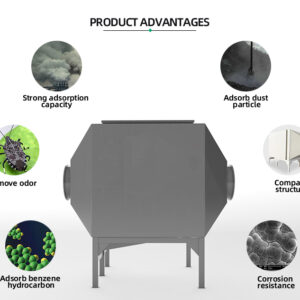
- High Purification Efficiency: Delivers 90%-95% VOC and odor removal. Effectively treats various industrial organic waste gases.
- Durable and Premium Material: New PP material offering excellent anti-corrosion and chemical-resistant properties.
- Compact Design and Low Consumption: Simple drawer structure, minimal footprint, no chemical reagent consumption.
- Easy Installation and Operation: Modular drawer design for easy carbon replacement, simple to operate and maintain.
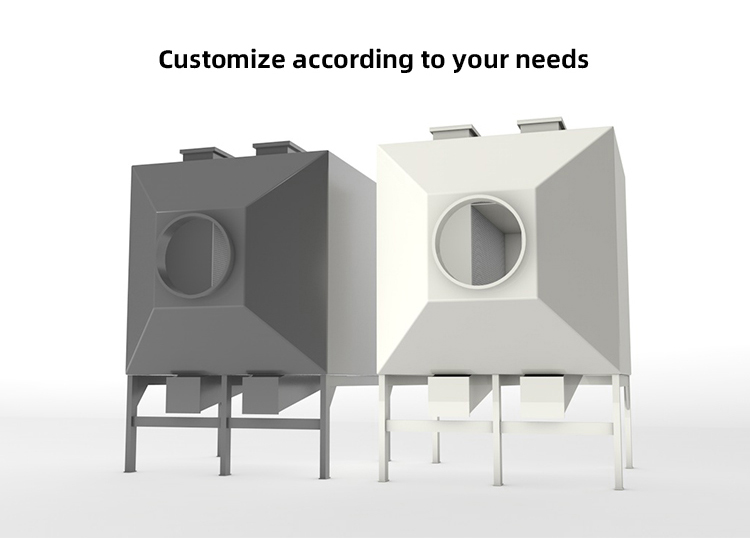
- Flexible Customization and After-Sales: Custom sizing to air volume, 1-year warranty, overseas support.
Key Specifications
| Model No. | XC-2 |
| Material | New PP (Polypropylene) |
| Function | Industrial Waste Gas Treatment |
| Purifying Technology | Activated Carbon Adsorption |
| Purify Efficiency | 90%-95% |
| Activated Carbon Type | Cylindrical, diameter 4 mm (granular/pellet/honeycomb available) |
| Service Life | 8-10 Years (equipment structure); carbon media replaced per usage |
| Color | Beige / Dark Grey |
| Brand / Origin | Xicheng / China |
Certifications and Compliance
- CE Certified – Carbon Adsorption Equipment, Exhaust Fan, Air Valve
- RoHS Compliant – Adsorption Equipment materials
- ISO 9001 – Quality Management System
- ISO 14001 – Environmental Management System
- SGS Tested – PP Sheet, PPS, PP Pipe, PVC Sheet
- Design Compliance – Equipment designed to meet EU Industrial Emissions Directive (2010/75/EU) and US EPA NESHAP for VOC and HAP emission control
Model Selection Table
Standard carbon adsorption equipment range — all dimensions in millimeters.
| Air Volume (m3/h) | Type | Specification (mm) | Activated Carbon (kg) | Thickness (mm) | Through Area (m2) |
|---|---|---|---|---|---|
| 1,500-2,500 | 2 Layers 1 Side | 1050 x 870 x 1000 | 100 | 10 | 0.64 |
| 2,500-3,500 | 3 Layers 1 Side | 1150 x 870 x 1700 | 125 | 10 | 0.96 |
| 3,500-5,000 | 2 Layers 1 Side | 1550 x 870 x 1000 | 175 | 10 | 1.28 |
| 5,000-7,000 | 3 Layers 1 Side | 1600 x 870 x 1700 | 275 | 10 | 1.92 |
| 7,000-10,000 | 3 Layers 1 Side | 2150 x 870 x 1700 | 400 | 10 | 2.88 |
| 10,000-14,000 | 3 Layers 2 Sides | 1600 x 1730 x 1700 | 525 | 10 | 3.84 |
| 14,000-18,000 | 4 Layers 2 Sides | 1800 x 1730 x 2000 | 700 | 10 | 5.12 |
| 18,000-22,000 | 3 Layers 2 Sides | 2150 x 1730 x 1700 | 775 | 10 | 5.76 |
| 22,000-28,000 | 3 Layers 2 Sides | 2650 x 1730 x 1700 | 1,050 | 10 | 7.68 |
| 28,000-35,000 | 4 Layers 2 Sides | 2900 x 1730 x 2000 | 1,400 | 12 | 10.24 |
| 35,000-45,000 | 4 Layers 2 Sides | 3500 x 1730 x 2400 | 1,725 | 12 | 12.80 |
| 45,000-55,000 | 4 Layers 2 Sides | 4000 x 1730 x 2400 | 2,075 | 12 | 15.36 |
| 55,000-60,000 | 5 Layers 2 Sides | 4000 x 1730 x 2900 | 2,600 | 12 | 19.20 |
Custom configurations: Up to 120,000 m3/h with multi-unit parallel arrangement. Contact xicheng023@outlook.com for sizing.
How to Order
- You send – Exhaust gas composition, VOC concentrations (mg/Nm3), air volume (m3/h), temperature, relative humidity
- We analyze – Pollutant profile to determine carbon type: granular, pellet, honeycomb, or chemically impregnated
- We design – Equipment sizing based on EBCT, carbon working capacity, pressure drop, and expected media life
- You approve – Technical proposal with equipment drawings, carbon specification, media replacement schedule, and pricing
- We build – 15-25 days. Vessel fabricated, carbon charged, flow distribution tested before shipment
- We ship – Equipment drawings, installation manual, carbon handling guidelines, and commissioning checklist included.
Contact xicheng023@outlook.com or WhatsApp +86 18927456906 — proposal within 24 hours.
Complete Your System
- Wet Scrubber Overview – Pair with scrubber for multi-stage exhaust treatment
- Industrial Activated Carbon Filter – Filter-focused carbon solution for lighter-duty applications
- PP Exhaust Duct – Corrosion-resistant ductwork for your treatment system
- PP/FRP Centrifugal Fan – Industrial fan matched to equipment pressure drop
Global Shipping
We ship carbon adsorption equipment worldwide across Southeast Asia, South Asia, Middle East, Africa, Europe, Americas, and Oceania. Standard sea freight with full export documentation; air freight available for smaller units.
FAQ
How does carbon adsorption equipment compare to a thermal oxidizer for VOC control?
Carbon adsorption is generally preferred for lower-concentration VOC streams (under 25% LEL) where thermal oxidation would require substantial auxiliary fuel. Carbon has lower capital cost, no natural gas consumption, and produces no NOx or CO2 from combustion. Thermal oxidizers are preferred for very high-concentration streams (over 25% LEL) where the VOCs can self-sustain combustion. Many facilities use carbon adsorption for day-to-day VOC control and bypass thermal oxidation only during high-concentration events. Read: Carbon Filter vs Wet Scrubber Comparison.
What maintenance does carbon adsorption equipment require?
Primary maintenance is carbon media replacement — typically every 3-12 months depending on inlet loading. Secondary items: differential pressure monitoring across the carbon bed (rising pressure drop indicates carbon compaction or dust accumulation), inspection of drawer seals and gaskets annually, and fan/motor PM per manufacturer schedule. The PP or SS housing itself requires minimal maintenance. Read: Carbon Filter Replacement and Maintenance Guide.
What information do you need to size the equipment correctly?
We need: exhaust gas composition and concentration of target pollutants (mg/Nm3 or ppm), air volume (actual m3/h at operating temperature), operating temperature and humidity, target outlet concentration or removal efficiency, and any space constraints at the installation location. With this data we can provide a performance-guaranteed equipment specification within 24 hours.