
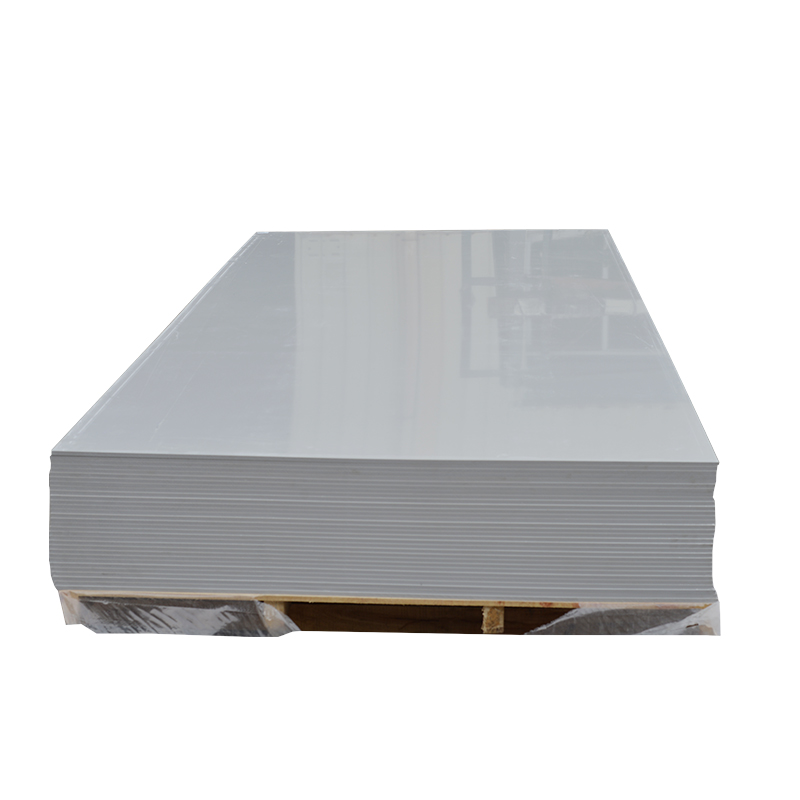


Description
Technical Specifications
Mechanical & Physical Properties
| Material | Rigid PVC-U (Unplasticized Polyvinyl Chloride) |
| Thickness | 2-30mm |
| Sheet Sizes | 1220×2440mm / 1500×3000mm |
| Density | 1.38-1.45 g/cm³ (ISO 1183) — approximately 50% heavier than PP |
| Tensile Strength | 45-55 MPa (ISO 527) |
| Flexural Strength | 70-80 MPa (ISO 178) |
| Impact Strength (Notched Izod) | 3-5 KJ/m² (ISO 180) |
| Heat Deflection Temperature | 65-75°C (ISO 75) |
| Vicat Softening Point | 75-85°C (ISO 306) |
| Working Temperature | -10°C to 60°C |
| Water Absorption (24h) | < 0.1% (ISO 62) |
| Flammability | V0 (UL 94) — inherent, chlorine-based. Produces HCl gas and dense smoke when burned. |
| Colors | Grey, White |
Manufacturing & Quality Control
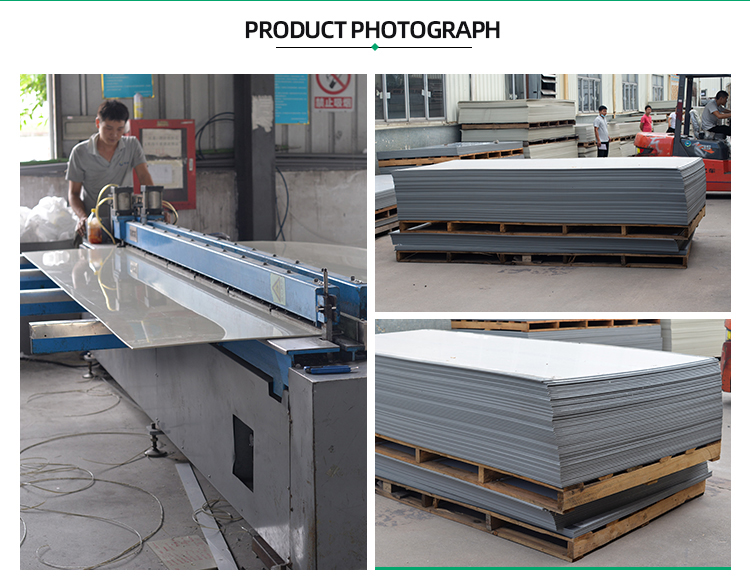
Xicheng PVC sheet is extruded from rigid PVC-U compound at our Shenzhen facility. PVC extrusion requires precise thermal control — the processing window between melting and thermal degradation is narrower than PP. Quality control per ISO 9001:2015:
- Incoming compound inspection: Thermal stability testing (Congo Red or similar per ISO 182) to verify PVC compound will not degrade during extrusion. Compound outside thermal stability spec rejected.
- In-process monitoring: Continuous thickness gauging. Melt temperature monitoring at extruder die to prevent thermal degradation (which causes yellowing and embrittlement).
- Final inspection: 5-point thickness measurement, diagonal check, visual surface and color inspection, batch mechanical testing (tensile, Izod impact).
Why PVC Sheet?
PVC rigid sheet serves a specific role alongside PP in the industrial plastics portfolio: it is the cost-effective choice for applications that do not require PP’s broad-spectrum acid resistance or 90°C temperature capability, but where higher room-temperature rigidity and inherent flame retardancy matter.
At 1.38-1.45 g/cm³, PVC is approximately 50% denser than PP. This density translates to measurably higher stiffness at ambient temperature: flexural strength of 70-80 MPa (vs PP’s 35-40 MPa) and a harder, more scratch-resistant surface. For indoor, mild-environment applications — general ventilation ductwork, water treatment enclosures, construction panels — PVC delivers adequate performance at lower material cost than PP.
Critical safety distinction: PVC’s inherent V0 flame rating comes from its chlorine content (approximately 57% by weight). When PVC burns, it releases dense, corrosive hydrogen chloride (HCl) gas and toxic dioxins/furans. This is well-documented: HCl gas from burning PVC building materials is a primary contributor to fire smoke toxicity in enclosed spaces. For occupied building ventilation, laboratory furniture, and electrical enclosures — where people are present during a fire — halogen-free FR PP sheet (V0) provides equivalent fire rating without the toxic smoke penalty. For industrial installations where fire smoke toxicity is not a primary design concern, PVC remains an economical and functionally adequate choice.
For broad chemical resistance and higher temperature requirements, see our main PP polypropylene sheet.
Key Advantages
- Lower Material Cost: PVC sheet is typically less expensive than PP of equivalent thickness. For non-critical, mild-environment applications at scale, this cost difference can be significant.
- High Room-Temperature Rigidity: Flexural strength 70-80 MPa — approximately 2× PP’s stiffness. Fewer supports and closer spacing needed for equivalent-span duct and panel installations.
- Inherent V0 Without Additives: PVC’s chlorine content provides natural self-extinguishing behavior. No FR additive package required, reducing material complexity and cost.
- Good UV Resistance: Grey PVC has fair inherent UV resistance — meaningfully better than standard PP. Suitable for sheltered outdoor applications with 5-8 year service expectations without additional UV stabilization.
- Hard, Scratch-Resistant Surface: PVC’s higher surface hardness resists scratching and marring better than PP in handling and service. Important for visible panels and surfaces.
Applications
- General Ventilation Ductwork: Indoor fume extraction in non-corrosive or mildly corrosive environments. Higher rigidity means less support structure needed compared to PP of equivalent thickness.
- Water & Wastewater Treatment: Chemical dosing cabinet panels, control enclosures, and equipment housings handling ambient-temperature treatment chemicals.
- Construction Panels: Interior wall cladding, ceiling panels, partition walls, and decorative panels where moisture resistance and easy cleaning are required.
- Equipment Enclosures: Machinery guards, electrical cabinet panels, and equipment covers in non-corrosive industrial environments at ambient temperature.
PVC vs PP Selection Guide
| Criterion | Choose PVC When | Choose PP When |
|---|---|---|
| Temperature | Service ≤60°C | Service 60-90°C |
| Chemical Environment | Mild — general industrial, water treatment | Aggressive — strong acids, HF, concentrated alkalis |
| Fire Safety | V0 needed; smoke toxicity not a primary concern | V0 needed AND halogen-free/low-smoke required |
| Rigidity at 20°C | Higher stiffness beneficial | Moderate stiffness acceptable |
| Weight | Higher weight acceptable | Light weight matters for handling |
| Budget | Lower material cost is priority | Performance outweighs cost difference |
Ordering, Warranty & Delivery
- MOQ: 1 m². No upper limit.
- Lead Time: 15-25 working days standard.
- Payment: T/T (30% deposit, 70% before shipment). L/C accepted.
- Shipping: FOB Shenzhen. Sea/air/land. Wood pallet packaging with moisture barrier.
- Warranty: 1 year against manufacturing defects. Lifetime technical support. 24-hour technical response.
Company: XICHENG EP (CN) LTD | Address: Room 2007, Building 1, Zhongliang Yunjing Plaza, Matian Street, Guangming District, Shenzhen, Guangdong, China | Certifications: ISO 9001:2015, CE, RoHS
Frequently Asked Questions
When should I choose PVC over PP?
Choose PVC when the application is indoor, at ambient temperatures (≤60°C), with mild chemical exposure, and cost or rigidity are the primary drivers. Choose PP for aggressive acid service, temperatures above 60°C, or halogen-free fire safety requirements. For applications requiring both fire rating and broad chemical resistance in occupied spaces, upgrade to halogen-free FR PP (V0).
Can PVC and PP be welded together?
No. PVC and PP are dissimilar thermoplastics with different melt temperatures and incompatible chemical structures. They cannot be welded to each other. Choose one material for the entire fabrication.
Is PVC suitable for outdoor use?
Grey PVC sheet has fair inherent UV resistance — better than standard PP. It can serve 5-8 years in sheltered outdoor applications (under canopy/eaves). For full direct-sun exposure, specify UV-stabilized grades or protect with coating/shelter. PVC’s working temperature range (-10°C to 60°C) limits its use in extreme climates.
What are the fire safety concerns with PVC?
PVC contains approximately 57% chlorine by weight. When PVC burns, it produces dense, corrosive HCl gas and toxic dioxins. In building fires, HCl gas from burning PVC materials is a primary contributor to smoke toxicity. For occupied building ventilation and fire-rated ductwork, halogen-free FR PP is the safer alternative. For outdoor or unoccupied industrial installations where fire smoke toxicity is not a primary concern, PVC’s inherent V0 rating is functionally adequate.
Request PVC Sheet Quotation — Response Within 24 Hours
Product Images


