
17 August, 2024
0 Comments
1 category
Activated carbon adsorption tower description
An activated carbon adsorption tower is a device used to remove contaminants, pollutants, and other undesirable substances from gases or liquids. The primary mechanism involves passing the gas or liquid through a bed of activated carbon, which has a high surface area due to its porous structure, allowing it to adsorb a wide range of organic compounds and some inorganic substances.
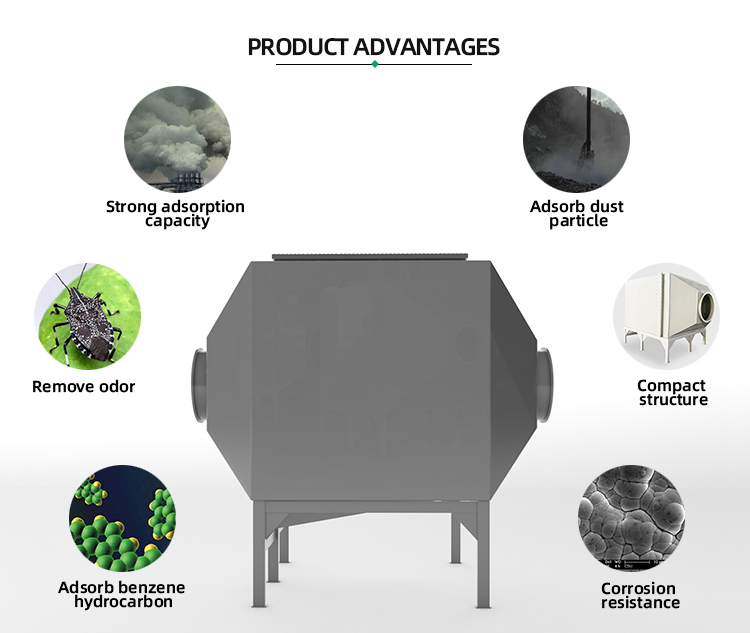
Activated carbon adsorption tower key components
- Activated Carbon Bed: This is the core of the adsorption tower, typically made from materials like coal, wood, coconut shells, or other carbonaceous substances. The activated carbon is treated to create a highly porous structure with a large surface area for adsorption.
- Inlet and Outlet: The contaminated gas or liquid enters through the inlet, passes through the carbon bed, and exits through the outlet with reduced levels of pollutants.
- Support Grids: These are located at the bottom of the carbon bed to support the activated carbon and ensure uniform distribution of the gas or liquid.
- Casing: The outer shell of the tower, is typically made from materials like PP polypropylene, depending on the application.
- Flow Distribution System: Ensures that the gas or liquid flows uniformly through the activated carbon bed for optimal contact and adsorption efficiency.

Activated carbon adsorption tower applications
- Air Purification
- Industrial Exhaust Gas Treatment: Removes volatile organic compounds (VOCs), odors, and harmful gases like sulfur compounds, ammonia, and hydrogen sulfide from industrial emissions.
- Odor Control: Used in waste treatment plants, food processing facilities, and chemical manufacturing to eliminate unpleasant odors.
- Gas Processing
- Natural Gas Purification: Removes impurities such as sulfur compounds, carbon dioxide, and hydrocarbons from natural gas to meet quality standards.
- Biogas Upgrading: Adsorbs contaminants like hydrogen sulfide and siloxanes from biogas, making it suitable for energy production or injection into the natural gas grid.
- Gasoline Vapor Recovery: Captures gasoline vapors during the fueling process at gas stations, reducing environmental pollution.
- Electronics Manufacturing
- Gas Purification: Purifies gases used in semiconductor manufacturing, ensuring that the production environment is free of contaminants.
Activated carbon adsorption tower advantages
- High Adsorption Efficiency
- Effective Pollutant Removal: Activated carbon has a large surface area and high porosity, allowing it to efficiently adsorb a wide range of contaminants, including volatile organic compounds (VOCs), odors, chemicals, and toxins.
- Broad Application Range: Capable of removing both organic and some inorganic substances from gases and liquids, making it versatile across different industries.
- Flexibility in Use
- Adaptable Design: Can be customized to fit various sizes, configurations, and operating conditions to meet specific application requirements.
- Scalability: Suitable for both small-scale and large-scale operations, from small air purifiers to massive industrial gas or water treatment systems.
- Environmental Benefits
- Non-Toxic: Activated carbon is generally non-toxic and safe to handle, with minimal environmental impact when properly managed.
- Waste Minimization: Helps in reducing the release of harmful pollutants into the environment, contributing to cleaner air.
- Operational Simplicity
- Easy Installation and Operation: Activated carbon adsorption towers are relatively simple to install and operate, with minimal maintenance requirements compared to other treatment technologies.
- Low Energy Consumption: Passive systems (those that rely on natural flow) require little to no energy, and even active systems typically have low energy demands compared to other advanced treatment methods.
- Selective Adsorption
- Targeted Removal: Activated carbon can be tailored to selectively adsorb specific contaminants, allowing for more efficient purification processes and better resource management.
- Effective for Low Concentrations: Even at low concentrations, activated carbon can effectively adsorb contaminants, making it ideal for polishing steps in treatment processes.
- Compliance with Regulations
- Environmental Compliance: Helps industries meet stringent environmental regulations by reducing emissions and effluent contaminants to acceptable levels.
- Safety Standards: Contributes to workplace safety by capturing harmful fumes and gases, thereby protecting workers’ health.
- Compact Design
- Space-Saving: Activated carbon adsorption towers can be designed to be compact, making them suitable for installations where space is limited.
- Modular Design: Allows for easy integration into existing systems and the ability to expand capacity as needed without significant infrastructure changes.
- Low Noise and Vibration
- Quiet Operation: These towers typically operate with minimal noise and vibration, making them suitable for environments where noise pollution is a concern.
Please follow and like us:


Category: Blog