
15 August, 2024
0 Comments
1 category
Air pollution control wet scrubber description
An air pollution control wet scrubber is a device used in air pollution control to remove particulate matter and gases from industrial exhaust streams. It operates by bringing the polluted air into contact with a liquid, water/chemicals, which captures and removes the contaminants.
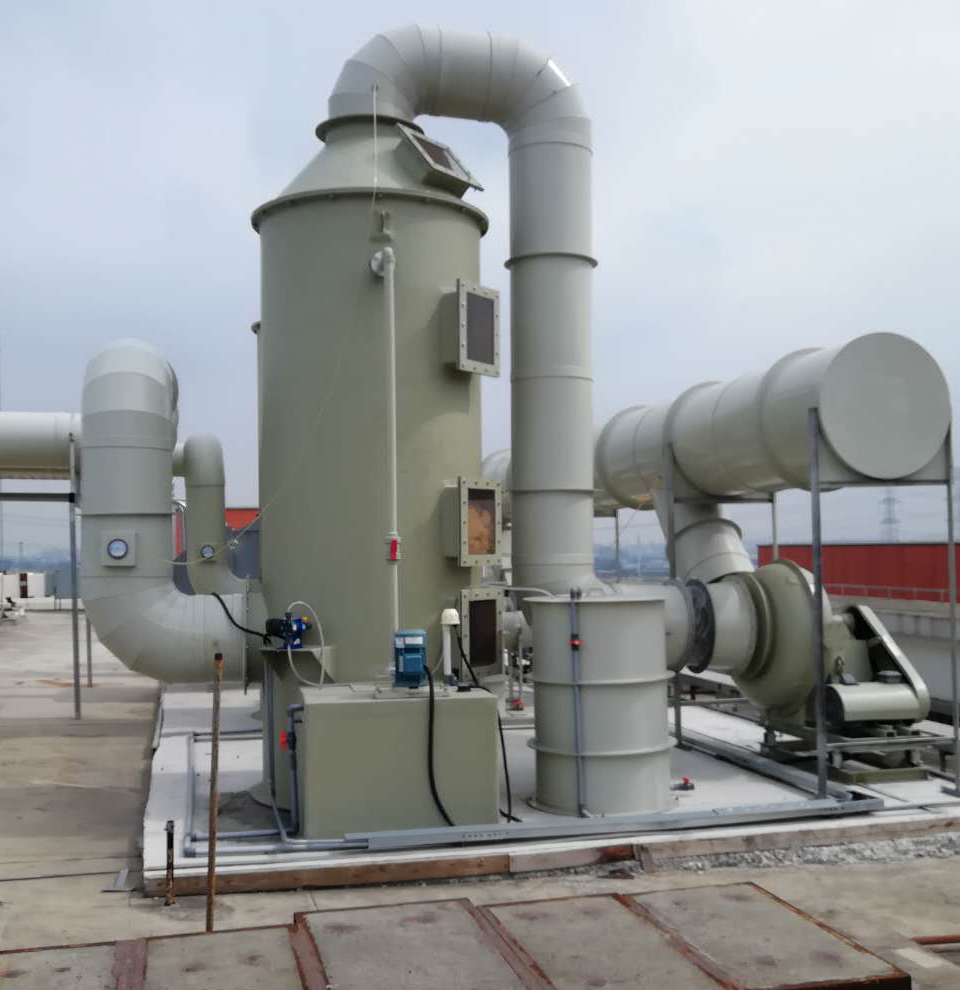
Air pollution control wet scrubber principles
- Polluted Gas Stream Introduction
- The polluted gas stream, containing particulate matter, hazardous gases, or both, is introduced into the scrubber.
- The gas enters the air pollution control wet scrubber typically through an inlet duct, where it is directed toward the scrubbing section.
- Liquid Injection
- A scrubbing liquid (often water, but sometimes a chemical solution) is injected into the scrubber. The method of injection can vary:
- Spray Nozzles: Disperse the liquid into fine droplets.
- Liquid Pools or Packed Beds: Where the gas passes through or over a liquid layer or a bed of materials saturated with the liquid.
- A scrubbing liquid (often water, but sometimes a chemical solution) is injected into the scrubber. The method of injection can vary:
- Gas-Liquid Contact
- The polluted gas stream and the scrubbing liquid come into contact in various ways, depending on the air pollution control wet scrubber design:
- Spray Tower: The gas stream moves upward while the liquid is sprayed downward, allowing the liquid droplets to collide with and capture pollutants.
- Venturi Scrubber: The gas stream is accelerated through a narrow throat (Venturi section), creating turbulence that enhances contact between the gas and liquid.
- Packed Bed Scrubber: The gas flows through a packed section where liquid flows over the packing material, maximizing the surface area for contact.
- The polluted gas stream and the scrubbing liquid come into contact in various ways, depending on the air pollution control wet scrubber design:
- Pollutant Capture and Absorption
- Particulate Matter Removal: The liquid droplets capture particulates by impaction, interception, or diffusion. The particulates adhere to the liquid droplets and are carried away with the liquid stream.
- Gas Absorption: Gaseous pollutants are absorbed into the liquid. For example, acidic gases like sulfur dioxide (SO2) may dissolve in water and then be neutralized by an alkaline scrubbing solution.
- Separation of Clean Gas and Liquid
- After scrubbing the gas, it passes through a demister or separator that removes any remaining liquid droplets from the gas stream.
- The cleaned gas, now free of most pollutants, is released into the atmosphere through an exhaust stack.
- Collection and Treatment of the Scrubbing Liquid
- The liquid, now containing the captured pollutants, is collected at the bottom of the scrubber.
- Depending on the type of air pollution control wet scrubber and pollutants removed, the liquid may be recirculated, treated to remove contaminants, or neutralized before disposal.
- Waste Disposal or Recycling
- The contaminated scrubbing liquid must be treated before disposal to meet environmental regulations. Alternatively, it may be recycled within the system after appropriate treatment.

Air pollution control wet scrubber applications
- Chemical Manufacturing
- Pollutant Control: Removal of acid gases like hydrogen chloride (HCl), sulfur dioxide (SO₂), and ammonia (NH₃) generated during chemical reactions.
- Process Example: In chemical plants producing fertilizers, plastics, or pharmaceuticals, wet scrubbers control emissions from reactors, storage tanks, and loading operations.
- Power Plants
- Flue Gas Desulfurization (FGD): Wet scrubbers, often referred to as FGD systems, are used to remove sulfur dioxide (SO₂) from the exhaust gases of coal-fired power plants.
- Mercury Control: Wet scrubbers can also help in capturing mercury and other heavy metals when used in conjunction with other technologies.
- Metal Processing
- Acid Mist Control: In metal plating and pickling operations, wet scrubbers are used to capture and neutralize acid mists, such as sulfuric acid or nitric acid, which are harmful if released into the atmosphere.
- Particulate Removal: During operations like smelting, grinding, or machining, wet scrubbers can efficiently remove fine particulate matter from the exhaust gases.
- Waste Incineration
- Control of Toxic Emissions: Wet scrubbers are employed to control the release of toxic gases, such as hydrogen chloride (HCl), sulfur dioxide (SO₂), and dioxins, from the incineration of municipal, medical, and hazardous waste.
- Particulate Matter Removal: They also capture ash particles and other fine particulates present in the flue gas.
- Pulp and Paper Industry
- Odor Control: Wet scrubbers are used to remove odorous gases like hydrogen sulfide (H₂S) and other volatile organic compounds (VOCs) produced during the pulping process.
- Particulate and Chemical Removal: They also help in removing particulates and chemicals from recovery boilers and lime kilns.
- Petrochemical Industry
- VOC Control: In the production and processing of oil and gas, wet scrubbers control emissions of volatile organic compounds (VOCs), hydrogen sulfide (H₂S), and other hazardous air pollutants.
- Ammonia and Acid Gas Removal: They are also used to remove ammonia and acid gases from the refining process.
- Textile Industry
- Dye and Chemical Emissions: Wet scrubbers help control emissions of chemicals and dyes used in the textile industry, preventing harmful substances from entering the atmosphere.
- Particulate Control: Capture of fine textile fibers and dust generated during fabric processing.
- Food and Beverage Industry
- Odor and Fume Control: Wet scrubbers are used to control odors and fumes from cooking, fermentation, and other food processing operations.
- Particulate Matter Capture: They help in capturing fine particulates generated during processes like drying, grinding, and packaging.
- Odor Control in Wastewater Treatment Plants
- Hydrogen Sulfide (H₂S) Removal: Wet scrubbers are employed in wastewater treatment facilities to remove hydrogen sulfide and other odorous gases produced during sewage treatment.
- VOC Removal: They also help in controlling volatile organic compounds (VOCs) emitted from wastewater processing units.
- Etc.
Please follow and like us:


Category: Uncategorized